There are some temples where you arrive, take darshan, and leave. And then there are places like Ambaji Temple Ambaji, where even before entering the temple, something feels different. Maybe it’s the location near the Aravalli Hills, or maybe it’s the way devotees walk quietly toward the temple without rushing. You’ll notice people carrying offerings, some barefoot, some chanting softly, but no one seems in a hurry to finish the visit. And that’s where the experience of visiting Ambaji Temple Ambaji begins—not inside the temple, but in the approach itself. Because unlike many temples where everything feels structured and fast, here the journey and darshan feel connected.
📊 Quick Overview – Ambaji Temple Ambaji
| Detail | Information |
| Temple Name | Ambaji Temple Ambaji |
| Location | Khodiyar Chowk, Banaskantha, Gujarat |
| Deity | Goddess Amba (Shakti Peeth) |
| Entry Fee | Free |
| Best Time | October to March & Bhadarvi Purnima |
| Nearby Attraction | Gabbar Hill (Original Shakti Peeth) |
Why Ambaji Temple Ambaji Feels Spiritually Different
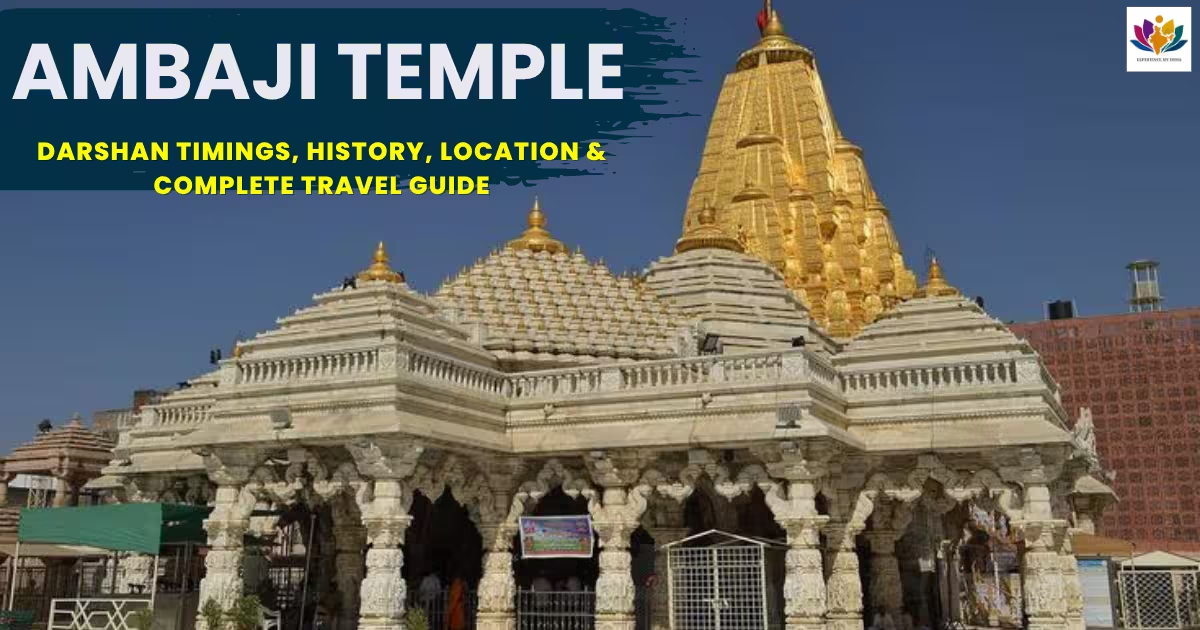
Among all major temples in Gujarat, Ambaji Temple Ambaji holds a special place because it is one of the 51 Shakti Peethas. But what most people don’t expect is the simplicity inside the temple.
There is no idol in the traditional sense. Instead, the worship is focused on a sacred Shree Visa Yantra, which represents the divine presence of Goddess Amba. And because of this, the experience feels less about visual darshan and more about presence.
Also, the temple is located close to the Gujarat–Rajasthan border, which means you’ll see a mix of devotees from both regions, adding to the cultural atmosphere.
Ambaji Temple Timings & Darshan Schedule
Understanding Ambaji temple timings is important because the temple follows a structured darshan flow.
🕒 Darshan Timings Table
| Session | Timing |
| Morning Darshan | 7:00 AM – 11:30 AM |
| Afternoon Darshan | 12:30 PM – 4:30 PM |
| Evening Darshan | 6:30 PM – 9:00 PM |
🪔 Aarti Timings
| Aarti | Timing |
| Morning Aarti | 7:00 AM – 7:30 AM |
| Evening Aarti | 6:30 PM – 7:00 PM |
If you’re planning darshan, early morning feels calmer. However, evening aarti brings a different kind of energy, especially with the lighting and chants.
History of Ambaji Temple Ambaji – Beyond Dates and Events
The history of Ambaji Temple Ambaji is not tied to a single timeline. It’s layered with belief, mythology, and continuous worship over centuries.
- It is believed that the heart of Goddess Sati fell here, making it a Shakti Peeth
- The temple has been a center of worship for thousands of years
- Unlike other temples, the focus is on the Yantra, not an idol
And because of this, the temple feels different. You’re not just looking at a deity—you’re experiencing a symbolic form of energy.
Entry Fees, Costs & Facilities
| Service | Cost |
| Temple Entry | Free |
| Bhojanalaya Meal | ₹165 – ₹200 per person |
| Ropeway (Gabbar Hill) | ₹125 adult / ₹70 child (return) |
| Parking | ₹100 approx (Khodiyar Chowk) |
The temple trust manages facilities well, so basic amenities are easily available.
Gabbar Hill – The Original Shakti Peeth Experience
About 4 Km from Ambaji Temple, you’ll find Gabbar Hill, which is believed to be the actual spot where the divine presence exists.
You can either climb steps or use the ropeway.
- Ropeway time: 10–15 minutes
- Best time: Sunset
Climbing feels more meaningful, but the ropeway makes it easier, especially for families.
Best Time to Visit Ambaji Temple Ambaji
| Month | Experience |
| October – March | Pleasant weather |
| April – June | Hot but manageable |
| July – September | Monsoon, scenic surroundings |
However, the most important time is Bhadarvi Purnima (August–September), when lakhs of devotees visit. The energy during this period is intense, but so is the crowd.
Crowd Behavior & Real Observations
This is something many people don’t fully prepare for.
- Morning → smoother darshan
- Afternoon → moderate crowd
- Evening aarti → peak crowd
During Bhadarvi Purnima, the crowd increases significantly, and waiting time can extend.
Still, compared to many large temples, the movement here feels more organized.
A Small Detail Most Visitors Miss
Inside the temple, when you stand in front of the Shree Visa Yantra, you might notice something unusual. There’s no visual focal point like a statue, yet people stand quietly for a few seconds longer than usual. It’s a small observation, but it reflects how the experience here is more internal than visual.
Nearby Places to Visit Around Ambaji
- Gabbar Hill (4 Km) – Original Shakti Peeth
- Kumbhariya Jain Temples (2 Km) – Ancient architecture
- Mount Abu (50 Km) – Hill station nearby
If you have time, combining Ambaji with Mount Abu creates a balanced trip.
Travel Distance & Connectivity
| Place | Distance | Time |
| Ahmedabad | 180 Km | 4 hours |
| Mount Abu | 50 Km | 1.5 hours |
| Palanpur | 65 Km | 1.5 hours |
Road connectivity is good, but some stretches are narrow, so driving speed remains moderate.
Planning Support Partner
Planning a visit to Ambaji Temple Ambaji may seem straightforward, but once you reach, factors like darshan timing, crowd flow, and nearby travel planning begin to shape your experience. This is where Somnath Dwarka Tour Package becomes helpful in a practical way. From aligning your temple visit with the right aarti timing to managing nearby destinations like Gabbar Hill, the support ensures your journey feels smooth, well-paced, and free from unnecessary delays.
Contact: Somnath Dwarka Tour Package Today:
Call Us: +91 7300620809
WhatsApp Us: +91 7300620809
Visit Our Website: Somnath Dwarka Tour Package
Somnath Dwarka Tour Package is a Unit of Experience My India
Experience My India Trip Advisor Review
How to Reach Ambaji Temple Ambaji
🚗 By Car
- From Ahmedabad → 180 Km (4 hours)
- From Mount Abu → 50 Km (1.5 hours)
🚆 By Train
- Nearest station: Palanpur (65 Km)
- Taxi available from station
✈️ By Air
- Nearest airport: Ahmedabad Airport
- Distance: 180 Km
A Thought That Stays After the Visit
Unlike many temple visits where you feel like you’ve completed something, visiting Ambaji Temple Ambaji feels slightly different. You don’t feel rushed to leave immediately. Many people stay back, sit quietly, or just walk around without a plan.
Conclusion
Visiting Ambaji Temple Ambaji is not just about following a schedule or completing darshan. It’s about allowing yourself to experience a place that doesn’t depend on visual grandeur but on quiet presence. And somewhere between the temple steps, the chants, and the calm surroundings, you realize that the experience doesn’t end when you leave—it stays with you, in a way that’s difficult to explain but easy to feel.
FAQs – Ambaji Temple Ambaji
Ambaji Temple Ambaji is located at Khodiyar Chowk, Banaskantha district, Gujarat, near the Gujarat–Rajasthan border, making it easily accessible from both states.
The Ambaji temple timings are 7:00 AM – 11:30 AM (morning), 12:30 PM – 4:30 PM (afternoon), and 6:30 PM – 9:00 PM (evening).
The Ambaji mandir darshan time for aarti includes Morning Aarti at 7:00 AM – 7:30 AM and Evening Aarti at 6:30 PM – 7:00 PM.
No, entry to Ambaji Temple Ambaji is completely free for all devotees.
Ambaji Temple Ambaji is one of the 51 Shakti Peethas, where it is believed that the heart of Goddess Sati fell, making it a highly sacred pilgrimage site.
Unlike most temples, there is no idol in Ambaji Temple Ambaji. Worship is done to the sacred Shree Visa Yantra, which represents the divine energy of Goddess Amba.
The best time to visit is between October and March for pleasant weather, while Bhadarvi Purnima (August–September) is the most important festival period.
Gabbar Hill is approximately 4 km from Ambaji Temple Ambaji, and it can be reached by road or ropeway.
The ropeway charges are around ₹125 for adults and ₹70 for children for a return trip.
Facilities include paid parking (₹100 approx), Ambika Bhojanalaya meals (₹165–₹200 per person), and basic accommodation and shops near the temple area.