Sometimes a journey begins long before the road actually starts. For many travellers, the idea of a Gujarat Somnath Dwarka Tour begins quietly — maybe while hearing someone describe the sea touching the walls of Somnath Temple, or while watching an evening aarti video from Dwarka where the bells echo across the old town.
When you finally travel through this part of Gujarat, you notice something interesting. The journey is not only about visiting temples. It slowly turns into a rhythm of coastal roads, ancient stories, and towns where devotion still shapes everyday life. People arrive with expectations of darshan, yet they leave remembering small moments — a sunrise near the Arabian Sea, the calm of Dwarka streets early in the morning, or the silence inside Somnath temple corridors.
A well-planned Gujarat Somnath Dwarka Tour usually combines spiritual visits with a relaxed travel route, because the distance between these places tells its own story. And once you begin the route, you realise the journey is just as meaningful as the destination.
Why the Gujarat Somnath Dwarka Tour Feels Different from Other Pilgrimage Routes
India has many famous temple circuits. Yet the Gujarat Somnath Dwarka Tour has a slightly different atmosphere.
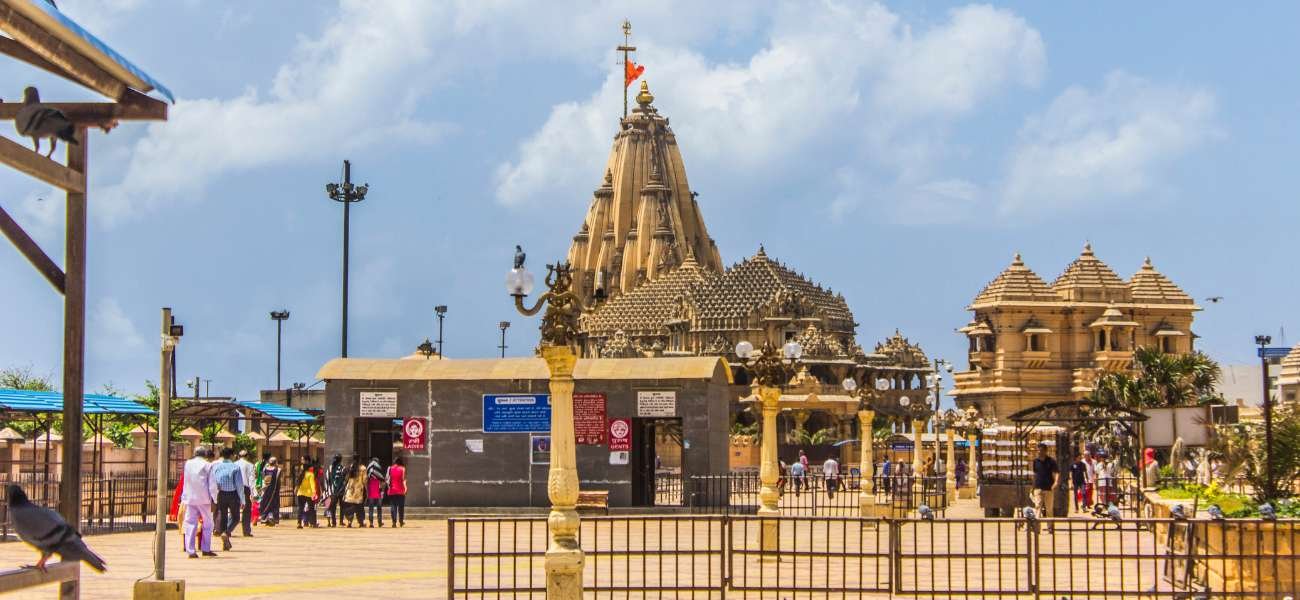
First, there is the coastline. Somnath Temple stands right beside the Arabian Sea, and that constant sound of waves quietly changes the entire experience. While many temples sit in crowded cities, Somnath almost feels like it belongs to the ocean itself.
Then comes Dwarka. Unlike most pilgrimage towns, Dwarka carries the feeling of an ancient kingdom. According to tradition, this was the capital city of Lord Krishna. So walking through Dwarka is not just a temple visit; it feels like stepping into a living piece of mythology.
Another thing worth noticing is the pace of travel. The route between these locations passes through small towns and open highways. As a result, the journey never feels rushed if planned well. This is why many pilgrims prefer a structured Somnath Dwarka temple tour Gujarat instead of trying to arrange everything independently.
Important Temples Covered in the Gujarat Somnath Dwarka Tour
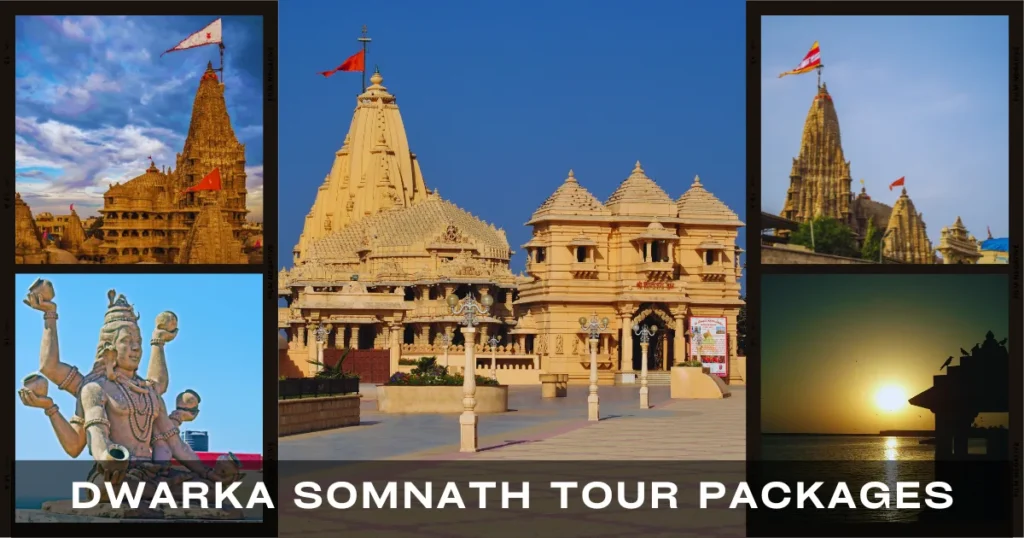
A typical Gujarat Somnath Dwarka Tour focuses on a few spiritually important temples that define the pilgrimage.
- Somnath Temple
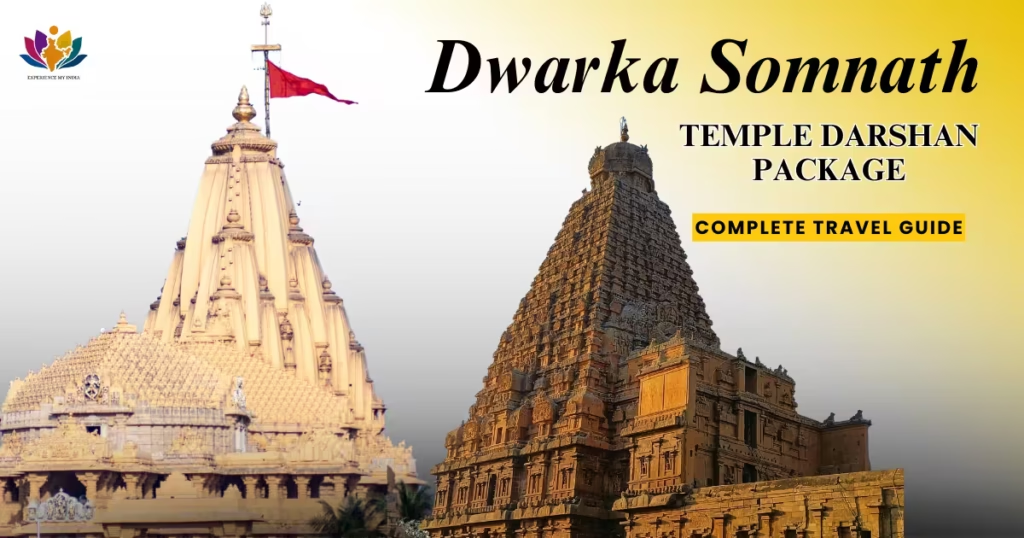
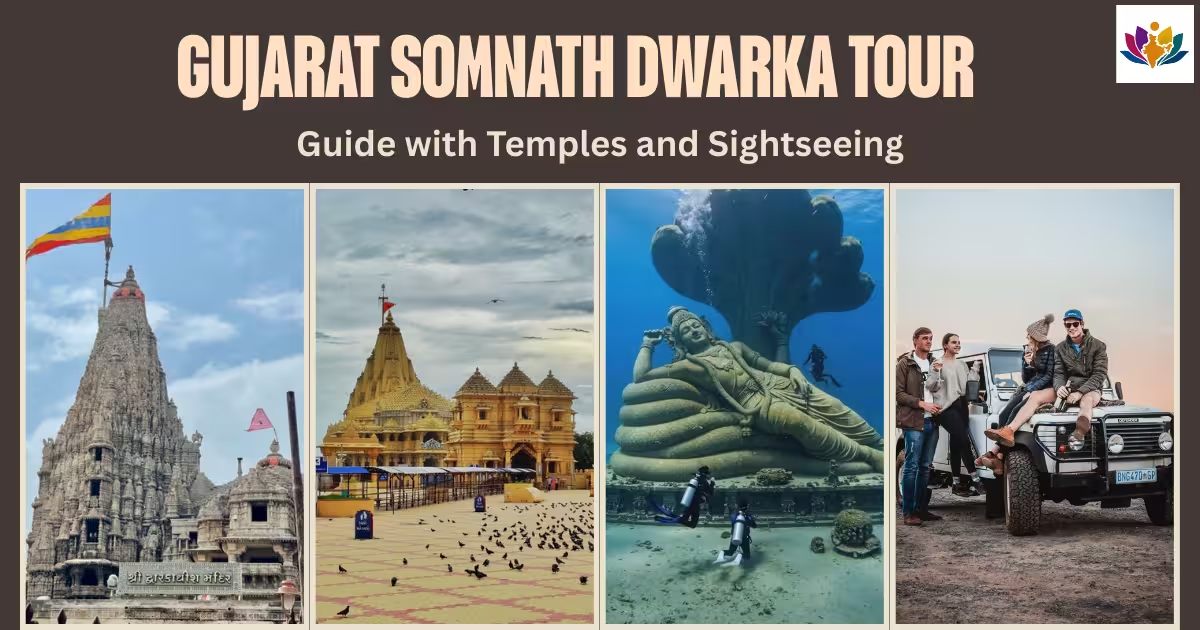
One of the twelve Jyotirlingas of Lord Shiva. The temple stands on the western coast of Gujarat and has been rebuilt several times in history. Yet despite the invasions and reconstructions, the temple still carries a strong spiritual presence. - Dwarkadhish Temple
This temple is dedicated to Lord Krishna and is considered one of the Char Dham pilgrimage sites. The tall five-storey structure dominates the skyline of Dwarka town, and the evening aarti often becomes the most memorable moment for visitors. - Nageshwar Jyotirlinga
Located between Dwarka and Beyt Dwarka, this temple is another Jyotirlinga dedicated to Lord Shiva. Pilgrims often include it naturally in their Dwarka Somnath pilgrimage tour itinerary. - Beyt Dwarka Temple
An island temple associated with Lord Krishna’s residence. Reaching this place requires a short boat ride, which surprisingly becomes one of the highlights of the journey.
Sightseeing Places Often Included in the Tour
Apart from temples, the Gujarat Somnath Dwarka Tour also includes several peaceful sightseeing spots.
- Triveni Sangam (Somnath)
A sacred meeting point of three rivers. Many pilgrims begin their Somnath visit with a ritual bath here. - Bhalka Tirth
A historically important place believed to be where Lord Krishna left his earthly form. - Sudama Setu (Dwarka)
A pedestrian bridge offering views of the Gomti River and the Dwarkadhish Temple area. - Gomti Ghat
Pilgrims often sit here quietly after darshan. Early morning visits feel particularly calm.
What most travellers notice is that these places are not loud tourist attractions. Instead, they are simple locations where the atmosphere itself carries meaning.
A Realistic Dwarka Somnath Pilgrimage Tour Itinerary
Planning the route carefully makes the entire journey smoother. A commonly followed Dwarka Somnath pilgrimage tour itinerary looks like this:
- Day 1 – Arrival in Ahmedabad
Most travellers begin the Somnath Dwarka trip from Ahmedabad. After arrival, the road journey toward Dwarka begins. - Day 2 – Dwarka Temple Visits
Morning darshan at Dwarkadhish Temple, followed by visits to Nageshwar Jyotirlinga and Beyt Dwarka. - Day 3 – Travel to Somnath
The road journey between Dwarka and Somnath takes several hours, but the coastal route makes the drive surprisingly pleasant. - Day 4 – Somnath Temple and Nearby Sites
Early morning darshan at Somnath Temple followed by visits to Triveni Sangam and Bhalka Tirth.
But here is something many people realise only during the trip — rushing through temples reduces the experience. Slowing down, even slightly, changes everything.
Best Time to Plan the Gujarat Somnath Dwarka Tour
Weather plays a major role in the overall travel experience.
- October to March
Pleasant temperatures and comfortable travel conditions. - April to June
Temperatures increase significantly, so early morning temple visits work best. - Monsoon Season
Fewer crowds and greener surroundings, though occasional rain can affect travel schedules.
Another thing worth knowing is that festival periods attract large numbers of devotees. Janmashtami in Dwarka and Mahashivratri in Somnath bring extraordinary energy, but crowds also increase.
Local Guide Tip
Many travellers try to complete Somnath and Dwarka in just two days. However, that often turns the trip into a rushed schedule of temple queues and highway drives. If possible, keep at least three to four days for the journey. The slower pace allows time for evening aartis and quiet temple visits, which usually become the most memorable parts of the Gujarat Somnath Dwarka Tour.
Planning Support Partner
During peak travel seasons, organising transport and temple visit timing can sometimes become confusing. Many travellers prefer structured assistance, and Somnath Dwarka Tour Package often helps visitors plan routes, manage temple schedules, and arrange travel between cities so the journey remains calm and organised.
Contact: Somnath Dwarka Tour Package Today:
Call Us: +91 7300620809
WhatsApp Us: +91 7300620809
Visit Our Website: Somnath Dwarka Tour Package
Somnath Dwarka Tour Package is a Unit of Experience My India
Experience My India Trip Advisor Review
How to Reach Gujarat Somnath Dwarka Tour Route
Travelling to Somnath and Dwarka is fairly convenient because Gujarat has good road and rail connectivity.
🚗 By Car
- Ahmedabad to Dwarka distance is roughly 440 km.
- Ahmedabad to Somnath distance is around 410 km.
- Road journeys usually take 8–9 hours depending on traffic conditions.
- Private vehicles allow flexible stops during the Somnath Dwarka trip from Ahmedabad.
🚆 By Train
- Dwarka Railway Station connects with major cities like Ahmedabad and Rajkot.
- Veraval Railway Station is the nearest station to Somnath Temple.
- From both stations, taxis and local transport are easily available.
✈️ By Air
- Rajkot Airport and Jamnagar Airport are the closest airports for Dwarka.
- Diu Airport is the nearest airport to Somnath Temple.
- After landing, travellers usually continue by road to complete their Somnath Dwarka temple tour Gujarat.
FAQs – Gujarat Somnath Dwarka Tour Guide with Temples and Sightseeing
The most comfortable time for a Gujarat Somnath Dwarka Tour is between October and March when the weather remains pleasant for temple visits and long road journeys. During these months, sightseeing and darshan are easier compared to the summer season.
Most travellers prefer a 3 to 4 day journey to cover the main temples and sightseeing places comfortably. This duration allows enough time for darshan at Dwarkadhish Temple, Somnath Temple, Nageshwar Jyotirlinga, and Beyt Dwarka.
A typical Somnath Dwarka temple tour Gujarat usually includes Somnath Temple, Dwarkadhish Temple, Nageshwar Jyotirlinga, Beyt Dwarka, and nearby sacred sites like Bhalka Tirth and Triveni Sangam.
Many travellers begin their Somnath Dwarka trip from Ahmedabad because it is well connected by flights, trains, and highways. Ahmedabad also offers several transport options for reaching Dwarka or Somnath.
The distance between Somnath and Dwarka is approximately 230 km by road. The journey usually takes around 5 to 6 hours depending on traffic and road conditions.
Yes, the Gujarat Somnath Dwarka Tour is generally comfortable for older citizens because the temples are accessible and travel routes are well developed. However, planning slower travel days and comfortable transport helps make the trip easier.
The Dwarka Somnath pilgrimage tour itinerary connects two of the most sacred Hindu destinations—Dwarka, associated with Lord Krishna, and Somnath, one of the twelve Jyotirlingas of Lord Shiva. This combination makes the journey spiritually significant for many devotees.
Yes, the Somnath Dwarka trip from Ahmedabad is well supported by highways, train connections, and private tour vehicles. Many travellers prefer road travel because it allows stops at important temples and sightseeing places along the route.
Yes, travellers can use trains to reach Dwarka Railway Station or Veraval Railway Station near Somnath. From these stations, taxis and local vehicles are easily available for temple visits.
Many visitors choose a Somnath Dwarka Tour Package because it simplifies travel planning. Transport arrangements, temple visits, and route planning become easier, especially for first-time travellers visiting Gujarat.
Conclusion
Something interesting happens during the final day of a Gujarat Somnath Dwarka Tour. By that time the temples, roads, and small towns start to feel strangely familiar. The places that seemed distant on the map suddenly become part of your own travel memory.
Maybe it is the sea beside Somnath, or the quiet lanes around Dwarkadhish Temple, or simply the feeling of travelling through a land where stories of Shiva and Krishna still shape everyday life.
And when the journey ends, one quiet thought often stays behind — sometimes the road between two sacred places teaches just as much as the temples themselves.