I reached Somnath early in the morning, before the town fully woke up. The sea was already there, of course, steady and endless. But a little away from the waves, something quieter was happening. Three rivers meeting. No noise. No announcement. Just water flowing into water.
That was my first real moment at Triveni Sangam.
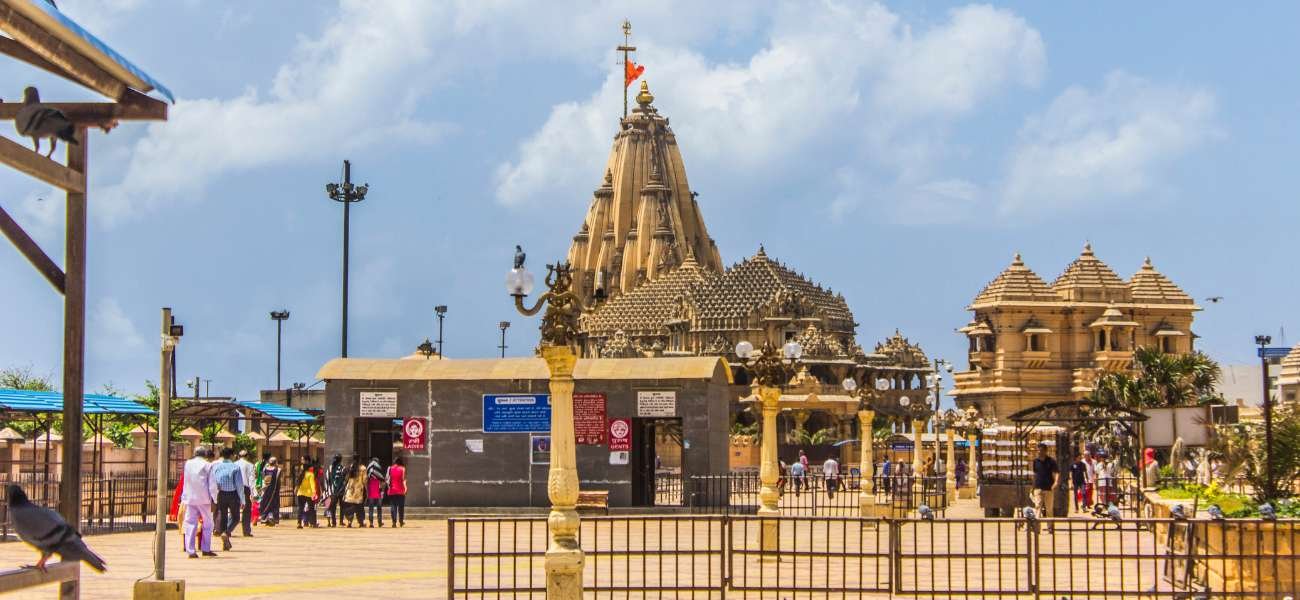
People talk a lot about Somnath Temple, and rightly so. But Triveni Sangam Ghat doesn’t compete with the temple. It complements it. If the temple feels powerful and structured, the sangam feels gentle and reflective. Together, they shape the Somnath experience.
If you are searching for somnath triveni sangam, you are probably looking for more than just a location. You want to know when to go, what actually happens there, and whether it’s worth spending time. This guide explains that, slowly and clearly.
Somnath First, Sangam Later – Why the Order Matters
Most people arrive in Somnath with one focus: darshan at the temple. Timings, queues, aarti. Everything revolves around that. And that’s fine.
But Triveni Sangam works best when you don’t rush into it. The sangam absorbs whatever pace you bring. If you come hurried, it feels like just another ghat. If you come after temple darshan, with your mind already quieter, it feels different.
That’s why many locals suggest visiting the sangam either early morning or after evening aarti at the temple.
About Triveni Sangam Somnath – History and Significance
The Triveni Sangam Somnath significance comes from the meeting of three rivers: Hiran, Kapila, and the mythical Saraswati. Whether you focus on belief or geography, the idea of convergence is central here.
For centuries, people have come here not just to bathe, but to pause. To let things settle. The sangam has always been associated with purification, remembrance, and closure. Many rituals related to ancestors are performed here quietly, without spectacle.
Unlike larger sangams that feel crowded and ceremonial, Triveni Sangam in Somnath feels personal. You can stand close to the water without being pushed. You can sit without being told to move.
Location and Access – Easy but Often Missed
- Location:
Close to Somnath Temple, walking distance from the main complex - Access:
Well-paved path, easy to reach on foot or by local transport
Many visitors skip it simply because no one insists that they go. That’s also why it feels less crowded.
Darshan and Visiting Timings – Clear and Practical
Triveni Sangam Ghat Visiting Time
- Open: 6:00 AM to 10:00 PM
There is no strict “darshan” here like a temple. You can visit, sit, or perform rituals anytime during these hours.
Early morning and evening are the most meaningful.
Somnath Temple Darshan & Aarti Timings (For Better Planning)
Since most visitors combine the temple and the sangam, knowing the temple timings helps.
Somnath Temple Darshan Timing
- Morning 6:00 AM to 10:00 PM
Somnath Temple Aarti Timings
- Morning (Mangala Aarti): 7:00 AM
- Noon (Rajbhog Aarti): 12:00 PM
- Evening (Sandhya Aarti): 7:00 PM
Light and Sound Show
- Time: 8:00 PM (daily, weather permitting)
Many people attend evening aarti, walk to Triveni Sangam afterward, and then return for the light and sound show. This flow feels natural and unhurried.
Triveni Sangam Ghat Aarti and Rituals – Quiet, Not Grand
Aarti at Triveni Sangam does not feel organised like a temple ritual. It feels collective.
Morning Aarti
- Time: 7:00 AM – 8:00 AM
This is when the ghat feels most peaceful. Fewer people. Softer light. The water reflects the morning sky, and rituals feel deeply personal.
Evening Aarti
- Time: 5:00 PM – 7:00 PM
This aarti blends into sunset. Lamps are lit. People stand silently. There’s no single focal point. Everyone finds their own moment.
Rituals at Triveni Sangam – Like Visiting Sacred Corners
Rituals here are not loud. They don’t draw attention.
Holy Dip
Some people take a brief dip. Others just touch the water. There is no pressure to do more.
Ancestral Rituals
Many families come here for pind daan and remembrance rituals. These happen quietly, without interruption.
Sitting by the Water
This is the most common ritual, even if people don’t call it that. Sitting. Watching. Letting thoughts slow down.

Best Time to Visit Triveni Sangam Somnath
Timing changes the experience completely.
Early Morning
- Least crowded
- Best for rituals and quiet sitting
Evening
- Gentle crowd
- Beautiful light
- Natural flow with temple aarti
Festival Days
- More people
- Still calmer than the main temple
If you want silence, mornings work best. If you want atmosphere, evenings are better.
Festivals at Triveni Sangam – Subtle but Meaningful
Festivals don’t overwhelm the sangam. They soften it.
Mahashivratri
Somnath is extremely crowded, but Triveni Sangam remains comparatively calm. Many people come here after temple darshan to regain balance.
Kartik Purnima
Early morning rituals increase. Lamps float on the water. The mood feels reflective.
Shraddh Periods
During these times, more families perform ancestral rituals. The ghat feels solemn, not heavy.
Places to Visit Near Triveni Sangam Somnath
The sangam fits well into a relaxed walking itinerary.
Somnath Temple
The spiritual centre. Powerful, structured, and emotionally intense.
Somnath Beach
Good for a quiet walk, especially early morning.
Bhalka Tirth
Associated with Lord Krishna’s final moments. Calm and reflective.
These places together create a balanced Somnath visit.
Things to Do Around Triveni Sangam
- Sit quietly without a goal
- Observe rituals without photographing
- Walk along the water’s edge
- Visit before or after temple aarti
This is not a place to “cover.” It’s a place to pause.
How to Reach Somnath Triveni Sangam
From Delhi
By Air:
- Nearest airport: Diu or Rajkot
- Continue by road
By Train:
- Somnath railway station is well connected
- Short auto or walk to the ghat
And By Car or Taxi:
- Good road connectivity from major Gujarat cities
Local transport within Somnath is simple and manageable.
Quiet planning support from Somnath Dwarka Tour Package often helps travellers align temple aarti, sangam visit, and evening activities without rushing the day.
FAQs – Somnath Triveni Sangam Ghat
Q1. What is the best time to visit Triveni Sangam Somnath?
Early morning or evening.
Q2. Is there any entry fee?
No, entry is free.
Q3. Can rituals be performed here?
Yes, especially ancestral rituals.
Q4. Is Triveni Sangam crowded like Somnath Temple?
No, it is much calmer.
Q5. How far is it from Somnath Temple?
Walking distance.
Q6. Is evening aarti worth attending?
Yes, if you prefer a quiet experience.
Q7. Can older citizens visit comfortably?
Yes, access is easy.
Q8. Is photography allowed?
Yes, but discretion is advised.
Q9. Do festival days change timings?
Not significantly, but crowds increase.
Q10. Is one visit enough?
Many people return during the same trip.
Some places give you answers.
Somnath Triveni Sangam gives you space.
And sometimes, space is exactly what stays with you long after the journey ends.