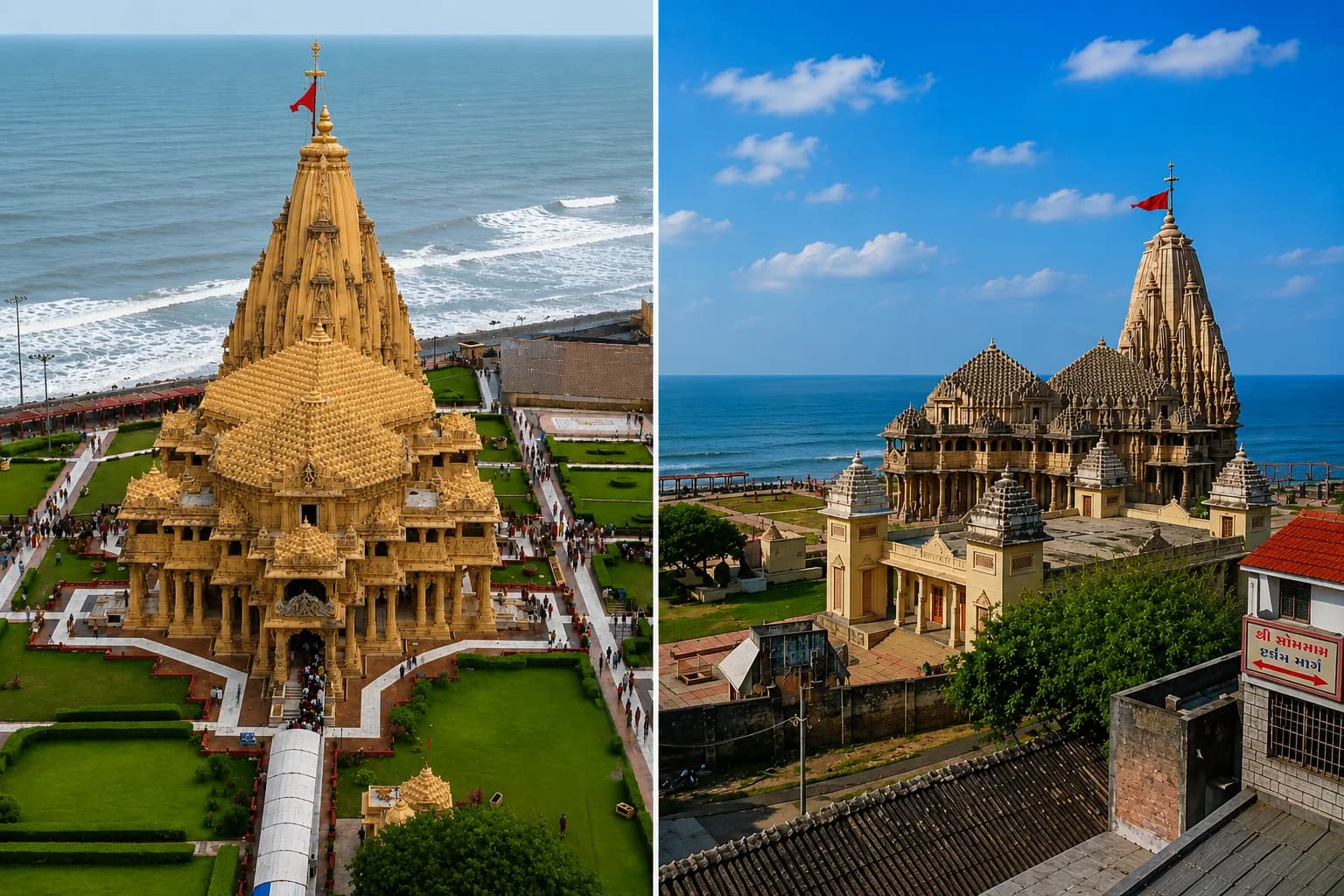
Jyotirlinga in Dwarka & the History of the Dwarkadhish Temple
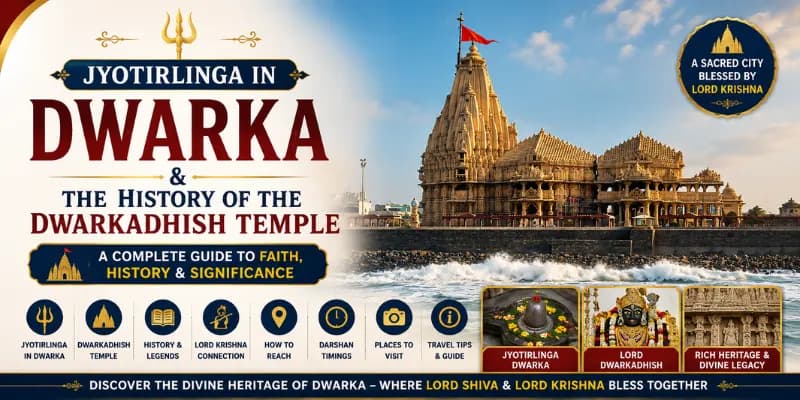
There is no Shiva Jyotirlinga inside Dwarka itself, because Dwarka's great temple, the Dwarkadhish or Jagat Mandir, is dedicated to Lord Krishna, not Shiva. The Jyotirlinga near Dwarka is Nageshwar, about 17 km away, one of the twelve Jyotirlingas. Dwarka is Krishna's ancient city, and its Dwarkadhish Temple is traditionally said to have been built by Krishna's great-grandson Vajranabha over the site of Krishna's own residence.
A lot of pilgrims arrive expecting a Jyotirlinga in Dwarka and are surprised to learn the city's temple is a Krishna shrine, not a Shiva one. I was born in Dwarka and have answered this question countless times, so this guide clears it up and then tells the real story: the long, remarkable history of Dwarka and its temple. To walk this history yourself, our Somnath Dwarka Tour Package from Experience My India covers both Dwarka and the Nageshwar Jyotirlinga.
Is there a Jyotirlinga in Dwarka?
No, there is no Jyotirlinga in Dwarka city. Dwarka's famous temple is the Dwarkadhish (Jagat Mandir), a Vaishnava temple where Krishna is worshipped as Dwarkadhish, the King of Dwarka and a Jyotirlinga is a shrine of Lord Shiva, so the two are different. The Jyotirlinga associated with the Dwarka area is Nageshwar Jyotirlinga, about 17 km from the city on the road to Bet Dwarka and it is one of the twelve Jyotirlingas of Lord Shiva. So a full Dwarka pilgrimage usually means both: Krishna at Dwarkadhish and Shiva at Nageshwar.
The history of Dwarka: Lord Krishna's city
Dwarka's story begins with Lord Krishna. By tradition, he left Mathura to escape the repeated attacks of Jarasandha, the king of Magadha and travelled west to the Saurashtra coast, where he founded a magnificent capital on land said to have been reclaimed from the sea. That city, mentioned in the Mahabharata as the Dwaraka Kingdom, became his home for the rest of his earthly life. For the wider picture of the city today, see our Dwarka city guide.
Who built the Dwarkadhish Temple?
By tradition, the original Dwarkadhish Temple was built by Vajranabha, the great-grandson of Lord Krishna, over the Hari-Griha, the residential place of Krishna himself. This is why the temple is regarded as standing on the very ground where the Lord once lived. On the question of age, faith and archaeology give slightly different answers: tradition places the first temple around 2,500 years ago, while archaeological study of the main shrine, the five-storey Jagat Mandir supported by 72 pillars, dates it to roughly 2,000 to 2,200 years old. The temple is built in the Chalukya style from limestone and sandstone and its 43 metre spire flies a flag that is changed several times a day.
The Dwarkadhish Temple through the centuries
Like Somnath, Dwarka's temple has a long history of damage and renewal:
In the 8th century, the great philosopher Adi Shankaracharya visited Dwarka, established the Sharada Peeth, one of the four cardinal mathas of Hinduism and renovated the temple. In 1241, an invasion damaged the shrine and five Brahmins who died defending it are remembered as the Panch Pir. In 1472, the Gujarat Sultan Mahmud Begada attacked Dwarka and destroyed the temple; historians note the port was targeted partly because it sheltered pirates, but the campaign also razed its temples. The Dwarkadhish was rebuilt and enlarged by the rulers of Gujarat in the 15th and 16th centuries, giving the temple much of the form seen today and in 1958 the Gaekwad of Baroda added a golden pinnacle to the spire. These are matters of documented history, distinct from the temple's legendary origins.
The submerged Dwarka: legend and archaeology
One of Dwarka's most famous beliefs is that the original city sank beneath the sea. By tradition, after Krishna left the earth and the Yadava clan perished, the sea reclaimed Dwarka and it is said to have submerged and risen several times, so that today's town is the latest of many Dwarkas. Marine archaeologists have indeed found submerged stone structures, walls and ancient anchors off the coast near Dwarka and Bet Dwarka and divers can see some of them. It is important to be honest here: these underwater finds are real, but scholars still debate their age and whether they are the mythical golden city of Krishna, with some dating parts to later historical periods and pointing to coastal erosion. The legend and the archaeology overlap, but they are not the same thing and the guide's job is to tell you both.
Dwarka today
The Dwarka you visit now is a living pilgrimage centre: one of the four Char Dham and seven Sapta Puri, seat of the Sharada Peeth and a Pushtimarg temple following the traditions of Vallabhacharya. Krishna's departure from here links Dwarka to the Somnath coast, where the history of the Somnath temple carries a similar tale of destruction and rebuilding. To plan your darshan, see the Dwarkadhish temple darshan timings.
Visit Dwarka with Experience My India
If this history draws you, standing in the Jagat Mandir is unforgettable. Tell us your dates and we will plan Dwarkadhish, Nageshwar and the nearby sites for you. Message us on WhatsApp at +91 73006 20809 or call +91 73006 20809. For more, read our full Dwarka travel guide.

Harsh Rawat
Somnath–Dwarka circuit planning
Harsh Rawat runs Somnath Dwarka Tour Package on the ground in Gujarat, part of Experience My India. Since 2018 he has been planning and driving the Somnath–Dwarka circuit — the darshan timings, the road hours between temples and the stops worth adding — and the routes, fares and timings published across this site are the ones he maintains.