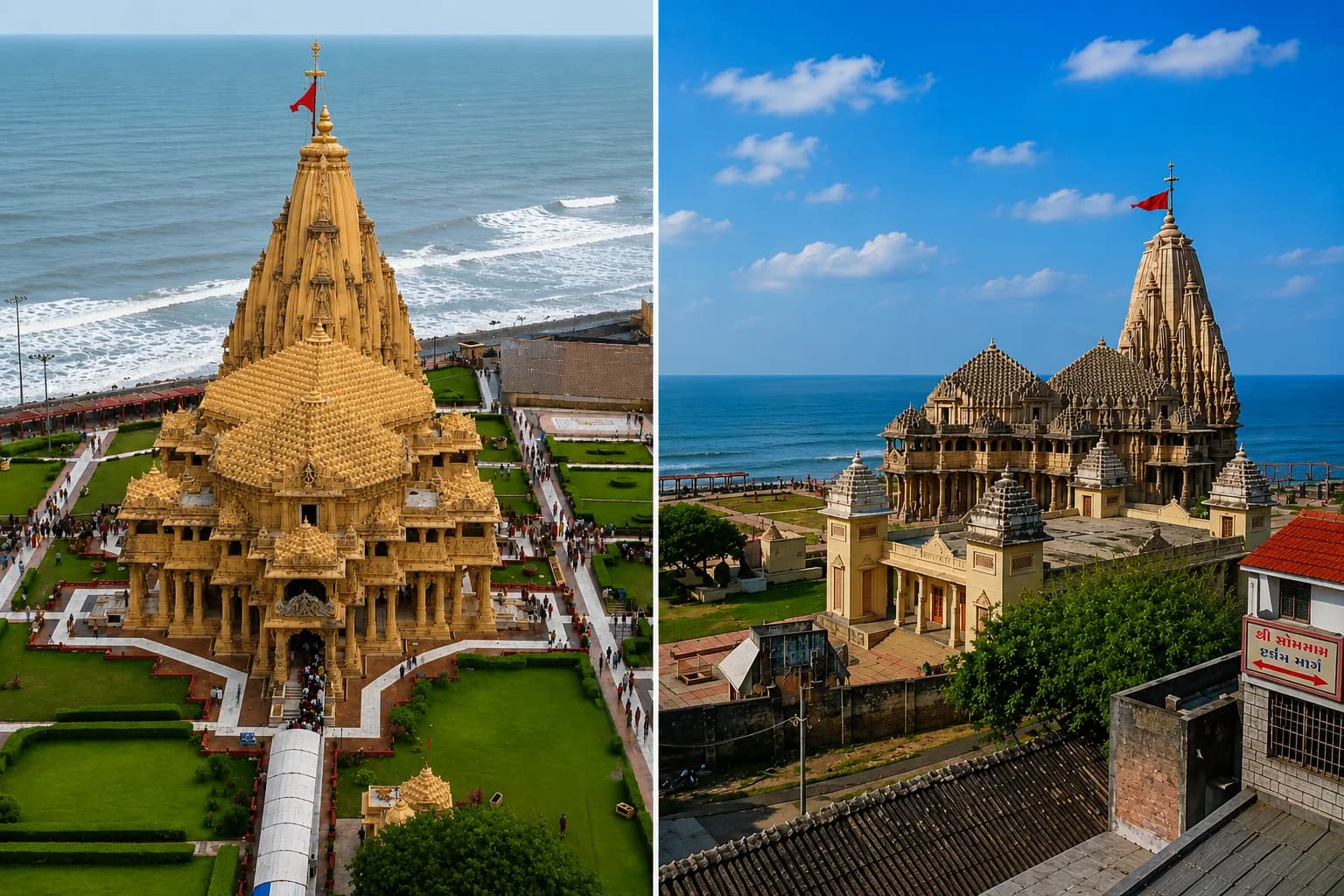
Famous Food of Gujarat: A Local Guide to Gujarati Cuisine
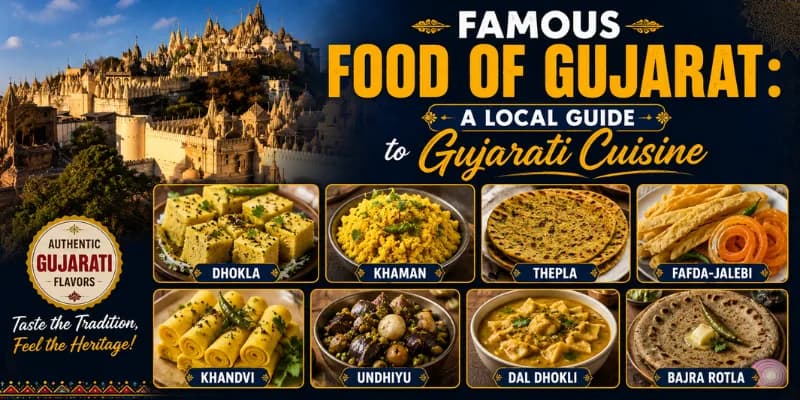
The famous food of Gujarat is largely vegetarian and balances sweet, salty and spicy flavours. The star is the Gujarati thali, alongside dhokla, khaman, thepla, fafda-jalebi, undhiyu and khandvi, with sweets like mohanthal and basundi. Experience My India makes an authentic thali part of every Saurashtra trip.
I am Harsh Rawat, born and raised in Gujarat and food is one of the things I love showing travellers as much as the temples. Gujarati cuisine is one of India's great vegetarian traditions and it surprises first-timers with how much variety, how much crunch and how much gentle sweetness it carries. I plan these trips for the Somnath Dwarka Tour Package team, a unit of Experience My India. This is a full local's guide to the food of Gujarat: what defines the cuisine, the legendary thali, the must-try dishes, the farsan snacks, the sweets, the drinks, the festival foods and the four regional cuisines that make it all so varied. By the end you will know exactly what to order and where.
Want an authentic thali on your trip? Message me on WhatsApp for a food-and-temple plan or call +91 73006 20809.
What Makes Gujarati Cuisine Special
Two things define the food of Gujarat. First, it is overwhelmingly vegetarian, shaped by the strong Jain and Hindu emphasis on ahimsa or non-violence, so generations of cooks have poured their creativity into lentils, vegetables, flours, dairy and spices rather than meat. The result is a vegetarian cuisine with more range than many meat-eating traditions. Second, it balances sweet, salty, spicy and sour in almost every dish, often with a small amount of jaggery or sugar that gives Gujarati food its signature, gentle sweetness. This surprises visitors from other states, but it is deliberate and delicious once you understand it.
Cooks lean on tomato, lemon, sugar and yogurt and locals will tell you these ingredients also help the body cope with the hot, dry climate for much of the year. Ghee is used generously and a Kathiawadi kitchen will reach for a fiery garlic, red chilli and salt chutney that cuts straight through the sweetness. The overall effect is subtle and layered, built on contrast: crisp against soft, sweet against spicy, rich against tangy. Understand that balance and you understand Gujarati food.
The Gujarati Thali: The Heart of It All
If you try one thing in Gujarat, make it a thali. It is a large platter of many small bowls, usually unlimited, built to deliver every flavour and texture at once and it is the single best way to understand the whole cuisine in one sitting. Servers move around the hall topping up whatever you finish and a good host is genuinely happy only when your plate keeps getting refilled.
A typical Gujarati thali carries rotli or thin chapati, a dal or a yogurt-based kadhi, rice or khichdi, one or two shaak (vegetable curries, which may be sweet or spicy), a kathol (braised pulses or whole beans such as moong or black-eyed beans), a farsan (a steamed or fried snack), a yogurt dish such as raita or sweet shrikhand and a sweet, all rounded out with chutneys, pickles, papad and ghee. The magic is in the detail: coarse next to smooth, dry next to wet and colours from turmeric yellow to tomato red to leafy green on a single plate. Eating a thali is less a meal than a guided tour of Gujarat.
Famous Food of Gujarat You Must Try
Beyond the thali, these are the dishes that define Gujarat, from everyday plates to seasonal specials that appear only for a few weeks a year.
Dish | What it is |
Dhokla | Soft, steamed, faintly sweet chickpea-flour cake, tempered with mustard seeds and curry leaves |
Khaman | Fluffier, brighter yellow gram-flour cousin of dhokla, spongy, light and slightly sweet |
Thepla | Soft spiced flatbread of wheat and fenugreek, the great Gujarati travel food |
Fafda-Jalebi | Crisp savoury fafda with chutney and chilli, paired with hot sweet jalebi, the classic breakfast |
Khandvi | Delicate rolled gram-flour and yogurt strips, silky, tangy and tempered with mustard |
Undhiyu | Rich winter medley of roasted vegetables and muthiya, a January and Uttarayan special |
Handvo | Savoury baked lentil and rice cake with a crisp crust, often studded with bottle gourd |
Dal Dhokli | Wheat dumplings simmered in sweet-tangy dal, pure comfort food in a bowl |
Sev Tameta | Tangy tomato curry topped with crunchy sev, a Kathiawadi staple |
Bajra Rotla | Rustic millet flatbread with garlic chutney, jaggery and ghee, Kathiawadi soul food |
Each of these can be a light snack, a side or the centre of a meal and most appear somewhere on a good thali. If you are eating your way across the state, treat this table as your checklist and tick them off region by region.
Farsan: Gujarat's Legendary Snacks
Farsan is the Gujarati word for the vast family of snacks eaten between meals, with tea or as part of a thali and no state in India does them better. Beyond dhokla and khaman you will find khandvi, crisp fafda and ganthiya, patra (spiced colocasia-leaf rolls, sliced and tempered), steamed muthiya, dhokla's fried cousin the vada and in South Gujarat the soft, tangy locho eaten with butter and sev. Farsan is the everyday face of Gujarati eating, sold from dedicated farsan marts where families buy it by weight every evening. Pair any of it with a cup of masala chai and a spoon of green or garlic chutney and you have the true taste of a Gujarati afternoon.
Gujarati Sweets and Mithai
Sweetness runs quietly through the whole cuisine, so the dedicated sweets are something special. Look for mohanthal, a dense, fudgy gram-flour sweet perfumed with cardamom; basundi, thickened sweet milk simmered for hours; shrikhand, strained sweetened yogurt often flavoured with saffron and cardamom and eaten with hot puri; doodhpak, a creamy rice pudding; lapsi, sweet broken-wheat porridge served at auspicious occasions; and the world-famous ghari of Surat, a rich mawa-filled disc eaten during the Chandani Padvo festival. Jalebi appears at breakfast and at festivals alike. Many of these sweets double as prasad and as celebration food, so you will meet them at temples as often as at the table.
Drinks and the Everyday Table
On this hot coast, a cold drink in hand is almost compulsory. Chaas, the salted and spiced buttermilk, is the everyday go-to and is offered freely at most thali meals, said to aid digestion and cool the body. Sweet lassi and fresh sugarcane juice are close behind and in summer aamras, sweet mango pulp eaten with hot puri, becomes a meal in itself. Masala chai punctuates the day. None of it is fancy and all of it is part of why eating in Gujarat feels so generous.
The Four Regional Cuisines of Gujarat
Gujarat is really four food regions and knowing them helps you eat well wherever you travel. The same dish can change character completely from one region to the next.
North Gujarat: the home of the classic thali and a huge range of farsan, from khaman to kachori. Cooking here uses buttermilk and less water and Ahmedabad is widely seen as the heart of Gujarati cuisine.
Junagadh, Somnath and Dwarka, so it is the food you will meet most on a pilgrimage trip.
Kutch: hardy desert food built on bajra and dabeli, the sweet-spicy stuffed bun that has spread across the whole state, plus distinctive breads and dairy.
South Gujarat or Surti: richer and more indulgent, known for undhiyu, locho, Surti khaman, the mawa sweet ghari and the winter treat ponk, tender roasted green millet sold only for a few weeks.
Festival and Seasonal Foods
Much of Gujarat's best eating is tied to the calendar. Undhiyu belongs to winter and the Uttarayan kite festival in January, when families gather on terraces. Ponk appears only in the coldest weeks in the Surat region. Aamras arrives with the summer mangoes. During Navratri, the nine nights of garba, many Gujaratis eat special fasting foods such as sabudana and farali dishes. Diwali brings a flood of mithai and namkeen. If your trip lands near a festival, ask what is in season, because the seasonal specials are often the finest food the state offers.
Where to Eat Gujarati Food on a Somnath Dwarka Trip
The good news for pilgrims is that Somnath and Dwarka both sit in the Kathiawadi heartland, so authentic thalis and farsan are everywhere. For the full experience, find a busy bhojanalaya or thali hall at lunch, when the food is freshest and the refills are unlimited and graze on street farsan and sweets in the temple bazaars by evening. See our places to visit in Dwarka to plan the sightseeing around the eating and if you are staying over, our where to stay options keep you near the good kitchens.
Want the food built into your trip? The Experience My India Somnath Dwarka tour packages include authentic Gujarati thali meals along the route.
How I Introduce Guests to Gujarati Food
First-timers often expect the food to be plain because it is vegetarian and the sweetness catches them off guard, so I ease people in. I start them with a thali at lunch, when you can taste twenty things in small doses and quickly find what you love, then send them for fafda-jalebi one morning and a plate of hot khaman another. By the second day they are asking for extra garlic chutney with their bajra rotla like a local. My one rule is simple: come hungry and let the thali be unlimited, because that generosity is the whole point. Sharing that welcome is a big part of what Experience My India means by hospitality and a private cab for the trip means your driver can point you to the thali halls locals actually eat at, not just the tourist ones.
Taste the real Gujarat with a local by your side
Chat on WhatsApp Call +91 73006 20809

Harsh Rawat
Somnath–Dwarka circuit planning
Harsh Rawat runs Somnath Dwarka Tour Package on the ground in Gujarat, part of Experience My India. Since 2018 he has been planning and driving the Somnath–Dwarka circuit — the darshan timings, the road hours between temples and the stops worth adding — and the routes, fares and timings published across this site are the ones he maintains.