Pind Daan at Triveni Sangam Somnath: Rituals, Timing and What to Expect
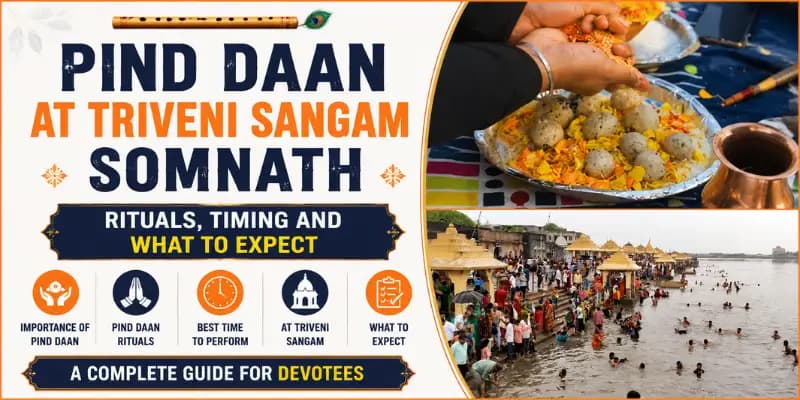
Pind daan at Triveni Sangam Somnath is the offering of rice pindas and sesame-water tarpan for ancestors, performed by local priests at the confluence of the Hiran, Kapila and Saraswati. It is most auspicious during Pitru Paksha and on amavasya. Experience My India can arrange the priest and timing.
I am Harsh Rawat, born in Dwarka and a guide on this coast for more than 8 years and I have quietly helped many families arrange these rites at the sangam. It is one of the most personal reasons people come to Somnath. I look after this for the Somnath Dwarka Tour Package team, the pilgrimage unit of Experience My India. If you want the meaning and location of the confluence itself, our Triveni Sangam Somnath guide covers that. This page is about the ancestral rites: what they are, when to do them and what to expect on the day.
Need a priest and the right muhurat arranged? Message me on WhatsApp or call +91 73006 20809 and I will set it up.
What Is Pind Daan at Triveni Sangam Somnath?
Pind daan is the offering of pindas, small balls of rice and barley flour, as symbolic nourishment to departed ancestors. At Somnath it is performed on the banks of the Triveni Sangam, where the Hiran, the Kapila and the mythical Saraswati meet and flow into the sea. By long tradition, offerings made at this confluence are believed to reach the ancestors directly and bring peace to souls that have not yet found rest. Because Somnath is also linked to Lord Krishna leaving his earthly form nearby, the sangam carries a particular association with closure and release, which is why so many families choose it for these rites.
The Rituals: Pind Daan, Tarpan and Shraddha
Three related rites are usually spoken of together and a priest will guide you through whichever your family needs.
Pind daan: offering the rice pindas to ancestors, the central act of nourishment and remembrance.
Tarpan: offering water mixed with black sesame or til, along with mantras, addressing the ancestors by name and gotra.
Shraddha: the fuller ceremony of faith that frames the offerings, often completed with anna-dana, the feeding of priests or the needy and dakshina to the priest.
When to Perform: Pitru Paksha, Amavasya and Best Days
The most auspicious time is Pitru Paksha, the fortnight dedicated to ancestors that ends on Sarva Pitru Amavasya, usually falling between September and October. The exact tithi shifts each year, so confirm the year's dates before you travel. Beyond that fortnight, a monthly amavasya and the death anniversary tithi are also observed and Kartik Purnima draws many to the Triveni Sangam ghat and aarti timings for prayers. Early morning, after a dip and before the heat, is the traditional and calmest time to perform the rites.
Ancestral Rites at Triveni Sangam at a Glance
Rite | What it is | When |
Pind daan | Offering rice pindas to ancestors | Pitru Paksha, amavasya |
Tarpan | Sesame-water offering with mantras | Daily and on tithis |
Shraddha | Full ceremony with anna-dana | Death tithi, Pitru Paksha |
Tripindi Shraddha | Three pindas for three generations, for Pitru Dosh | Shraddh Paksha |
Asthi Visarjan | Immersion of ashes in the confluence | After cremation |
How the Ceremony Works
On the day, you meet your priest at the ghat, ideally in the early morning. After a purifying dip in the sangam, the priest begins with a sankalp, a formal statement of intent naming you, your family and the ancestors by name and gotra. The pindas are prepared and offered, tarpan is poured with til and water and mantras are chanted throughout. The rites usually close with a small dakshina to the priest and, where the family wishes, anna-dana. A guided ceremony is unhurried and takes an hour or more. It helps to arrange the priest in advance so the muhurat is right, which is something Experience My India handles as part of a one-day Somnath tour.
Special Rites for Pitru Dosh
Some families come specifically to address Pitru Dosh, the belief that unsettled ancestors can bring recurring difficulty in health, career or marriage. For this, priests may recommend Tripindi Shraddha, which offers three pindas for three generations of ancestors or Narayan Bali for souls believed to have met an untimely end. These are specialised ceremonies with their own vidhi, so discuss your situation openly with a qualified priest, who will advise what is appropriate rather than prescribing everything to everyone.
Practical Tips for the Day
Go early. The morning is cooler, calmer and traditional for these rites.
Carry cash. Priest dakshina and offerings are handled in cash, so keep small notes.
Dress simply. Modest, light cotton is best, with a change of clothes if you plan to take a dip.
Use a known priest. Arrange one in advance rather than choosing on the spot and plan your darshan around the current Somnath temple timings.
Get there easily. A private cab for the morning lets you carry offerings and reach the ghat before the crowd.
A Word on Doing This With Care
These are not sightseeing rites and I never treat them like an item on a list. When families ask me to arrange pind daan at the sangam, I match them with a priest who explains each step in a language they understand, I keep the morning free of any rush and I let the sea and the confluence hold the moment. Many people arrive carrying grief and leave feeling lighter, which is the whole purpose of the place. If you would like it arranged with that kind of care, our team plans it quietly around your Somnath darshan and Experience My India keeps the details off your shoulders so you can simply be present.
Arrange ancestral rites at the sangam with care
Chat on WhatsApp Call +91 73006 20809

Harsh Rawat
Somnath–Dwarka circuit planning
Harsh Rawat runs Somnath Dwarka Tour Package on the ground in Gujarat, part of Experience My India. Since 2018 he has been planning and driving the Somnath–Dwarka circuit — the darshan timings, the road hours between temples and the stops worth adding — and the routes, fares and timings published across this site are the ones he maintains.