Somnath Temple Dress Code: What to Wear and What to Avoid
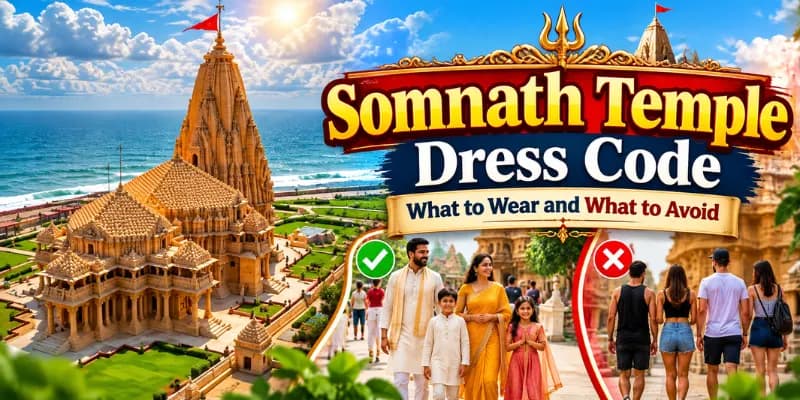
Somnath temple has a modest dress code rather than a strict one. Cover your shoulders and knees: sarees, salwar kameez, kurta-pajama, trousers, t-shirts and jeans are all fine, while shorts, mini-skirts and revealing clothes are not allowed. Mobiles are banned inside. Experience My India guides pilgrims on the rules.
I am Harsh Rawat, born in Dwarka and a guide on this coast for more than 8 years and this is one of the most common questions I am asked before a visit. People worry they will be turned away for wearing the wrong thing, so let me set your mind at ease with the real, current rules. I guide pilgrims for the Somnath Dwarka Tour Package team, the pilgrimage unit of Experience My India. This guide covers exactly what to wear at the Somnath Jyotirlinga temple, what to avoid, the rules for men, women and children and the other entry rules that trip up first-timers, like the ban on phones inside.
Planning your Somnath darshan? Message me on WhatsApp for darshan and dress-code help or call +91 73006 20809.
Is There a Strict Dress Code at Somnath Temple?
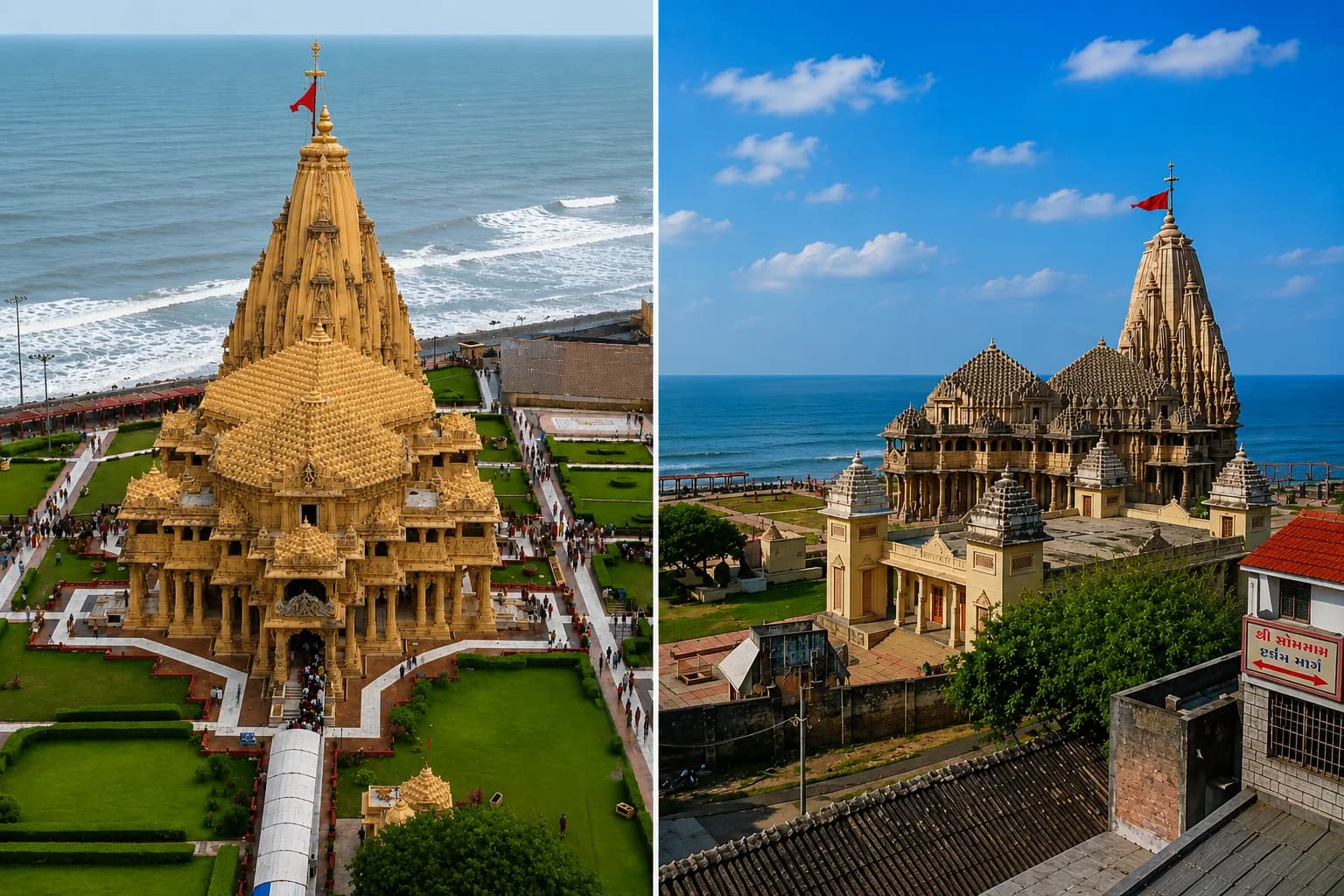
The honest answer is that Somnath is moderate, not severe. Unlike some South Indian temples that require traditional dress only, the Shree Somnath Trust follows general temple norms: dress modestly and respectfully. Its own guidance permits Indian sarees, dhotis, trousers, t-shirts and even jeans, while mini-skirts and disrespectful or revealing outfits are not allowed. A notice near the security counter, a short walk before the main temple, reminds visitors to avoid improper dress. Because Somnath sits right beside a popular beach, guards do keep an eye out for beachwear, so a little care saves you any awkwardness at the gate.
In short, you do not need to rush out and buy traditional clothes. If you would dress respectfully for any place of worship, covering shoulders and knees and avoiding anything skimpy, you will be perfectly fine. Wearing traditional Indian attire is welcome and adds to the experience, but it is not compulsory.
Somnath Temple Dress Code at a Glance
Allowed and welcome | Best avoided |
Saree, salwar kameez, chudidar | Shorts and half-pants |
Kurta-pajama, dhoti | Mini-skirts and short dresses |
Full-length trousers and jeans | Ripped or torn jeans |
T-shirt or shirt with sleeves | Sleeveless or low-cut tops |
Long skirt with a modest top | Tight or revealing clothing |
A dupatta or shawl to cover shoulders | Swimwear and beachwear |
Dress Code for Men
For men, the simplest respectful choice is traditional Indian wear, a kurta-pajama or a dhoti, which suits the setting beautifully. If you prefer Western clothing, full-length trousers or jeans with a t-shirt or shirt are completely acceptable. The one thing to avoid is shorts or half-pants, which are the most common reason men get stopped at the gate. Sleeveless vests are also best skipped. If you do arrive in shorts, guards may ask you to cover up and at times a dhoti is offered at the entrance so you can proceed. Save the shorts for the beach afterward.
Dress Code for Women
For women, the guiding principle is to cover the shoulders and the knees. A saree, a salwar kameez or a chudidar is ideal and always welcome. A long skirt with a modest top or trousers or jeans with a long kurti, works well too. It helps to carry a dupatta or a light shawl to drape over the shoulders as a mark of respect and to cover up quickly if needed. Avoid mini-skirts, short dresses, sleeveless or low-cut tops and tight or sheer clothing. None of this requires anything elaborate; comfortable, modest clothing is all that is expected.
Dress Code for Children
Children are treated gently and there is no rigid rule for young ones, but it is wise to dress them modestly too, in simple covered clothing rather than very short or sleeveless outfits, to avoid any hesitation at the gate. For teenagers, the same guidance as adults applies. Dressing the whole family in comfortable, respectful clothing keeps the darshan smooth for everyone.
What Is Not Allowed
Shorts, half-pants, mini-skirts and short dresses.
Ripped or torn jeans and tight, sheer or revealing clothing.
Sleeveless vests and low-cut or off-shoulder tops.
Swimwear or beachwear worn straight from the nearby beach.
If you turn up in any of these, you will usually be asked to cover up rather than turned away outright, but it is far more pleasant to arrive dressed appropriately and walk straight in.
Other Entry Rules You Must Know
The dress code is only half the story. A few other rules catch first-timers by surprise and knowing them makes your visit effortless. Most importantly, all electronic devices, including mobile phones, cameras, tablets and smart watches, are strictly prohibited inside the temple, so plan to leave them in the free cloak-room lockers near the entrance. Footwear must be removed and left at the free shoe house and belts and leather items are sometimes restricted, so travel light. Alcohol, non-vegetarian food and smoking are not permitted anywhere in the temple vicinity. Since you cannot carry a phone, check the Somnath temple timings and the aarti timings before you go in and agree a meeting point with your group.
What to Wear for the Beach and Nearby Sites
Somnath beach sits right beside the temple and the dress code there is relaxed, so beach clothing is fine by the water. The trick is to cover up again before walking back toward the temple or the market, out of respect for the sacred setting. The other nearby sites, such as the Triveni Sangam, Gita Mandir and Bhalka Tirth, are all places of pilgrimage, so keep to the same modest dress there as at the main temple. A light cotton outfit with a shawl handles both the shrines and the coastal weather nicely.
Practical Tips for a Comfortable Visit
Choose light cotton clothing. The coast is warm for much of the year and cotton keeps you cool through queues and aartis.
Wear slip-on footwear. You will remove your shoes at the shoe house, so sandals or easy slip-ons save fuss.
Carry a dupatta or shawl. It covers shoulders instantly and doubles as sun protection near the sea.
Dress a little warmer for the early morning aarti in winter, when the sea breeze can be cool.
Plan your day so you do the beach after darshan, not before and a private cab lets you leave bags and beach things in the vehicle.
Dress Code at Nearby Temples
If your trip includes Dwarka, the same modest approach applies at the Dwarkadhish temple, which follows similar norms. It is worth planning your outfits for the whole circuit at once, since you will be moving between several shrines. Our Dwarkadhish darshan guide covers that end and the broader things to do in Somnath guide helps you plan around the temple visit.
What I Tell My Travellers
My advice is simple and it never fails: dress as you would for a respectful family occasion, cover your shoulders and knees and keep a shawl handy. In more than eight years of guiding, I have almost never seen a properly, modestly dressed visitor have any trouble at Somnath. The people who get stopped are the ones who wander over straight from the beach in shorts and swimwear. Sort your clothing out before you reach the temple, leave your phone in the locker without stress and you can give your full attention to the Jyotirlinga and the evening aarti, which is the whole reason you came. Making that experience smooth and worry-free is exactly what Experience My India is here for. If you are staying nearby, our where to stay options let you change and freshen up close to the temple.
Plan a smooth, respectful Somnath darshan
Chat on WhatsApp Call +91 73006 20809

Harsh Rawat
Somnath–Dwarka circuit planning
Harsh Rawat runs Somnath Dwarka Tour Package on the ground in Gujarat, part of Experience My India. Since 2018 he has been planning and driving the Somnath–Dwarka circuit — the darshan timings, the road hours between temples and the stops worth adding — and the routes, fares and timings published across this site are the ones he maintains.