Sun Temple Somnath (Suraj Mandir): Timings, History and What to See
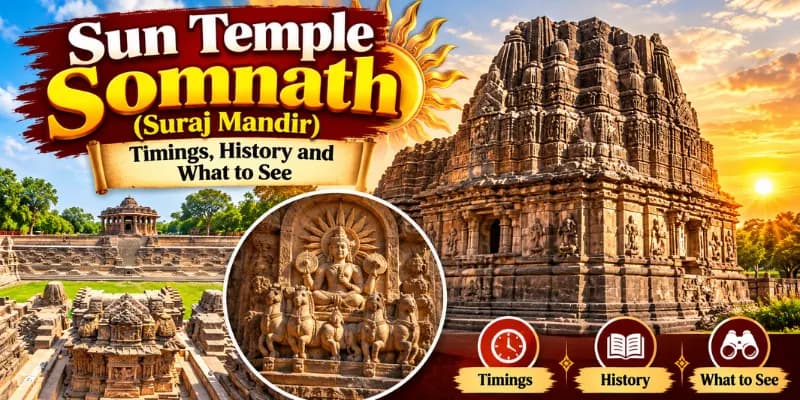
The Suraj Mandir, or Sun Temple, is an ancient 14th-century Hindu temple dedicated to the Sun God, located just north of Triveni Ghat in Prabhas Patan, Somnath. It is open daily from 6:00 AM to 8:00 PM and sits right next to the Panch Pandav Gufa. Experience My India can add it to your Somnath sightseeing plan.
What Is the Suraj Mandir (Sun Temple) in Somnath?
The Suraj Mandir, also known as the Surya Mandir, is an ancient 14th-century Hindu temple dedicated to the Sun God, located just north of Triveni Ghat in Prabhas Patan, Somnath. I am Harsh Rawat, born on this coast and guiding it for more than 8 years and this is one of the quiet gems I love showing guests on the Somnath Dwarka Tour Package. Most visitors rush straight to the Jyotirlinga and never discover this weathered, beautiful Surya temple a short walk away.
The main idols here are Surya Dev, the Sun God and his consort Chaya Devi. The temple is small compared with the great Somnath shrine, but its carvings and its age make it one of the most atmospheric stops in the whole Prabhas Patan area.
Want this hidden Sun Temple added to your Somnath day? Message me on WhatsApp or call +91 73006 20809 and I will build a walking route around Prabhas Patan. |
Sun Temple Somnath at a Glance
Detail | Information |
Also known as | Surya Mandir, Suraj Mandir, Sun Temple |
Deities | Surya Dev (the Sun God) and Chaya Devi |
Timings | Open daily, 6:00 AM to 8:00 PM |
Location | Just north of Triveni Ghat, Prabhas Patan, Somnath, next to Panch Pandav Gufa |
Built | Current stone structure around the 14th century |
Architecture | Traditional Solanki (Chaulukya) style |
Attached feature | Surya Kund, an old traditional stepwell |
History and Legends of the Sun Temple
The origins of the Suraj Mandir reach back to the early history of the original Somnath Temple itself, which makes it one of the oldest sacred sites in Prabhas Patan. Over the centuries it was rebuilt in stone and the structure you see today dates to around the 14th century.
The Pandava legend
Hindu epics and local belief hold that the Pandavas prayed to Lord Surya here during their agyatvas, the period of exile when they lived in disguise. That connection is why the temple sits right beside the Panch Pandav Gufa, the caves linked to the Pandavas and why pilgrims treat the whole corner of Prabhas Patan as a single Mahabharata-era cluster.
Solanki architecture
The current building uses the traditional Solanki or Chaulukya, architectural style, the same tradition that gave Gujarat its finest stepwells and temples. Even in its weathered state, the proportions and the stonework show the hand of that golden age of Gujarati temple building.
Architectural Highlights to Look For
For a small temple, the Suraj Mandir rewards a slow, careful look. Here is what I always point out to guests.
Outer wall carvings: the exterior is covered in detailed stone carvings of elephants, lions, birds and floral patterns.
The entrance image: above the main doorway, look for the carving of Surya riding his chariot drawn by seven horses, flanked by his two wives.
Wall niches: the passage around the inner shrine has carved stone niches showing other major deities, including Vishnu with Lakshmi, Brahma with Saraswati and Shiva with Parvati.
The Surya Kund: an old traditional stepwell is attached directly to the temple complex, once used for ritual water.
The seven-horse chariot above the door is the detail worth travelling for. It is the classic iconography of Surya and seeing it carved in weathered stone, still clear after centuries, is a quiet thrill.
Love old temples and carvings? Tell me on WhatsApp and I will plan a heritage walk through Prabhas Patan around the Sun Temple. |
Where It Is and What to Combine It With
The Sun Temple sits in an old neighbourhood of Prabhas Patan, just north of the Triveni Sangam, the sacred confluence where three rivers meet the sea. Its position makes it easy to fold into a half day around the main temple.
Right beside it is the Panch Pandav Gufa, the Pandava caves, so the two are always seen together. A short distance away, the Prabhas Patan Museum holds carved fragments from old Somnath temples and makes a natural next stop for anyone interested in the history.
For the full list of what to see in the area, our guide to the sightseeing places in Somnath maps out how the Sun Temple, the Sangam and the caves fit together with the Jyotirlinga.
What I Tell Every Guest About the Sun Temple
After 8 years and more than fifty thousand travellers, I will be honest: the Suraj Mandir is not a grand, polished monument and if you want only the big famous shrine you can skip it. But if you love the quiet, old, lived-in corners of a pilgrimage town, this is the place I most want to show you. It is usually empty, the light through the carvings in the early morning is lovely and you can stand with the stone chariot of the Sun to yourself.
Go early, around opening at 6:00 AM, when the Triveni area is calm and the morning sun catches the eastern face of the temple. Pair it with the Panch Pandav Gufa next door and a walk to the Sangam and you have a gentle, meaningful hour that most Somnath visitors never experience. That contrast, the giant Jyotirlinga and this hushed little Sun Temple, is what makes Prabhas Patan so special.
Plan Your Somnath Sightseeing
Want to see the hidden side of Somnath? I will fold the Sun Temple, the Pandava caves and the Triveni Sangam into your darshan with transport and timing handled. See our 3 Days Somnath Dwarka Tour Package or message your dates on WhatsApp or call +91 73006 20809. |

Harsh Rawat
Somnath–Dwarka circuit planning
Harsh Rawat runs Somnath Dwarka Tour Package on the ground in Gujarat, part of Experience My India. Since 2018 he has been planning and driving the Somnath–Dwarka circuit — the darshan timings, the road hours between temples and the stops worth adding — and the routes, fares and timings published across this site are the ones he maintains.