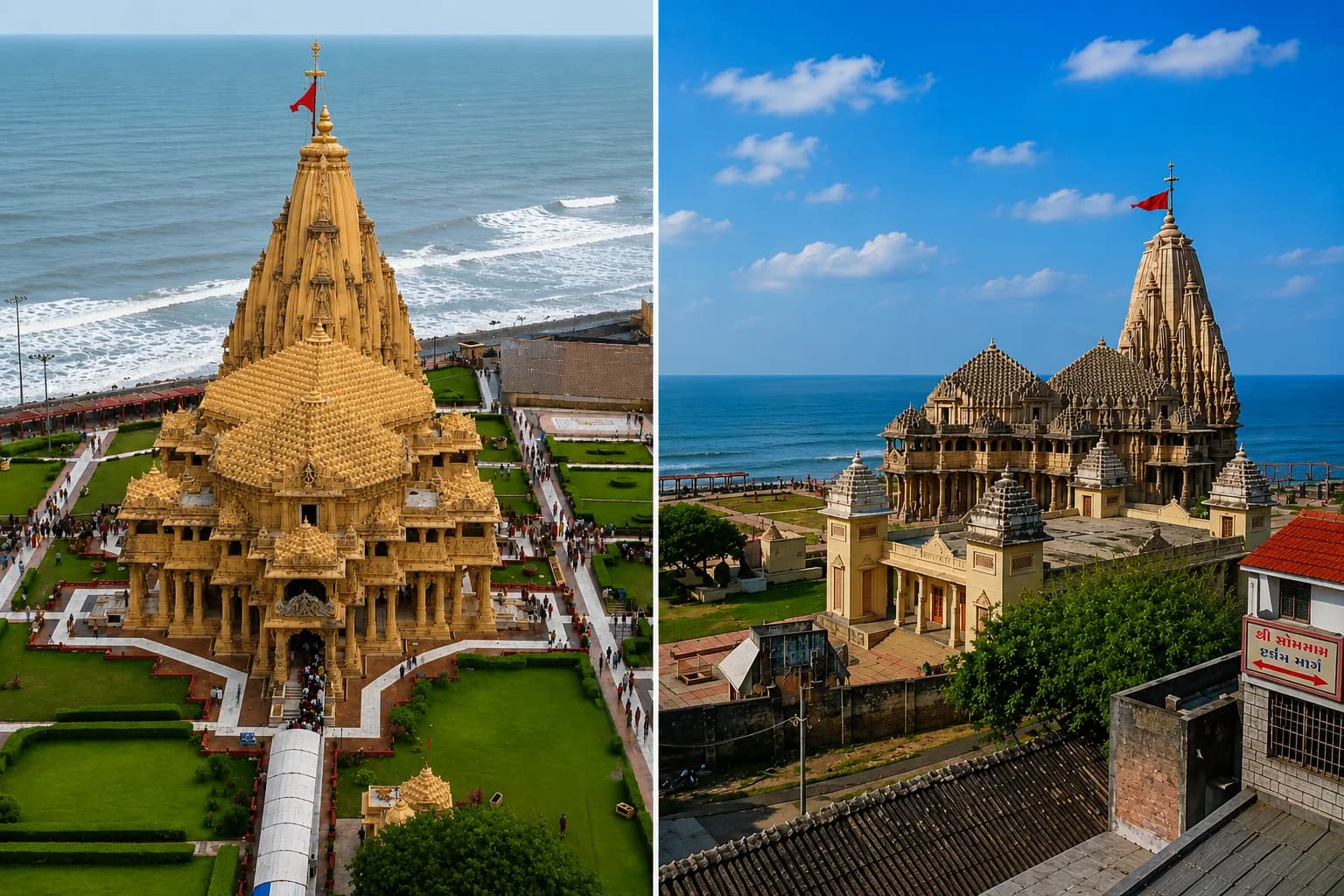
Places to Visit in Beyt Dwarka: Temples, Beaches and the Island of Krishna
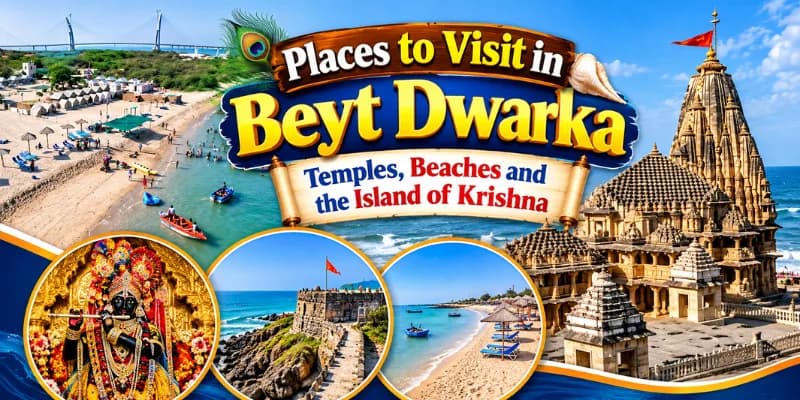
The main places to visit in Beyt Dwarka are the Dwarkadhish (Keshavrai) temple, the Hanuman Dandi temple, the Abhay Mata temple, the island's quiet beaches, and the Sudarshan Setu bridge that now connects it to Okha. The island is reached by a short ferry or by road. Experience My India can plan the whole visit for you.
The Best Places to Visit in Beyt Dwarka
Beyt Dwarka, also spelled Bet Dwarka, is the sacred island where Lord Krishna is believed to have lived, reached across a short stretch of sea from Okha near Dwarka. I am Harsh Rawat, born in Dwarka itself and I have taken countless guests on the Somnath Dwarka Tour Package across to this island over the last eight years. It is small, barely a few kilometres across, but it holds some of the most atmospheric temples and beaches on the whole Saurashtra coast, along with legends that reach back to the time of the Mahabharata.
This guide is deliberately thorough. It walks through every place worth seeing on Beyt Dwarka, explains the stories behind each shrine and then covers the practical side in detail: how to reach the island, the best time to come, what to eat, what to buy and the mistakes I watch first-time visitors make. By the end you will know exactly how to plan an unhurried, meaningful day on the island of Krishna.
Planning a Beyt Dwarka visit? Message me on WhatsApp or call +91 73006 20809 and I will arrange the crossing and the darshan. |
Why Beyt Dwarka Matters: History and Legend
Before the places themselves, it helps to understand why this little island draws so many pilgrims. Beyt Dwarka, sometimes called Shankhoddhar, the island of the conch, is woven deep into the story of Lord Krishna. While the mainland Dwarka was his great kingdom, tradition holds that Beyt Dwarka was his actual residence, the place where he lived with his family and queens and where he returned after his days at court.
The island carries two beloved legends above all. The first is the reunion of Krishna and his childhood friend Sudama. The story tells that the poor Brahmin Sudama came here with a humble handful of beaten rice for his old friend and Krishna, overjoyed, received him with such love and quietly blessed him with undreamed-of prosperity. For countless devotees, Beyt Dwarka is the home of that tender tale of friendship and grace. The second is the belief that the island itself was raised and shaped by Vishwakarma, the divine architect, which is why the whole place feels set apart, half in this world and half in myth.
There is a conch legend too. The name Shankhoddhar comes from the story that Krishna slew the demon Shankhasura here and recovered the stolen Vedas and to this day the waters around the island are known for their shells and conches. Hold any of these stories in mind as you cross and the ordinary ferry ride becomes a small pilgrimage in itself.
1. Beyt Dwarka Dwarkadhish Temple (Keshavrai Temple)
The heart of the island is the Dwarkadhish temple, also known as the Keshavrai temple, a centuries-old shrine to Lord Krishna. This is where tradition says Krishna lived with his family and the temple is the main reason pilgrims cross to the island. The atmosphere inside is intimate and devotional, quite different from the grand mainland Dwarkadhish, with a warmth that comes from its island isolation.
The temple complex holds several shrines within its walls, dedicated to Krishna, his queens Rukmini and Satyabhama and Jambavati and other deities, so a full darshan here means moving slowly from shrine to shrine rather than seeing a single idol. The temple is traditionally associated with the saint Vallabhacharya and the Pushtimarg tradition and you will often hear devotional singing filling the halls. Reach it early in the day for a calmer darshan, as it is the first and busiest stop for everyone who lands on the island.
What to know before you go in
Dress modestly, as you would for any temple, remove footwear at the entrance and expect photography to be restricted inside the sanctums. The temple keeps the usual pattern of a morning and an evening darshan session with a midday break, so plan your crossing to arrive within the open hours rather than during the afternoon closure. If you are unsure of the day's timings, we confirm them for you before you travel.
2. Hanuman Dandi Temple
A short distance from the main temple stands the Hanuman Dandi temple, one of the most unusual shrines anywhere in India. It is famous as the only place where Lord Hanuman is shown together with his son, Makardhwaj. The large, striking idols of father and son stand side by side and the story behind them is wonderful.
The legend tells that while Hanuman was returning from burning Lanka, a drop of his sweat was swallowed by a great fish, from which a mighty son, Makardhwaj, was born. Years later, when Hanuman came to this region in search of Rama and Lakshmana, he met a powerful guardian who turned out to be his own son. The two fought before recognising one another and the temple marks that meeting of father and son. It is a favourite stop for families and children and a genuinely rare sight you will not find at any other temple on the coast.
3. Abhay Mata Temple
The Abhay Mata or Abhaya Mata, temple on the island is dedicated to the goddess and is an important stop for pilgrims completing the circuit of Beyt Dwarka's shrines. Abhaya means fearlessness and devotees come to seek the goddess's protection. Quieter than the main temple, it rounds out the spiritual side of the island and is easy to include in a half-day visit. The walk to it, through the island's lanes, is part of its charm.
4. The Cluster of Island Shrines
Beyond the three main temples, Beyt Dwarka is dotted with smaller shrines that devotees weave into their circuit, including temples to the queens of Krishna, to Devaki and to various forms of Vishnu and Shiva. You do not need to see every one, but it is worth wandering a little beyond the Dwarkadhish temple to feel how the whole island is, in effect, one continuous place of worship. Local guides at the temple can point you to the shrines that matter most to your tradition.
Want to combine the temples and the beaches in one smooth trip? Tell me your dates on WhatsApp and I will time your Beyt Dwarka crossing around the darshan. |
5. The Beaches of Beyt Dwarka
Beyond the temples, Beyt Dwarka has peaceful, undeveloped beaches with soft sand and shallow, clear water, a world away from the busy mainland. These are not commercial beaches with loungers and cafes, they are quiet shores where you can walk, sit and watch the fishing boats come and go. For many guests, an hour by the sea here is the most restful part of the whole Dwarka trip.
In the winter months the waters around the island are known for seagulls, which arrive in great numbers and wheel around the ferries and for occasional dolphin sightings on the crossing. The combination of temple bells behind you and gulls over the water in front is something I never tire of. Sunset from the island, with the sea turning gold, is a quiet highlight that most day-trippers rush away before seeing.
6. The Seagulls and Dolphins of the Crossing
It is worth treating the sea crossing itself as a thing to see, not just a way to arrive. In winter, particularly, flocks of migratory seagulls follow the boats and passengers often feed them, so the short journey becomes a swirl of white wings against a blue sky. Keep your camera ready. On calmer crossings you may also glimpse dolphins in the channel. Children, especially, love this part and it turns a simple ferry ride into one of the trip's happiest memories.
7. Sudarshan Setu (Signature Bridge)
The Sudarshan Setu, India's longest cable-stayed bridge, now links Okha on the mainland to Beyt Dwarka, giving the island all-weather road access for the first time in its history. The bridge is a genuine sight in its own right, a sweeping modern structure with viewing galleries, a footpath and verses from the Bhagavad Gita set along its length, along with solar panels built into the walkway.
For visitors, the bridge changes how you can plan the trip. You no longer depend entirely on the ferry and the tides, which matters for elderly pilgrims, families with small children and anyone travelling in the rough monsoon season. My favourite approach is to cross by ferry one way, for the traditional sea experience and the gulls and return over the Sudarshan Setu by road, so you see the island from the water and from the bridge in a single trip.
8. The Village, Gomti Talav and Island Life
Around the temples, the old lanes of Beyt Dwarka village, the Gomti Talav tank and the small shops give the island its gentle, lived-in character. This is a working fishing island and part of its appeal is simply watching daily life: nets drying in the sun, boats being painted, pilgrims and locals mingling in the narrow streets. A slow walk between the shrines, past the sea views and the stalls, is what turns a visit here from a tick-box darshan into a real experience.
Beyt Dwarka Places at a Glance
Place | Known for |
Dwarkadhish (Keshavrai) Temple | Main Krishna temple, the heart of the island |
Hanuman Dandi Temple | Hanuman shown with his son Makardhwaj, a rare sight |
Abhay Mata Temple | Goddess shrine on the pilgrim circuit |
Island shrines cluster | Smaller temples to Krishna's queens and other deities |
Island beaches | Quiet sands, winter seagulls and dolphins |
Sudarshan Setu | India's longest cable-stayed bridge to the island |
Village walk and Gomti Talav | Old lanes, shell shops and sea views |
How to Reach Beyt Dwarka
Beyt Dwarka is reached from Okha port, about 30 kilometres north of Dwarka town. There are now two ways across: the traditional ferry over the sea and the road over the Sudarshan Setu. Most pilgrims come from Dwarka and our guide on how to reach Dwarka covers getting to the coast by air, rail and road. From Dwarka town, Okha is under an hour by road.
By ferry from Okha
The public ferries from Okha to Beyt Dwarka run through the day, roughly from early morning to evening, leaving when the boat is full rather than on a fixed timetable. The crossing takes around 15 to 20 minutes and the fare is modest. The ferry is the classic, atmospheric way to arrive, complete with the seagulls and it is how most pilgrims have come for generations. Just remember to start back in time for the last boat if you cross this way.
By road over the Sudarshan Setu
Since the opening of the Sudarshan Setu, you can also simply drive or take a cab straight onto the island, which is a blessing in rough weather and for anyone who finds boats difficult. The bridge gives reliable, all-weather access and removes the worry of missing the last ferry. For the full island overview, including temples, timings and the bridge, see our comprehensive companion guide below.
For the complete picture of the island, its temples and the bridge in one place, see our complete Bet Dwarka guide. And because Okha sits close to the Nageshwar Jyotirlinga, most visitors pair the two in one smooth half day.
Best Time to Visit Beyt Dwarka
The best time to visit Beyt Dwarka is the cool season, roughly October to March, when the coastal weather is pleasant, the sea is calm and the winter seagulls are at their most spectacular around the crossing. Mornings are ideal in any season, as the ferries run frequently, the island is cooler and you beat the midday temple closure.
Summer, from April to June, is hot and humid, so visit early and carry water and sun cover. The monsoon, July to September, brings rough seas that can pause the ferry, which is exactly when the Sudarshan Setu road becomes invaluable. The island is also wonderfully alive during Janmashtami, Krishna's birthday, though you should expect large crowds if you come for the festival.
For where to stay before and after your island trip, our hotels overview helps you plan a base in Dwarka town, which is where almost everyone stays, since the island itself has only very basic lodging.
What to Eat and What to Buy
Beyt Dwarka is simple when it comes to food. Expect modest vegetarian fare near the temples, from Gujarati thalis and snacks to tea stalls and prasad, rather than restaurants. Eat light before the crossing if the sea is choppy and carry water. The island keeps to the devotional, no-frills character of a pilgrimage place, which is part of its charm.
For shopping, the island and the Okha jetty are known for shells, conches and sea curiosities, a nod to the old name Shankhoddhar, the island of the conch, along with the usual prasad, religious items and small souvenirs. A conch bought here makes a fitting keepsake of a visit to Krishna's island. Carry small cash, as card payments are unreliable on the island.
Travel Tips for Beyt Dwarka
Go in the morning. The ferry runs often, the island is cool and you avoid the midday temple closure.
Carry small cash. The ferry fare, the shops and the stalls all run on cash and card payments are unreliable.
Mind the last boat. If you cross by ferry, start back in good time, as overnight options on the island are very limited. The bridge is the all-weather alternative.
Dress modestly. These are active temples, so cover shoulders and knees and be ready to remove footwear.
Hold children close near the jetty and on the boat and keep a firm grip on belongings in the crowd.
Respect the wildlife. Enjoy the seagulls, but do not chase or crowd them and take all litter back with you.
A Simple Half-Day Plan for Beyt Dwarka
Here is the rhythm I recommend. Leave Dwarka early and reach Okha within the hour. Cross by the morning ferry, enjoying the gulls on the way and begin at the Dwarkadhish temple for an unhurried darshan. Walk on to the Hanuman Dandi temple for the father-and-son idols, then the Abhay Mata temple, weaving through the village lanes between them.
Afterwards, spend a quiet half hour on a beach or by the shore, buy a conch or some prasad and then return, either by ferry again or over the Sudarshan Setu by road. On the way back towards Dwarka, stop at the Nageshwar Jyotirlinga, which sits close to Okha. That single half day gives you the temples, the sea, the bridge and a Jyotirlinga, without ever feeling rushed.
Want this exact half-day planned and booked for you? Message me on WhatsApp and I will handle the crossing, darshan timing and the Nageshwar stop. |
What I Tell Every Guest About Beyt Dwarka
After 8 years and more than fifty thousand travellers, my honest advice is to give Beyt Dwarka a calm half day rather than a rushed hour. Many people dash across, see the main temple and dash back and miss the Hanuman Dandi shrine, the quiet beaches and the village life that give the island its soul. The island rewards the unhurried. Some of my guests' favourite moments here have been the simplest: feeding gulls from the boat, sitting on an empty beach, hearing a bhajan drift out of a side shrine.
Go in the morning, carry small cash, keep children close near the water and start back in good time if you are crossing by sea. If boats make you nervous or the weather is rough, take the Sudarshan Setu by road instead, there is no shame in it and the views are superb. Pair it with Nageshwar and you have one of the loveliest, most complete half days on the entire Dwarka coast, equal parts devotion, history and sea air. That balance is exactly why Beyt Dwarka stays with people long after they have gone home.
Plan Your Beyt Dwarka Visit
Ready to cross to the island of Krishna? I will arrange the crossing, time your darshan at the island temples and fold Beyt Dwarka into a smooth Dwarka trip. See our 2 Days Dwarka Tour Package or message your dates on WhatsApp or call +91 73006 20809. |

Harsh Rawat
Somnath–Dwarka circuit planning
Harsh Rawat runs Somnath Dwarka Tour Package on the ground in Gujarat, part of Experience My India. Since 2018 he has been planning and driving the Somnath–Dwarka circuit — the darshan timings, the road hours between temples and the stops worth adding — and the routes, fares and timings published across this site are the ones he maintains.