The 12 Jyotirlingas of India: Complete List, Locations and Significance
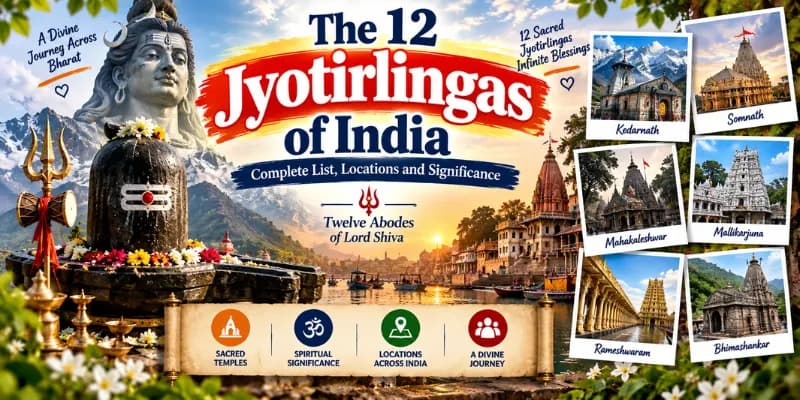
The 12 Jyotirlingas are the twelve most sacred shrines of Lord Shiva across India, each a self-manifested pillar of light. They are Somnath, Mallikarjuna, Mahakaleshwar, Omkareshwar, Kedarnath, Bhimashankar, Kashi Vishwanath, Trimbakeshwar, Vaidyanath, Nageshwar, Rameshwaram and Grishneshwar, spread across seven states, with Somnath in Gujarat revered as the first.
For devotees of Lord Shiva, visiting the twelve Jyotirlingas is the ultimate pilgrimage and two of them, Somnath and Nageshwar, lie in Gujarat on the very circuit we know best. This guide, from the team behind Somnath Dwarka Tour Package, a unit of Experience My India, gives the complete list of all 12 Jyotirlingas with their locations, states and significance, explains what a Jyotirlinga is and shows how the two Gujarat shrines can be woven into a single, memorable pilgrimage.
What is a Jyotirlinga?
A Jyotirlinga, meaning a pillar or column of light, is a shrine where Lord Shiva is worshipped in the form of a self-manifested or Swayambhu, linga of radiant light. According to tradition, Lord Shiva appeared as an infinite, blazing column of light to settle a dispute over supremacy between Brahma and Vishnu and the twelve places where this divine light is said to have manifested became the twelve Jyotirlingas. They are considered the most sacred of all Shiva shrines and a pilgrimage to all twelve, spread across India from the Himalayas to the southern seas, is among the most cherished spiritual journeys a Hindu can undertake. Each Jyotirlinga has its own legend, character and immense devotional power. The word Jyoti means light or radiance and linga is the symbol of Lord Shiva, so a Jyotirlinga is literally the radiant sign of the lord and worshipping at these shrines is believed to bring great blessings, the washing away of sins and, ultimately, liberation.
The 12 Jyotirlingas at a glance
Here is the complete list of all 12 Jyotirlingas with their locations and states, in the traditional order recited by devotees:
No. | Jyotirlinga | Location and state |
1 | Somnath | Prabhas Patan, Veraval, Gujarat |
2 | Mallikarjuna | Srisailam, Andhra Pradesh |
3 | Mahakaleshwar | Ujjain, Madhya Pradesh |
4 | Omkareshwar | Mandhata Island, Madhya Pradesh |
5 | Kedarnath | Rudraprayag district, Uttarakhand |
6 | Bhimashankar | Khed near Pune, Maharashtra |
7 | Kashi Vishwanath | Varanasi, Uttar Pradesh |
8 | Trimbakeshwar | Nashik, Maharashtra |
9 | Vaidyanath | Deoghar, Jharkhand |
10 | Nageshwar | Dwarka, Gujarat |
11 | Rameshwaram | Rameswaram Island, Tamil Nadu |
12 | Grishneshwar | Verul near Ellora, Maharashtra |
The 12 Jyotirlingas and their significance
Each of the twelve Jyotirlingas has its own story, character and special significance, drawing devotees for different blessings and reasons, from salvation and healing to protection and peace:
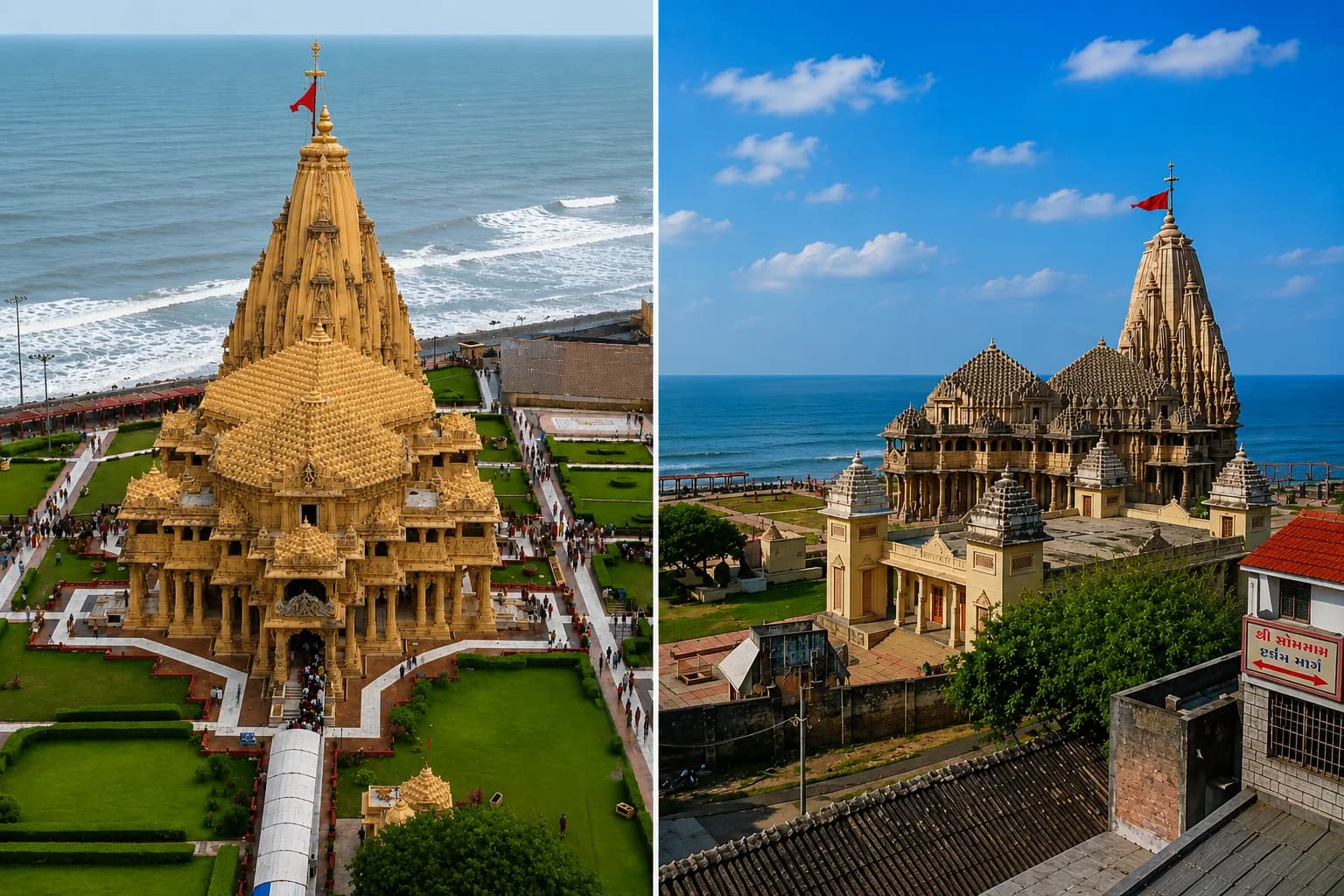
1. Somnath, Gujarat. Revered as the first among the twelve Jyotirlingas, the Somnath temple stands majestically by the Arabian Sea at Prabhas Patan near Veraval. Destroyed and rebuilt several times through history, it is a powerful symbol of eternal faith and resilience and its evening aarti and sound-and-light show draw pilgrims from across the country.
2. Mallikarjuna, Andhra Pradesh. Situated on the Nallamala Hills beside the Krishna River at Srisailam, Mallikarjuna is unique in that it houses both a Jyotirlinga and a Shakti Peetha together, one of the holiest sites for both Shaivites and Shaktas, set amid forested hills.
3. Mahakaleshwar, Madhya Pradesh. At Ujjain on the banks of the Shipra, Mahakaleshwar is famous as the only Dakshinmukhi or south-facing, Jyotirlinga and for its awe-inspiring Bhasma Aarti, performed with sacred ash in the early morning, a ceremony unlike any other in the country.
4. Omkareshwar, Madhya Pradesh. Set on Mandhata island in the Narmada River, shaped like the sacred Om or Omkar, symbol, Omkareshwar is a serene and deeply auspicious shrine on the holy river, reached by a bridge or boat across the water.
5. Kedarnath, Uttarakhand. Nestled high in the snow-clad Himalayas in Rudraprayag district, Kedarnath is one of the most remote Jyotirlingas, accessible only during the summer and autumn months and a part of the Chota Char Dham, reached after a long and challenging mountain trek.
6. Bhimashankar, Maharashtra. Surrounded by the forested Western Ghats at Khed near Pune, Bhimashankar is believed to be the source of the Bhima River, formed after Lord Shiva defeated the demon Tripurasura and the shrine sits amid a beautiful wildlife sanctuary.
7. Kashi Vishwanath, Uttar Pradesh. In Varanasi, one of the world's oldest living cities, Kashi Vishwanath is believed to be the ultimate place of moksha or salvation and is among the most venerated temples in all of Hinduism, drawing millions of pilgrims to the banks of the holy Ganga.
8. Trimbakeshwar, Maharashtra. Near the origin of the sacred Godavari River at Nashik, Trimbakeshwar is distinctive for its three-faced linga representing the Hindu trinity of Brahma, Vishnu and Shiva, worn by time and worship over the centuries.
9. Vaidyanath, Jharkhand. At Deoghar, Vaidyanath is a major pilgrimage centre where, by legend, the demon king Ravana worshipped Shiva to receive healing powers, giving the shrine its association with health and cure and drawing huge crowds during the holy month of Shravan.
10. Nageshwar, Gujarat. Near Dwarka, the Nageshwar Jyotirlinga symbolises protection from poison and negative energies and is known for the massive 80-foot seated statue of Lord Shiva that stands in the open beside the temple, a striking landmark that can be seen from far away on the Dwarka to Okha road.
11. Rameshwaram, Tamil Nadu. On Rameswaram island in the far south, the Ramanathaswamy temple is where, by tradition, Lord Rama worshipped Shiva before crossing the sea to Lanka, making it one of the holiest sites of southern India and a part of the four national Char Dham as well.
12. Grishneshwar, Maharashtra. At Verul near the world-famous Ellora Caves, Grishneshwar is regarded as the last of the twelve Jyotirlingas and is admired for its beautiful, ancient temple architecture with its intricate carvings, a fitting close to the sacred circuit.
The two Jyotirlingas of Gujarat: Somnath and Nageshwar
Of the twelve Jyotirlingas, two lie in Gujarat and both are on the Somnath and Dwarka pilgrimage circuit. Somnath, near Veraval, is revered as the very first Jyotirlinga, standing gloriously by the Arabian Sea, its epic history of destruction and rebuilding told in our Somnath temple history guide. Nageshwar, near Dwarka, the city of Krishna, is the tenth Jyotirlinga, famed for its towering Shiva statue. A pilgrimage to Gujarat lets devotees take darshan of two of the twelve Jyotirlingas in a single trip, along with the sacred city of Dwarka, one of the four Char Dham, making it one of the most rewarding of all Shiva and Krishna pilgrimages. Few other states offer two Jyotirlingas so close together and so easily combined, which is why the Somnath and Dwarka circuit is treasured by Shiva devotees from across India, who often add the Nageshwar darshan to a Dwarka Char Dham trip or the Somnath darshan to a wider Jyotirlinga yatra.
The 12 Jyotirlingas across India
The twelve Jyotirlingas are spread across the length and breadth of India, in seven states, so a full pilgrimage is a grand journey across the country. Maharashtra has three, Bhimashankar, Trimbakeshwar and Grishneshwar; Madhya Pradesh has two, Mahakaleshwar and Omkareshwar; and Gujarat has two, Somnath and Nageshwar. The others are single Jyotirlingas in Andhra Pradesh, Uttarakhand, Uttar Pradesh, Jharkhand and Tamil Nadu. From Kedarnath high in the Himalayas to Rameshwaram on the southern seas, the Jyotirlingas connect the whole of sacred India and many devotees complete the pilgrimage in stages over the years. This spread is part of the beauty of the Jyotirlinga yatra: to visit all twelve is to travel the length of the country, seeing its rivers, mountains, coasts and ancient cities and to feel the presence of Lord Shiva binding the whole land together as one sacred geography.
Planning a Jyotirlinga pilgrimage
Because the twelve Jyotirlingas are spread across India, most pilgrims visit them in groups over several journeys, often starting with those nearest to home or clustered together. The two Gujarat Jyotirlingas, Somnath and Nageshwar, are easily done together on a Somnath and Dwarka trip and pair beautifully with the Dwarka city guide sights and a Gir lion safari. The Maharashtra three or the two in Madhya Pradesh, can each be grouped on a regional trip. Plan the season with the best time to visit Gujarat and time your darshan with the Somnath temple timings for the Gujarat leg. Whichever Jyotirlingas you visit, planning around the seasons and the temple festivals makes the pilgrimage smoother and more rewarding and grouping the shrines by region keeps the travel manageable rather than exhausting.
Tips for a Jyotirlinga pilgrimage
A few pointers for visiting the Jyotirlingas:
Group nearby Jyotirlingas together, such as Somnath and Nageshwar in Gujarat, to travel efficiently and save time.
Start with the accessible ones, keeping remote Kedarnath for its open season in summer and early autumn.
Attend the special aartis, such as the Bhasma Aarti at Mahakaleshwar in Ujjain and the evening aarti at Somnath.
Visit in the cooler months for comfortable travel and around Mahashivratri for the grandest atmosphere of all.
Dress modestly and follow each temple's customs, as the rules on darshan, queues and offerings vary by shrine.
For the Gujarat Jyotirlingas, combine Somnath and Nageshwar with the city of Dwarka and a Gir lion safari.
Plan your Gujarat Jyotirlinga trip
Experience My India can plan your visit to the two Gujarat Jyotirlingas and the wider region. Take darshan at Somnath and Nageshwar, see the sacred city of Dwarka, add a Gir lion safari, plan your arrival with how to reach Somnath, book Somnath Dwarka hotels and let the Experience My India Somnath Dwarka tour packages or a Somnath Dwarka taxi service handle the temples, the coast and the whole itinerary, so you can focus on the darshan of the first and tenth Jyotirlingas.
Related guides
To plan your Gujarat Jyotirlinga trip, these related guides help:
Related guide | What it covers |
Air, rail and road access to Dwarka and Nageshwar. | |
The best months for the Dwarka coast. | |
The sights within the Somnath temple town. | |
The site where Krishna left his body, near Somnath. | |
The sacred confluence of three rivers at Somnath. | |
The sacred mountain and fort city of Saurashtra. |
Plan your visit
Experience My India can arrange your Gujarat Jyotirlinga pilgrimage to Somnath and Nageshwar. Browse more travel guides, message us on WhatsApp or call +91 73006 20809.

Harsh Rawat
Somnath–Dwarka circuit planning
Harsh Rawat runs Somnath Dwarka Tour Package on the ground in Gujarat, part of Experience My India. Since 2018 he has been planning and driving the Somnath–Dwarka circuit — the darshan timings, the road hours between temples and the stops worth adding — and the routes, fares and timings published across this site are the ones he maintains.