Gir Leopards: The Other Big Cat of the Lion's Forest
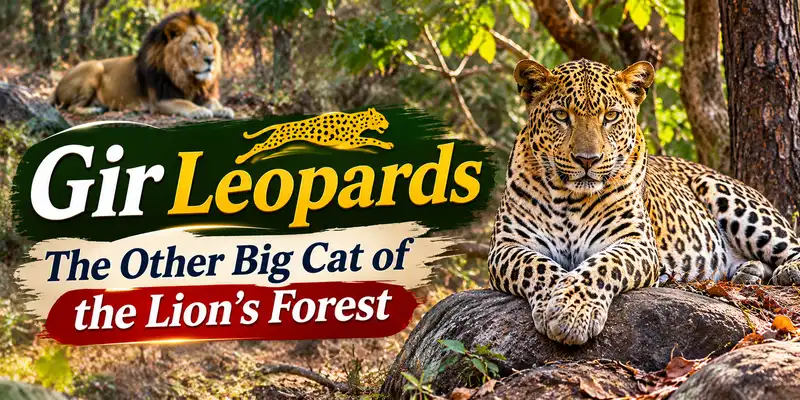
Gir National Park is home to over 300 to 500 Indian leopards, making it one of the highest-density big cat habitats in India. Though Gir is famous for its Asiatic lions, its dry deciduous forests and rocky outcrops are ideal leopard country and it is one of the very few places where lions and leopards share the same habitat. The mid-morning safari slot and the winter months offer the best sighting odds. This guide, from Experience My India, covers the leopards of Gir.
Everyone comes to Gir for the lions, but the forest holds a second, more elusive big cat in remarkable numbers: the Indian leopard. With over 300 to 500 leopards, Gir is one of India's densest big cat habitats and a safari here offers the rare thrill of possibly seeing both lion and leopard in a single landscape. This guide, from the team behind Somnath Dwarka Tour Package, a unit of Experience My India, covers the leopards of Gir: where they live, the best times and places to spot them, how they coexist with the lions, their ecological role and the conservation story they share with Gir's more famous resident. For the lions themselves, see our guide to the Asiatic lion.
Quick facts about Gir's leopards
Species | Indian leopard (Panthera pardus fusca) |
Population | Over 300 to 500 in the Gir landscape |
Habitat | Rocky hills, dense scrub and riverbanks across the Gir protected area |
Best sighting slot | The mid-morning safari, as lions settle to rest |
Best season | November to March for comfortable weather and tracking |
Notable | One of the few places where lions and leopards share habitat |
How many leopards live in Gir?
Gir is home to over 300 to 500 Indian leopards, Panthera pardus fusca, a remarkably high number that makes it one of the highest-density big cat habitats in the country. The leopards live throughout the entire Gir protected area of about 1,412 square kilometres, including the core national park and the surrounding buffer zones, sharing the landscape with the famous lion population. In recent years, as strict protection has allowed both lion and leopard numbers to rise, leopards have even expanded beyond the core forest into the agricultural belts and revenue areas across Saurashtra. This thriving leopard population, living in the shadow of the lions, is one of the less celebrated but genuinely impressive features of Gir and it adds a real sense of anticipation to every safari.
Where the leopards live
Gir's leopards range across the whole protected landscape, which spans the Junagadh, Gir Somnath and Amreli districts of the Saurashtra peninsula, with the main visitor hub at Sasan Gir. Within this, they favour particular kinds of terrain. Leopards frequently inhabit rocky hills, dense scrublands and the riverbanks along the Hiran, Shetrunji and Machhundri rivers, where cover and prey are both plentiful. Their love of rocky outcrops and dense vegetation, which offer concealment and vantage points, is exactly what the Gir terrain provides in abundance. This preference for broken, covered ground, as opposed to the more open areas the lions often use, is part of how the two big cats divide the habitat between them and it shapes where you are most likely to see a leopard on safari.
Best places and times to spot leopards
Leopards are shyer and more elusive than lions, so timing and location matter for a sighting. Early morning drives through the Sinh Sadan and Devaliya areas frequently yield sightings of leopards resting on tree branches or rocky outcrops, where they bask or keep watch. Crucially, the mid-morning safari slot often offers the strongest leopard sighting odds, because leopards tend to become more active as the lions settle down to rest, giving the smaller cat room to move. The winter months, from November to March, provide the most comfortable weather for tracking and good visibility. A patient approach, an early or mid-morning drive and a sharp-eyed guide scanning the trees and rocks are your best allies and the fenced Devaliya Safari Park can also produce good leopard sightings.
Safari timings and season for leopards
Leopard safaris follow the same schedule as the Gir lion safaris. The core jungle trail is closed every year from 16 June to 15 October for the monsoon, while the Devaliya Safari Park stays open year-round except Wednesdays. In the winter season, from 16 October to the end of February, morning safaris run from about 6:30 AM to 9:30 AM and 9:30 AM to 12:30 PM, with an afternoon slot from 3:00 PM to 6:00 PM. In summer, from 1 March to 15 June, morning safaris run from about 6:00 AM to 9:00 AM and 9:00 AM to 12:00 PM, with the afternoon slot shifting to 4:00 PM to 7:00 PM. All safari permits must be booked online in advance, as set out in our Gir safari booking online guide. The mid-morning slot, when lions rest, is widely considered the best for leopards.
Leopards and lions sharing a home
One of the most fascinating things about Gir is that it is one of the very few places in the world where lions and leopards share the same habitat. This coexistence is possible because the two cats partition the landscape and their behaviour to avoid direct competition. Leopards adapt by hunting smaller prey, using dense cover and the broken, rocky terrain the lions use less and by hauling their kills high into trees, out of reach of the larger, stronger lions. They are more nocturnal and more secretive, slipping through the forest where the lions dominate the open ground. This careful niche separation, worked out over long coexistence, allows both apex predators to thrive in the same forest and it makes Gir a living laboratory of large-carnivore coexistence found almost nowhere else.
The ecological role of leopards
Leopards play a vital part in keeping Gir's multi-predator ecosystem in balance. As agile, adaptable predators, they help regulate the populations of chital or spotted deer, sambar, wild boar, langurs and peafowl, preventing overgrazing and maintaining the health of the dry deciduous forest. By taking a different range of prey from the lions, they fill their own ecological niche rather than simply competing. A healthy leopard population is therefore a sign of a healthy forest and the fact that Gir supports so many alongside its lions speaks to the richness of its prey base and habitat, explored further in our Gir National Park animals guide. The leopard, often overshadowed by the lion, is in truth an equally important pillar of this ecosystem.
The conservation story
The conservation of Gir's leopards is closely tied to the protection of the Asiatic lion. Gir was once the private hunting ground of the Nawab of Junagadh and in 1913, recognising the severe decline of big cats from colonial and royal hunting, the Nawab banned hunting and initiated forest protection, which benefited leopards as well as lions. After independence, the government declared Gir a Wildlife Sanctuary in 1965 and upgraded a core area of about 258.71 square kilometres to a National Park in 1975. Strict anti-poaching laws, habitat restoration and the recovery of the prey base allowed both lion and leopard numbers to rebound steadily. Today leopards have not only recovered within the core forest but expanded into the agricultural belts and revenue areas across Saurashtra, a sign of a successful but increasingly complex conservation landscape shared with people.
Leopards and the Maldhari way of life
Gir's leopards, like its lions, live alongside people in a rare example of human and wildlife coexistence. The indigenous pastoral communities known as the Maldharis live inside traditional forest settlements, called nesses, within the sanctuary, grazing their cattle in the same landscape the big cats hunt. This long coexistence, supported by state compensation for livestock losses and by rescue and management programmes, is central to the Gir conservation model and is studied worldwide. As leopards expand into farmland beyond the forest, managing this coexistence becomes ever more important, balancing the needs of a growing big cat population with those of the rural communities who share its range. The leopards of Gir are thus part of a wider story about how wildlife and people can live together, which is one of the region's most remarkable achievements.
Tips for spotting leopards on safari
A few pointers improve your chances of a leopard sighting:
Take the mid-morning slot: leopards are often more active as the lions settle to rest, making this the prime window.
Scan the trees and rocks: leopards rest on branches and rocky outcrops, so look up and across, not just at ground level.
Visit in winter: November to March offers comfortable weather and good visibility for tracking.
Be patient and quiet: leopards are shy, so a calm, unhurried drive with low voices improves your odds.
Trust your guide: an experienced guide knows the rocky and riverine spots leopards favour and reads the alarm calls of prey animals.
Manage expectations: leopard sightings are never guaranteed, so treat one as a bonus to the lion safari.
Plan your Gir wildlife trip
Experience My India can plan a Gir wildlife journey that gives you the best chance of seeing both lions and leopards, with permits and guides arranged, a comfortable stay near Sasan and a well-paced itinerary that can also take in Somnath and the coast. Our Somnath Dwarka tour packages and wider Gujarat tour packages weave Gir into a fuller Saurashtra journey, with a stay at well-placed hotels and comfortable local transport throughout, so you can focus on the wildlife.
Related guides
To plan your Gir wildlife trip further, these related guides help:
Related guide | What it covers |
Choosing the zone with the best sighting odds. | |
Planning a safari trip to Gir end to end. | |
Sights and day trips around the national park. |
Plan your visit
Experience My India can arrange your Gir safari and wider Gujarat journey. Browse more travel guides, message us on WhatsApp or call +91 73006 20809.

Harsh Rawat
Somnath–Dwarka circuit planning
Harsh Rawat runs Somnath Dwarka Tour Package on the ground in Gujarat, part of Experience My India. Since 2018 he has been planning and driving the Somnath–Dwarka circuit — the darshan timings, the road hours between temples and the stops worth adding — and the routes, fares and timings published across this site are the ones he maintains.