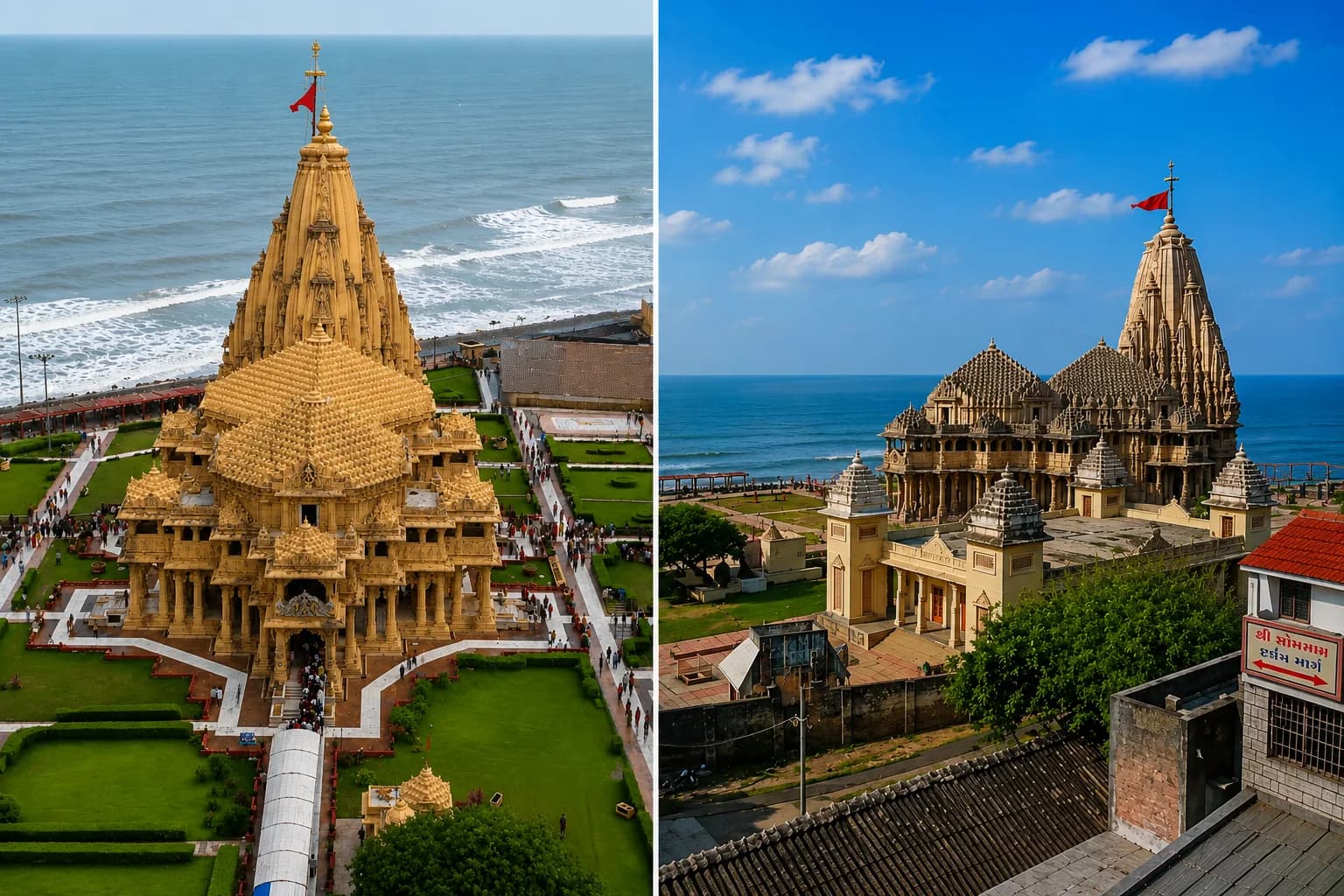
Somnath Aarti Timings: The Daily Rituals at the First Jyotirlinga
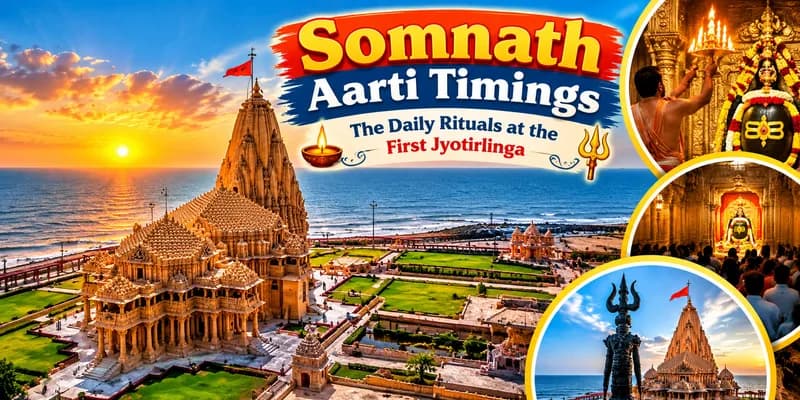
The Shree Somnath Temple holds three daily aartis, the Mangala Aarti at 7:00 AM, the Rajbhog Aarti at 12:00 PM and the Sandhya Aarti at 7:00 PM. The temple is open for darshan from 6:00 AM to 10:00 PM, with entry briefly restricted during each aarti. This guide, from Experience My India, covers the timings, which aarti to attend and the dress code and rules.
Attending an aarti at Somnath, the first of India's twelve Aadi Jyotirlingas, is a deeply moving and sensory experience, filled with rhythmic chants, the thunder of massive temple bells and the glow of great oil lamps. If you are planning your visit around these rituals, the timings matter, as entry is briefly restricted while each aarti is performed. This guide, from the team behind Somnath Dwarka Tour Package, a unit of Experience My India, sets out the daily aarti and darshan schedule, explains what each aarti is like and which to choose and covers the strict dress code, the prohibitions on electronics and the other practical rules you need to know to attend an aarti smoothly at this magnificent coastal shrine in Prabhas Patan, Gujarat.
Somnath Temple darshan and aarti timings
The Shree Somnath Temple opens daily from 6:00 AM to 10:00 PM for continuous darshan, so there is a long window in which to have the sacred view of the Jyotirlinga. Within that window, three aartis are performed at fixed times and entry to the sanctum is briefly restricted during each one. Here is the daily schedule at a glance:
Aarti | Time | What it is |
Temple open | 6 AM to 10 PM | Continuous darshan through the day |
Mangala Aarti | 7:00 AM | The first ritual of the day, the quietest and most meditative |
Rajbhog Aarti | 12:00 PM | The midday worship with the grand food offering or bhog |
Sandhya Aarti | 7:00 PM | The evening aarti, the most vibrant and crowded of the day |
The three daily aartis
Mangala Aarti, 7:00 AM. This is the very first ritual of the day, when the sanctum opens to the sound of Vedic chants and the Jyotirlinga is adorned with fresh flowers. It is highly recommended if you prefer a quieter, more meditative experience, as it draws the smallest crowd of the three and there is a special serenity to greeting the deity at the start of the day.
Rajbhog Aarti, 12:00 PM. The midday worship coincides with the grand food offering, the bhog, presented to the deity. It is a dignified, devotional ceremony at the heart of the day and a good option for visitors who are at the temple around noon between the morning and evening peaks.
Sandhya Aarti, 7:00 PM. The evening aarti is the most vibrant and crowded of the day and for many the most unforgettable. Watching the lamps glow as dusk settles over the Arabian Sea behind the temple is incredibly beautiful and the combined force of the chanting, the bells and the lamplight at nightfall makes this the aarti most visitors hope to attend.
Which aarti should you attend?
The right aarti depends on the experience you are seeking. For a calm, reflective darshan with the smallest crowd, the Mangala Aarti at 7:00 AM is the clear choice, a peaceful way to begin the day before the temple fills. For the full sensory spectacle, the Sandhya Aarti at 7:00 PM is unmatched, as the sunset over the sea, the glowing lamps and the large, fervent crowd together create an atmosphere that stays with you long after. The Rajbhog Aarti at noon sits comfortably between the two in both mood and crowd size. Many pilgrims who stay overnight try to attend both the Mangala and the Sandhya aartis, to experience the shrine at its most tranquil and at its most electric within a single visit.
The sensory experience of a Somnath aarti
An aarti at Somnath engages every sense. The air fills with the rhythmic cadence of Vedic chants, the deep resonance of the great temple bells rolls through the hall and rows of large oil lamps are raised and circled before the Jyotirlinga, their flames reflected in the eyes of hundreds of devotees. Set against the sound of the Arabian Sea just beyond the temple walls, the effect is powerful and transporting, a ceremony that feels both intimate and vast. Even visitors who come simply to witness, rather than to worship, often describe the Somnath aarti as one of the most stirring experiences of their journey through Gujarat and it is the reason so many travellers plan their day around the ritual times.
Why Somnath matters
Somnath holds a unique place among India's sacred sites as the Aadi Jyotirlinga, the first of the twelve, regarded as the first manifestation of Lord Shiva. By legend the temple was originally built in gold by Soma, the Moon God, who prayed here to be freed from a curse that had dimmed his light and the name Somnath means Lord of the Moon. Over the centuries the shrine became a symbol of unbreakable faith, destroyed and rebuilt many times, with the structure standing today reconstructed after independence. This brief context is enough to feel why the aarti here carries such weight and the full story of the Moon God legend and the temple's many reconstructions is told in our Somnath Temple history guide.
The Jay Somnath light and sound show
If you attend the evening Sandhya Aarti, you can round off the night with the spectacular Jay Somnath light and sound show, held inside the temple premises right after the gates close for standard entry, from about 8:00 PM to 9:00 PM. Narrated in a dramatic audio format against the floodlit temple facade, it walks you through the shrine's ancient history, with tickets costing roughly 25 to 50 rupees. It is a wonderful complement to the evening aarti and the full details are in our guide to the Somnath sound and light show.
Dress code and prohibitions
Somnath enforces a strict dress code and tight security and knowing the rules in advance saves time and trouble when you come for an aarti:
Dress modestly. Shorts, sleeveless tops and short skirts are strictly banned. Traditional Indian attire, such as sarees or salwar suits for women and kurtas or trousers for men, is highly recommended.
No electronics. Mobile phones, cameras, smartwatches and all other electronic items are strictly prohibited inside the complex.
Free cloakroom. Secure locker cloakrooms are available near the entrance at no cost, where you can deposit phones and other items before going in.
Leather restricted. Leather items such as belts and wallets are also restricted inside the temple premises.
Planning for these rules, especially leaving your phone and leather items in the cloakroom and dressing traditionally, lets you move straight through security and into the hall in good time for the aarti.
VIP darshan and avoiding the queues
The Sandhya Aarti in particular draws very large crowds and the queues for darshan around the aarti times can be long. If you would prefer a smoother, quicker darshan, the temple offers a VIP darshan facility and our guide to Somnath VIP darshan explains how it works and how to arrange it. Alternatively, choosing the quieter Mangala Aarti at 7:00 AM is a simple way to avoid the heaviest crowds while still enjoying a full and peaceful aarti experience.
Planning your visit and how to reach
Somnath is well connected by road, rail and air and most visitors reach it via Veraval, the nearest railhead or by road from across Saurashtra. Our how to reach Somnath guide covers the routes in full and for a comfortable, well-timed arrival around the aarti hours, our Somnath Dwarka taxi service can arrange transport. For choosing the season, see our best time to visit Somnath guide and for a stay close to the temple so you can attend both the morning and evening aartis, browse well-placed Somnath Dwarka hotels.
Combining your aarti visit with the coast
An aarti at Somnath sits naturally within a wider Saurashtra journey. Around the temple town there is plenty to see, as set out in our things to do in Somnath and sightseeing places in Somnath guides. Up the coast lies Krishna's holy city of Dwarka, while inland are the lions of Gir and the heritage of Junagadh and Girnar. Building your trip around the aarti times at Somnath lets you combine this deeply spiritual experience with the temples, beaches and wildlife of the region.
Tips for attending a Somnath aarti
A few pointers help your aarti visit go smoothly:
Note the three times, Mangala at 7:00 AM, Rajbhog at 12:00 PM and Sandhya at 7:00 PM and arrive a little early, as entry is restricted during each aarti.
Choose the Mangala Aarti for a quiet, meditative darshan or the Sandhya Aarti for the most vibrant atmosphere.
Leave your phone, camera, smartwatch and leather items in the free cloakroom near the entrance.
Dress in modest, traditional attire, as shorts, sleeveless tops and short skirts are not allowed.
Stay for the evening to pair the Sandhya Aarti with the Jay Somnath light and sound show.
Consider VIP darshan or the early Mangala Aarti if you want to avoid the heaviest crowds.
Remember the temple is open 6:00 AM to 10:00 PM, so you can also have darshan outside the aarti times.
Plan your Somnath visit
Experience My India can plan your Somnath visit around the aarti times, with comfortable transport, a stay close to the temple and an itinerary that lets you attend the rituals you most want to see. Our Somnath Dwarka tour packages and wider Gujarat tour packages weave the temple into a fuller Saurashtra journey taking in Dwarka, Gir and the coast, timed so you never miss an aarti.
Related guides
To plan the rest of your Somnath visit, these related guides help:
Related guide | What it covers |
Another of the twelve Jyotirlingas, near Dwarka up the coast. | |
The drive from the Somnath coast to the Gir lions. | |
Krishna's holy city up the coast and its key sights. |
Plan your visit
Experience My India can arrange your Somnath trip and wider Saurashtra journey. Browse more travel guides, message us on WhatsApp or call +91 73006 20809.

Harsh Rawat
Somnath–Dwarka circuit planning
Harsh Rawat runs Somnath Dwarka Tour Package on the ground in Gujarat, part of Experience My India. Since 2018 he has been planning and driving the Somnath–Dwarka circuit — the darshan timings, the road hours between temples and the stops worth adding — and the routes, fares and timings published across this site are the ones he maintains.