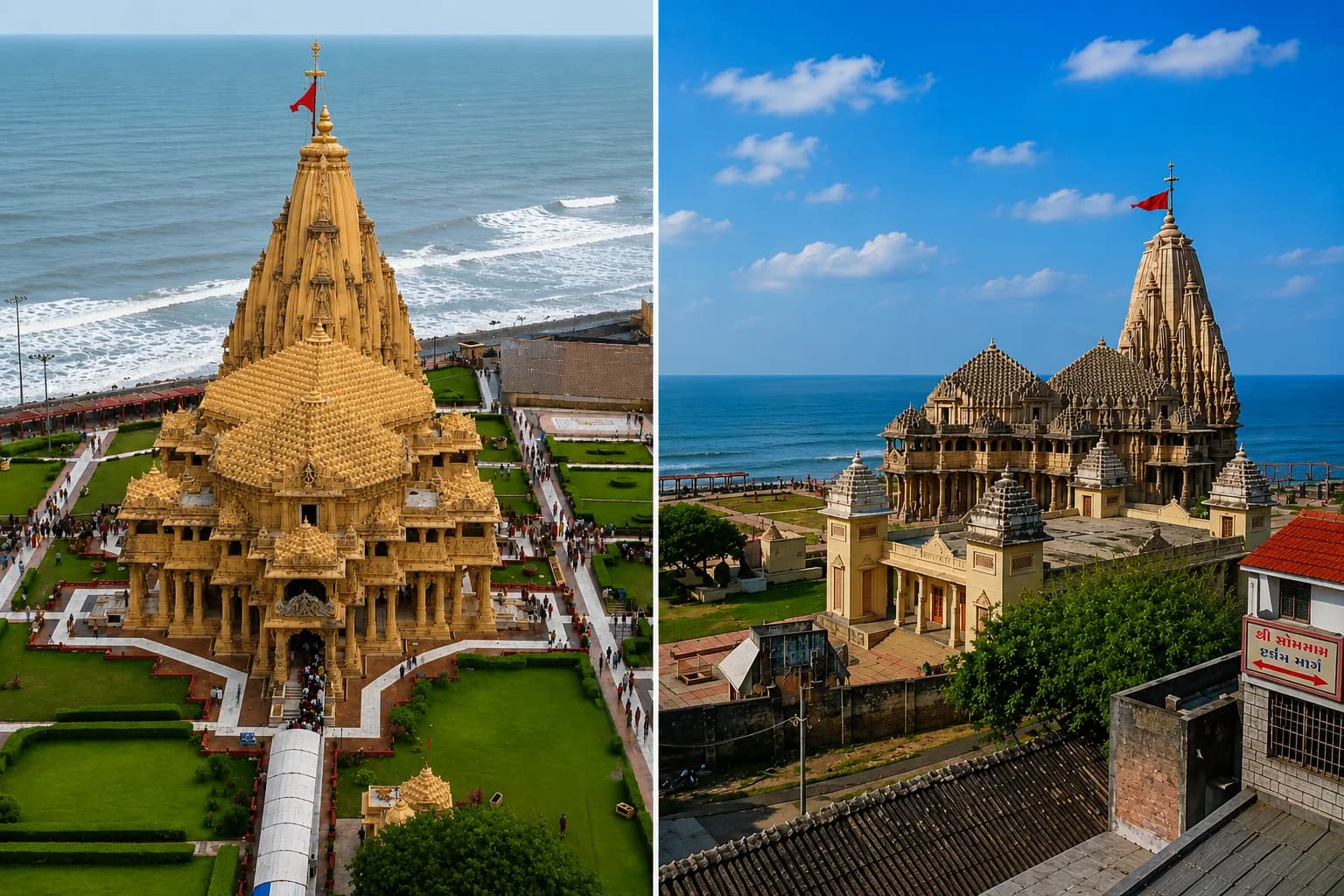
Best Time to Visit Somnath: Season and Month Guide

The best time to visit Somnath is from October to March, when the coastal weather is cool and pleasant, ideal for temple visits, the evening aarti and the beach. The summer, April to June, is hot, and the monsoon, July to September, brings rain and a rough sea, though it includes the holy month of Shravan. Mahashivratri, in February or March, is Somnath's grandest festival.
Timing your visit well makes a pilgrimage to Somnath, the first of the twelve Jyotirlingas of Lord Shiva, all the more rewarding. This guide, from the team behind Somnath Dwarka Tour Package, a unit of Experience My India, breaks down the best time to visit Somnath by season and by month, with the weather, the festivals and what to expect, so you can plan the most comfortable and meaningful trip to the great temple by the sea.
Best time to visit Somnath at a glance
Overall best time | October to March, cool and pleasant |
Peak season | November to February and festival times |
Hot season | April to June, best avoided for the heat |
Monsoon | July to September, rain, rough sea and Shravan |
Grandest festival | Mahashivratri, in February or March |
Ideal for | Temple, aarti, sound-and-light show, beach |
Somnath weather by season
Somnath has a coastal climate, standing on the Arabian Sea shore of southern Saurashtra, so it stays warm through much of the year, with three broad seasons that shape the best time to visit:
Winter, October to March: the best season, with cool, pleasant days and comfortable evenings, ideal for the temple, sightseeing and the coast.
Summer, April to June: hot and humid, with high temperatures, best avoided unless you can manage the heat and travel early and late in the day.
Monsoon, July to September: brings rain and a rough sea, but also the holy Shravan month, when many devotees visit despite the weather.
Winter, October to March: the best time
Winter is by far the best time to visit Somnath. From October to March, the coastal weather is at its most pleasant, with cool, comfortable days and mild evenings and clear skies over the Arabian Sea. This is the ideal season for darshan at the great Somnath temple, for the deeply moving evening aarti, for the spectacular sound-and-light show and for enjoying the beach and the sacred sites such as the Triveni Sangam and Bhalka Tirth. The comfortable weather also makes the short drive to a Gir lion safari or up the coast to Dwarka, a pleasure. Because it is the most comfortable season, winter is also the peak pilgrimage time, so the temple and hotels are busier and it is wise to book ahead, especially around Mahashivratri and other festivals. The gentle winter days let you spend long, unhurried hours at the temple, the ghat and the shore without the fatigue that the summer heat brings.
Summer, April to June: hot
The summer months, from April to June, are hot and humid in Somnath, with high daytime temperatures made more intense by the coastal humidity. While the sea breeze offers some relief, the heat can make temple queues and sightseeing tiring, especially in the middle of the day. If you do visit in summer, plan your temple visits, the aarti and sightseeing for the early morning and the evening, when it is cooler, rest during the hottest hours and stay well hydrated. The upside is that summer is the least crowded season, with fewer pilgrims, so those who do not mind the heat will find the temple quieter and the darshan queues shorter and hotels are often cheaper and easier to book than in the peak winter.
Monsoon, July to September: Shravan and the rains
The monsoon, roughly July to September, brings rain to Somnath and a rougher, choppier Arabian Sea. The rains turn the surrounding countryside lush and green and the sea can look dramatic under monsoon skies. Importantly, the monsoon includes the holy month of Shravan, which is especially sacred to Lord Shiva, so despite the weather, large numbers of devotees visit Somnath during this time to worship the Jyotirlinga and the temple has a powerful devotional atmosphere. However, heavy rain can disrupt travel and the beach and the open-air sound-and-light show may be affected. If you visit in the monsoon, especially for Shravan, keep your plans flexible and carry rain protection. For the truly devout, worshipping the first Jyotirlinga in the sacred rains of Shravan is a deeply meaningful experience that outweighs the discomfort of the weather.
Somnath month by month
Here is a quick month-by-month guide to help you choose the right time for your Somnath trip:
Month | What to expect |
October | Post-monsoon, warm and turning pleasant; a good time to visit |
November to February | Cool, pleasant and clear; the best months, but busiest |
February to March | Pleasant, with Mahashivratri, the grandest festival |
April to June | Hot and humid; best avoided or travel early and late |
July to September | Monsoon rains and rough sea, but the holy Shravan month |
Best time for festivals in Somnath
Festivals bring a special power to Somnath and timing a visit around one can be deeply moving, if busy. The grandest is Mahashivratri, the great night of Lord Shiva, in February or March, when the first Jyotirlinga draws vast crowds for night-long worship and the nearby Bhavnath Fair at Girnar also takes place. Kartik Purnima, in November, brings the Somnath Fair and a holy dip at the Triveni Sangam and the holy month of Shravan, in the monsoon, sees continuous Shiva worship. These festivals draw huge crowds, so while the atmosphere is unforgettable, you should book travel and stays well in advance and be prepared for large numbers of pilgrims. For festival dates and details, see our festivals section.
Best time for specific experiences
The best time can also depend on what you most want to do in Somnath:
Temple darshan and aarti: the winter months are ideal and the early morning and evening aartis are the most moving times for darshan of the Jyotirlinga.
Sound-and-light show: the open-air Jay Somnath show is best in the dry winter, as it can be affected by monsoon rain.
Triveni Sangam dip: winter and festival days like Kartik Purnima are the most auspicious and comfortable for a holy dip at the confluence.
Beach and coast: the cool, calm winter is best for the Somnath beach and the coastal drives, which the rough monsoon can disrupt.
When to avoid visiting Somnath
The peak summer, roughly late April to early June, is the least comfortable time to visit Somnath, with hot, humid weather that can make sightseeing and temple queues tiring. The height of the monsoon, in July and August, brings heavy rain and a rough sea that can disrupt the beach, the coastal drives and the open-air sound-and-light show, though the holy Shravan month still draws devout pilgrims. If comfort is your priority, avoid these periods, or, if you must travel then, plan around the weather, keep your itinerary flexible and focus on the temple and its aartis. That said, Somnath is a sacred Jyotirlinga visited year-round and with sensible planning it can be a powerful experience in any season.
Combine with Gir and Dwarka
Whenever you visit, Somnath combines beautifully with the wider region and the same cool winter season is best for all of it. Somnath is only about 57 km from Gir, the last home of the Asiatic lion, so a lion safari is an easy and popular addition, best planned with the best time to visit Gir in mind, as the safari zones close in the monsoon. Up the coast lies Dwarka, Krishna's city, for a fuller Saurashtra pilgrimage. Winter, October to March, is ideal for combining the temples, the coast and the wildlife, so plan a longer trip in the cool season for the complete experience.
Tips for timing your Somnath trip
A few pointers to help you plan:
Visit between October and March for the most pleasant weather and the best all-round Somnath experience.
Book well in advance for the peak winter months and around Mahashivratri, when Somnath is busiest.
If visiting in summer, plan the temple, aarti and sightseeing for the early morning and evening.
In the monsoon, especially for Shravan, keep plans flexible and carry rain protection.
Stay for the evening aarti and the Jay Somnath sound-and-light show, both best enjoyed in the dry winter season.
Combine the winter trip with a Gir lion safari and Dwarka for the full Saurashtra pilgrimage and wildlife tour.
Plan your Somnath trip
Once you have chosen the best time, Experience My India can plan your Somnath trip around it. Plan your arrival with our how to reach Somnath guide, time your darshan with the Somnath temple timings, see the sights with our sightseeing places in Somnath guide, book Somnath Dwarka hotels and let the Experience My India Somnath Dwarka tour packages or a Somnath Dwarka taxi service handle the temple, the coast and the whole itinerary at your chosen time of year.
Related guides
To plan the rest of your trip, these related guides help:
Related guide | What it covers |
Air, rail and road access to the Dwarka coast. | |
The site where Krishna left his body, near Somnath. | |
The sacred confluence of three rivers at Somnath. | |
When to visit Krishna's city, up the coast. | |
The epic story of the temple's destruction and rebuilding. | |
The short drive to a Gir lion safari. |
Plan your visit
Experience My India can arrange your Somnath trip at the best time of year. Browse more travel guides, message us on WhatsApp or call +91 73006 20809.

Harsh Rawat
Somnath–Dwarka circuit planning
Harsh Rawat runs Somnath Dwarka Tour Package on the ground in Gujarat, part of Experience My India. Since 2018 he has been planning and driving the Somnath–Dwarka circuit — the darshan timings, the road hours between temples and the stops worth adding — and the routes, fares and timings published across this site are the ones he maintains.