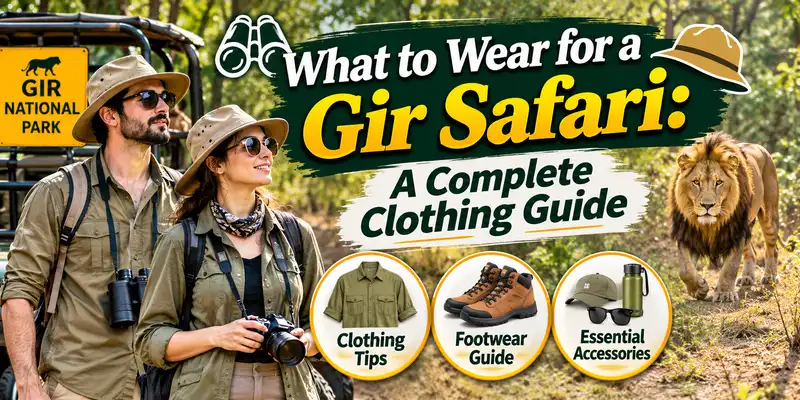
What to Wear for a Gir Safari: A Complete Clothing Guide
For a Gir safari, wear breathable, earthy-toned cotton clothing in olive, khaki, beige, brown or grey, with closed-toe shoes and socks and carry a warm layer for the cool early mornings, especially from November to February. Avoid bright colours, white, red and stark black, strong fragrances and open sandals. This guide, from Experience My India, covers the colours, fabrics, footwear, accessories and seasonal layers that make for a comfortable and considerate safari.
What you wear on a Gir safari matters more than you might think. The right clothing keeps you comfortable through an early, chilly start and a warming morning, protects you from sun and dust, and, importantly, helps you blend into the forest so you do not distract the wildlife you have come to see. This guide, from the team behind Somnath Dwarka Tour Package, a unit of Experience My India, covers exactly what to wear and what to avoid on a Gir jungle safari, from colours and fabrics to footwear, accessories and seasonal layers, so you are dressed for a comfortable and considerate wildlife experience in the home of the Asiatic lion.
The quick checklist
If you remember nothing else, dress by these simple rules, which the rest of this guide expands on:
Colours | Neutral, muted earth tones: olive, khaki, beige, brown, grey |
Avoid | Bright neons, white, red and stark black |
Fabrics | Loose, breathable cotton; full-length trousers or cargos |
Layering | A light jacket, fleece or sweater for cool mornings |
Footwear | Sturdy closed-toe shoes or sneakers with socks |
Accessories | Cap or wide-brimmed hat, sunglasses, a dust scarf |
Skip | Strong perfumes and body sprays |
Choose the right colours
Colour is the single most important clothing choice for a safari, for the wildlife's sake as much as your own. Choose neutral, muted tones that blend with the dry deciduous forest, such as olive green, khaki, beige, brown and grey. These earthy colours help you merge into the surroundings so that the animals are less aware of you, which improves both your sighting chances and the animals' comfort. Just as important is what to avoid: steer clear of bright neons, which stand out starkly against the forest, as well as white, which is highly visible and shows dust, red, which can agitate or distract some wildlife and stark black, which absorbs heat and stands out. Dressing to blend in is a small courtesy to the forest that pays off in better, calmer wildlife encounters.
Pick comfortable, protective fabrics
For comfort through a safari, wear loose, breathable cotton shirts and full-length trousers or cargos. Natural fabrics like cotton breathe well and keep you cool as the morning warms, while a loose fit allows easy movement in the Gypsy. Full-length sleeves and trousers, rather than shorts and short sleeves, protect you against the sun, the dust thrown up on the forest tracks and insects, which are all part of an open-vehicle drive. Cargos are popular for their pockets, handy for a phone, lens caps or sunscreen. Avoid anything too tight, too flimsy or synthetic, which can be uncomfortable over a three-hour drive. The goal is practical, protective comfort that keeps you at ease whether the morning is cold at the start or warm by the end.
Layer for cool mornings
One of the most common mistakes first-time safari-goers make is underdressing for the morning. Gir's early mornings can be genuinely chilly, especially from November to February, before the day warms up as the sun climbs. Because the best safari slots start at or before dawn, you will often set off in the cold and finish in pleasant warmth, so layering is essential. Bring a light jacket, fleece or sweater that you can wear at the start and remove and stow as temperatures rise. A layer you can easily take off and put back on is far better than a single heavy garment. This is especially true for the winter morning drives, which are the most rewarding for sightings, as our Gir National Park timings guide explains, so plan your layers around the slot you book.
Footwear for the safari
Footwear is about both comfort and practicality. Wear sturdy, closed-toe shoes or sneakers with socks, which protect your feet, keep out dust and are comfortable for the drive and any short walks at the reception or around your lodge. Closed shoes also keep your feet warmer on the cold morning start. What to skip is just as important: avoid flip-flops, open sandals and heels, which offer no protection from dust, insects or uneven ground and are unsuitable for a jungle setting. You do not need heavy hiking boots, as the safari is vehicle-based, but a solid pair of trainers or trekking shoes is ideal. Comfortable, closed footwear with socks is a small detail that makes the whole experience more pleasant from the early start onward.
Useful accessories
A few accessories round out your safari outfit and add real comfort:
A hat: a cap or wide-brimmed hat, ideally with a strap or secured against the wind of the open Gypsy, to shade you from the sun.
Sunglasses: to cut the glare and protect your eyes from sun and dust on the forest tracks.
A scarf or dust mask: to cover your nose and mouth against the dust kicked up on the drive, especially in the dry season.
A light daypack: for water, a camera and your layers once you shed them.
Sunscreen: applied before you set off, as the open vehicle offers little shade once the sun is up.
These small additions make a three-hour open-vehicle drive far more comfortable, particularly as the sun rises and the dust builds on the dry forest routes.
Skip the fragrances
One rule that surprises many visitors is to avoid strong perfumes, deodorants and body sprays before a safari. Strong fragrances can irritate or alert animals, whose sense of smell is far keener than ours, potentially reducing your chances of a close, calm sighting and scents can also attract insects, which are an unwelcome companion on an open drive. A safari is a time to be as neutral and unobtrusive as possible, in scent as in colour, so that you observe the wildlife without disturbing it. Go fragrance-free or as close to it as you can, on safari mornings. It is a small courtesy that, like muted clothing, helps you become part of the background rather than a distraction in the forest.
Dressing by season
What you wear should flex with the season, as Gir's climate shifts markedly across its open window of 16 October to 15 June. In winter, from October to February, the mornings are cold and the evenings cool, so warm layers are essential for the early drives, worn over your cotton base and shed as the day warms; this is the most comfortable and popular season. In summer, from March to mid-June, the days are hot and the afternoons draining, so light, breathable, full-cover cotton, a hat and plenty of water are the priority and the early morning slot is the most pleasant. The core park closes in the monsoon, from mid-June to mid-October. Whatever the season, the layering principle holds: dress for the cold start and the warm finish. Our how to plan a Gir tour guide helps you choose your timing.
Winter (Oct to Feb) | Cotton base plus a warm jacket or fleece for cold mornings; the most comfortable season |
Summer (Mar to mid-Jun) | Light, breathable full-cover cotton, a hat and lots of water; favour the morning slot |
Monsoon (mid-Jun to mid-Oct) | Core park closed; Devaliya open, with light rain-ready clothing if needed |
What not to wear
To summarise the things to avoid, so your safari and the wildlife are not compromised:
Bright and bold colours: neons, white, red and stark black all stand out and can distract or agitate wildlife.
Shorts and flimsy tops: they leave you exposed to sun, dust and insects over a long open drive.
Open footwear: flip-flops, sandals and heels offer no protection and are unsuited to the jungle.
Strong fragrances: perfumes and sprays can alert animals and attract insects.
Noisy, flashy accessories: jingling jewellery or anything that rustles loudly is best left behind.
Synthetic, non-breathable fabrics: they are uncomfortable as the morning warms up.
Dressing the part is good etiquette
Beyond comfort, dressing appropriately for a Gir safari is part of being a responsible wildlife tourist. Muted colours, a fragrance-free approach and quiet, unobtrusive clothing all reduce your impact on the animals and improve the experience for everyone in the vehicle, as well as for the wildlife itself. It complements the other conduct rules of the safari, such as staying seated, keeping quiet and not disturbing the animals, which are set out in our Gir National Park rules guide. Seeing the wild Asiatic lion, whose population has recovered so remarkably, is a privilege and dressing to blend quietly into its forest is a small way of honouring that. The best-dressed safari-goer is the one the lions barely notice.
Plan your Gir safari
Experience My India can plan your Gir safari with the permit and Gypsy arranged, a comfortable stay near Sasan and a well-paced itinerary that can also take in Somnath and the coast, so all you need to think about is what to pack. Our Somnath Dwarka tour packages and wider Gujarat tour packages weave Gir into a fuller Saurashtra journey, with a stay at well-placed hotels and comfortable local transport throughout.
Related guides
To plan your Gir safari further, these related guides help:
Related guide | What it covers |
How to book your safari permit in advance. | |
Choosing the zone with the best sighting odds. | |
Accommodation options near the Gir gate. |
Plan your visit
Experience My India can arrange your Gir safari and wider Gujarat journey. Browse more travel guides, message us on WhatsApp or call +91 73006 20809.

Harsh Rawat
Somnath–Dwarka circuit planning
Harsh Rawat runs Somnath Dwarka Tour Package on the ground in Gujarat, part of Experience My India. Since 2018 he has been planning and driving the Somnath–Dwarka circuit — the darshan timings, the road hours between temples and the stops worth adding — and the routes, fares and timings published across this site are the ones he maintains.