Diwali 2026: Dates, the Five Days, and Lakshmi Puja Muhurat
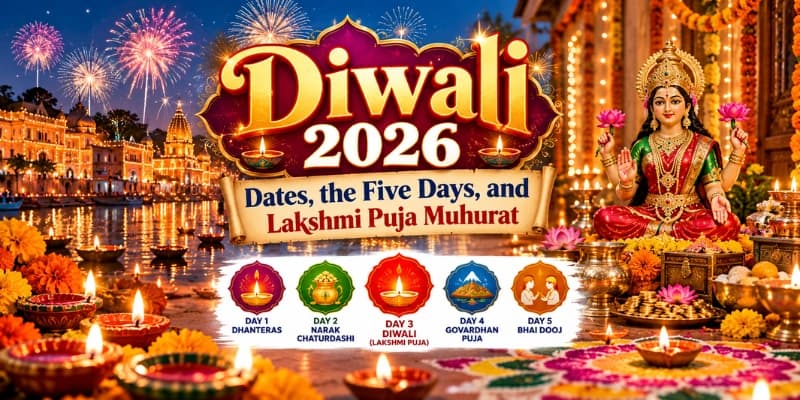
Diwali 2026, the festival of lights, falls on Sunday, 8 November 2026, the main day of Lakshmi Puja. The five-day festival runs from Dhanteras on 6 November to Bhai Dooj on 10 November. The Lakshmi Puja muhurat is in the evening, around 6:27 PM to 8:27 PM, celebrating the triumph of light over darkness.
Diwali, the grandest festival of lights, lights up all of India and nowhere more beautifully than the sacred temple towns of Gujarat like Dwarka, the city of Lord Krishna. This guide, from the team behind Somnath Dwarka Tour Package, a unit of Experience My India, covers the Diwali 2026 dates, the five days of the festival, the Lakshmi Puja muhurat, the significance of Diwali and how it is celebrated in Krishna's land.
When is Diwali 2026?
Diwali 2026, also called Deepavali, falls on Sunday, 8 November 2026, which is the main day of the festival, marked by Lakshmi Puja. Diwali is not a single day but a five-day festival, running from Friday, 6 November to Tuesday, 10 November 2026, with each day carrying its own meaning and rituals. The date of Diwali changes every year, as it is set by the Hindu lunar calendar, falling on the new moon or Amavasya, of the month of Kartik, usually in October or November. In 2026 the main Lakshmi Puja day is 8 November and the festival celebrates the triumph of light over darkness, good over evil and the worship of Goddess Lakshmi, the deity of wealth and prosperity. As this page gives the dates for 2026, the dates will differ in later years, so always check the current year's calendar when planning.
The five days of Diwali 2026
Diwali is a five-day festival and here are the five days with their dates for 2026, each with its own rituals and mood, from buying to feasting to family:
Day | Date | Festival |
Day 1 | Fri, 6 Nov 2026 | Dhanteras |
Day 2 | Sat, 7 Nov 2026 | Naraka Chaturdashi or Choti Diwali |
Day 3 | Sun, 8 Nov 2026 | Lakshmi Puja, the main Diwali |
Day 4 | Mon, 9 Nov 2026 | Govardhan Puja |
Day 5 | Tue, 10 Nov 2026 | Bhai Dooj |
The five days of Diwali in detail
Day 1, Dhanteras, Friday 6 November. The festival opens with Dhanteras, considered highly auspicious for buying gold, silver, new utensils or electronics, to invite wealth and prosperity into the home. Homes are cleaned and decorated and the first diyas are lit.
Day 2, Naraka Chaturdashi or Choti Diwali, Saturday 7 November. This day marks the victory of Lord Krishna over the demon Narakasura and is a major celebration day, especially in South India, where people take ceremonial oil baths in the early morning. It is also known as Choti or small, Diwali.
Day 3, Lakshmi Puja or main Diwali, Sunday 8 November. The central day of Diwali, when families worship Goddess Lakshmi for wealth and prosperity, light rows of diyas, burst fireworks, exchange sweets and gifts and share festive family meals. Homes and temples glow with lamps and lights.
Day 4, Govardhan Puja, Monday 9 November. Dedicated to Lord Krishna and nature, Govardhan Puja recalls Krishna lifting the Govardhan hill to shelter the people of Braj. It features grand Annakut celebrations, a mountain of food offered to the lord, especially prominent in the Mathura and Vrindavan region and at Krishna temples.
Day 5, Bhai Dooj, Tuesday 10 November. The festival closes with Bhai Dooj, which celebrates the loving bond between brothers and sisters, when sisters pray for their brothers' well-being and brothers give gifts, a warm, family-centred end to the five days.
Lakshmi Puja muhurat 2026
The most important ritual of Diwali is the Lakshmi Puja on the main day and it is performed in an auspicious window or muhurat, in the evening. The indicative timings for the Diwali 2026 Lakshmi Puja are:
Timing | Details |
Lakshmi Puja muhurat, Pradosh Kaal | About 6:27 PM to 8:27 PM, 8 November 2026 |
Vrishabha Lagna, fixed auspicious period | About 6:27 PM to 8:27 PM, for stable prosperity prayers |
Amavasya Tithi | Begins about 11:27 AM on 8 Nov, ends about 12:31 PM on 9 Nov |
The evening Pradosh Kaal, with the fixed Vrishabha Lagna, is considered ideal for worshipping Goddess Lakshmi for stable wealth and prosperity. Please note that these muhurat timings are indicative and vary by location, as they depend on the local sunset and position, so it is best to confirm the exact timings for your city with a local panchang or priest before the puja. Performing the Lakshmi Puja within the auspicious window is believed to bring the fullest blessings of the goddess for the year ahead, so many families plan their evening carefully around it.
The significance of Diwali
Diwali, the festival of lights, celebrates the timeless triumph of light over darkness, knowledge over ignorance and good over evil. It carries several sacred stories: the return of Lord Rama to Ayodhya after defeating Ravana, when the people lit rows of lamps to welcome him; the worship of Goddess Lakshmi, the deity of wealth, who is believed to visit clean, well-lit homes on the night of Diwali; and the victory of Lord Krishna over the demon Narakasura. Across India, homes and temples are cleaned, decorated with rangoli and lit with countless diyas and lamps, symbolising the inner light that protects from spiritual darkness. It is a time of joy, family, prayer, sweets and new beginnings, the most beloved festival in the Hindu calendar. Celebrated by millions across India and around the world, Diwali unites people of all backgrounds in a shared spirit of hope, gratitude and renewal, as the darkest night of the month is turned into a blaze of light.
Diwali and Lord Krishna
Two of the five days of Diwali are deeply connected to Lord Krishna, which makes the festival especially meaningful in his sacred city of Dwarka. Naraka Chaturdashi, the second day, celebrates Krishna's victory over the demon Narakasura, freeing the world from his tyranny. Govardhan Puja, the fourth day, recalls how Krishna lifted the mighty Govardhan hill on his little finger to shelter the people and cattle of Braj from a terrible storm, teaching devotion to nature and to the lord. For devotees of Krishna, Diwali is thus a celebration of the lord's protection and grace and the temples of Dwarka and the Krishna heartland glow especially brightly during the festival.
Diwali in Dwarka and Gujarat
Diwali is a magnificent time in the temple towns of Gujarat. At the Dwarkadhish temple in Dwarka and along the sacred Gomti Ghat, the festival is celebrated with special decorations, lamps and aartis and the whole city takes on a festive glow. In Gujarat, Diwali also flows into the Gujarati New Year, known as Bestu Varas, celebrated the day after the main Diwali, when people greet each other with Saal Mubarak and businesses open fresh account books. Visiting a temple town like Dwarka or Somnath during Diwali is a beautiful, joyful and deeply devotional experience, with the sacred sites at their most radiant, the lamps reflecting in the sea and the aartis carrying across the water.
How Diwali is celebrated
Diwali is celebrated with great joy and a rich array of customs. Homes are thoroughly cleaned and decorated with colourful rangoli, marigold garlands and strings of lights and lit with rows of diyas, the small oil lamps that give the festival its name. Families perform the Lakshmi Puja on the main evening, worshipping the goddess of wealth, then burst fireworks, exchange sweets and gifts, wear new clothes and share festive meals. Sweets like ladoos, barfi and jalebi are made and shared generously. It is a time for families to come together, for old quarrels to be forgotten and for new beginnings and the sight of a whole town glowing with lamps on Diwali night is one of the most beautiful in all of India. In the days before the festival, markets fill with shoppers buying lamps, decorations, new clothes and gifts and the whole country hums with a warm, anticipatory excitement that builds to the great night of lights.
Tips for Diwali 2026
A few pointers for the festival and for planning around it:
Note the main Lakshmi Puja day is Sunday, 8 November 2026, with the puja in the evening.
Confirm the exact Lakshmi Puja muhurat for your city locally, as timings vary by location.
Consider visiting a temple town like Dwarka or Somnath during Diwali for a deeply devotional celebration.
Book travel and stays well in advance, as Diwali is a peak festival and holiday period.
Celebrate safely with fireworks and enjoy the Govardhan Puja and the Annakut feast at Krishna temples.
Remember the Gujarati New Year, Bestu Varas, follows the day after the main Diwali across Gujarat.
Plan a Diwali trip
Experience My India can plan a Diwali visit to the temple towns of Gujarat, when they are at their most radiant. See the Dwarka city guide for what to see, plan your arrival with how to reach Dwarka, time your trip with the best time to visit Dwarka, book Somnath Dwarka hotels and let the Experience My India Somnath Dwarka tour packages or a Somnath Dwarka taxi service arrange the temples and the festive coast. For more festivals, see our festivals section.
Related guides
To plan a festive Gujarat trip, these related guides help:
Related guide | What it covers |
Air, rail and road access to the Somnath coast. | |
The Jyotirlinga of Lord Shiva near Dwarka. | |
The temple of Krishna's queen near Dwarka. | |
The top sights and spots around Dwarka. | |
The season and festivals that shape when to travel. | |
The sweets and food that fill the festive table. |
Plan your visit
Experience My India can arrange a festive Diwali trip to Dwarka, Somnath and Gujarat. Browse more travel guides, message us on WhatsApp or call +91 73006 20809.

Harsh Rawat
Somnath–Dwarka circuit planning
Harsh Rawat runs Somnath Dwarka Tour Package on the ground in Gujarat, part of Experience My India. Since 2018 he has been planning and driving the Somnath–Dwarka circuit — the darshan timings, the road hours between temples and the stops worth adding — and the routes, fares and timings published across this site are the ones he maintains.