Gomti Ghat, Dwarka: Aarti Timings, History and Complete Guide
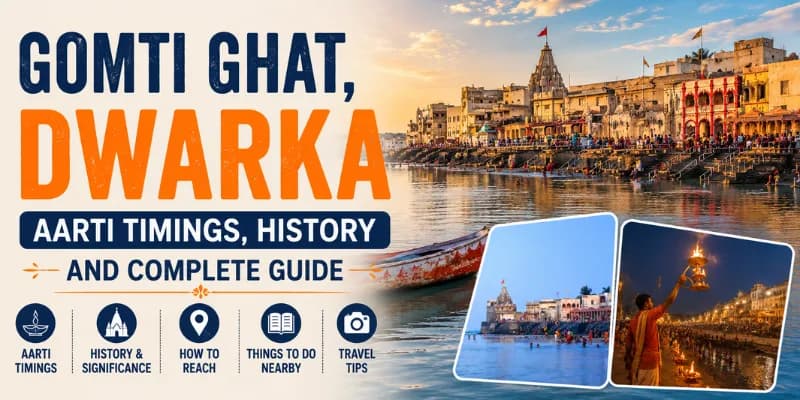
Gomti Ghat sits behind the Dwarkadhish temple in Dwarka, where the sacred Gomti river meets the Arabian Sea. The evening aarti is around 6:00 to 7:45 PM depending on the season, and pilgrims take a holy dip, reaching the water down 56 steps from the Swarga Dwar.
For most pilgrims, a visit to Dwarka begins not at the temple but at the water. This guide, from the team behind Somnath Dwarka Tour Package, a unit of Experience My India, covers everything about Gomti Ghat: where it is, its history, the aarti timings, the holy dip, what to see around it and how to reach it, along with a few honest answers to the questions travellers most often ask.
Where is Gomti Ghat located?
Gomti Ghat is located right behind the Dwarkadhish temple in the coastal city of Dwarka, in Gujarat, India. It sits at the point where the sacred Gomti river meets the Arabian Sea, a confluence known as the Gomti Sangam. You reach the water by walking down a flight of 56 steps from the temple's Swarga Dwar, the Gate to Heaven, so the ghat and the temple are just a short, natural walk apart. This closeness is why the traditional order is a holy dip at the ghat first, then darshan at the temple. The ghat lies on the eastern, creek-facing side of the temple, sheltered from the open sea, which keeps the water calmer here than on Dwarka's rocky main shore and this is what has made it the natural bathing place for pilgrims across the centuries.
The history of Gomti Ghat, Dwarka
The Gomti river of Dwarka is steeped in legend. According to tradition, the Gomti is a form of the sacred Ganga, brought down to earth through the penance of a sage so that pilgrims in the west could gain the same blessings as a dip in the Ganga. The river is closely tied to the story of Lord Krishna and his city of Dwarka and the ghat has been a place of ritual bathing, ancestral rites and prayer for centuries. Over time, the steps, shrines and the Swarga Dwar gateway grew around it, turning the riverbank into the sacred threshold to the Dwarkadhish temple that it remains today. To place it in the wider story of the city, see our guide to Dwarka history.
Gomti Ghat aarti timings
The evening aarti at Gomti Ghat, performed as the sun sets over the sea, is one of the most beautiful moments in Dwarka. The timing shifts with the season, following sunset:
Season | Approximate aarti time |
Winter (November to January) | Around 6:00 PM to 6:45 PM |
Spring and autumn (February to April, September to October) | Around 6:30 PM to 7:15 PM |
Summer (May to August) | Around 7:00 PM to 7:45 PM |
Reach the ghat about 30 minutes before sunset to get a good spot on the steps, as it fills quickly. Timings are approximate and follow the sun, so confirm locally on the day, especially around festivals when the schedule can change.
Can you take a bath at Gomti Ghat?
Yes, you can take a holy dip or snan, in the Gomti at the ghat and it is a cherished part of the Dwarka pilgrimage. The traditional practice is to bathe in the Gomti before taking darshan at the Dwarkadhish temple, cleansing yourself before entering the shrine. The best time for the dip is the early morning, between about 6:00 AM and 8:00 AM, when the ghat is calm or before the evening aarti. Many pilgrims also offer prayers to their ancestors here, as the Gomti Sangam is considered an auspicious place for such rites. Take the usual care on the wet, slippery steps, keep an eye on children near the water, carry a change of clothes and use the facilities near the ghat rather than changing at the waterline.
Things to see around Gomti Ghat
The ghat is the centre of a small cluster of sacred and scenic spots:
The Swarga Dwar: the Gate to Heaven, the grand stepped entrance from the temple down to the river.
Sudama Setu: the footbridge across the Gomti creek, offering lovely views back at the temple and town.
Panchnad Tirth: the five sacred freshwater wells near the ghat, part of the ritual circuit.
Chakra Tirth and Gomti temples: the small shrines along the bank, including the Samudra Narayan temple where the river meets the sea.
It also sits within easy reach of Bhadkeshwar Mahadev, the Shiva temple set out in the sea.
Gomti Ghat at night and photos
After the aarti, the ghat takes on a magical calm. The Dwarkadhish temple, lit up behind the steps, reflects on the water and the lamps floating on the river make for unforgettable photographs. The best pictures are of the temple shikhara framed from the Sudama Setu bridge, the aarti lamps at dusk and the Gomti Sangam at golden hour. Early risers are rewarded too, as the sunrise over the creek, with pilgrims bathing and the first light on the temple, is one of the most photogenic scenes in Dwarka. Enjoy the lit, busy stretches near the temple after dark and take the usual care with your belongings and footing on the steps at night.
How to reach Gomti Ghat
Gomti Ghat is right behind the Dwarkadhish temple, so from the temple it is only the 56-step walk down. To reach Dwarka itself, the town has its own railway station about 2 km away and the nearest airports are at Jamnagar and Porbandar, with Rajkot for more options. For the full breakdown, see our guide on how to reach Dwarka. Within the town, the ghat is walkable from most hotels near the temple or a short auto or Somnath Dwarka taxi service ride away.
Which Gomti joins the Ganga?
This is a common point of confusion, so it is worth clearing up. The Gomti at Dwarka is a small, sacred river in Gujarat that flows into the Arabian Sea at the Gomti Sangam and it does not join the Ganga. The Gomti that joins the Ganga is a different, much longer river in North India, the Gomti of Uttar Pradesh, which flows past Lucknow and meets the Ganga near Varanasi, at Kaithi in the Ghazipur area. The two share a name and a sacred aura, but they are separate rivers in different parts of the country.
Gomti Ghat in Dwarka, Dakor and Vadtal
The name Gomti appears at more than one pilgrimage site in Gujarat, which can be confusing when you search. This guide is about the Gomti Ghat in Dwarka, on the Gomti river behind the Dwarkadhish temple. Separately, the town of Dakor, famous for its Ranchhodrai temple, has its own Gomti tank and Vadtal, a major Swaminarayan seat, has a Gomti lake of its own too. They are distinct places with their own histories, so if you are planning a visit to Dakor or Vadtal, look for their specific temple and Gomti details rather than Dwarka's. This guide and its timings and directions, all refer to the Gomti Ghat in Dwarka, beside the Dwarkadhish temple.
Tips for visiting Gomti Ghat
A few pointers make the visit smoother and safer:
Arrive about 30 minutes before sunset for the aarti to find a place on the steps.
For a holy dip, come early, between 6:00 AM and 8:00 AM, when the ghat is calm.
Buy a small clay diya at the waterfront to float on the river during the ceremony.
Wear sandals with grip, as the stone steps get wet and slippery near the water.
Take darshan at the Dwarkadhish temple after your dip, following the traditional order.
Respect the devotional setting at all times and ask before photographing people bathing or praying.
Gomti Ghat at a glance
Location | Behind the Dwarkadhish temple, Dwarka, Gujarat |
Setting | Gomti Sangam, where the Gomti meets the Arabian Sea |
Access | 56 steps down from the Swarga Dwar |
Aarti | Around 6:00 to 7:45 PM, by season, at sunset |
Holy dip | Best 6:00 AM to 8:00 AM or before the aarti |
Nearest station | Dwarka, about 2 km |
Nearest airports | Jamnagar and Porbandar |
Best time to visit Gomti Ghat
The most rewarding months are the cooler winter, October to March, when the weather is pleasant for both a morning dip and the evening aarti. Within the day, two windows are special: sunrise, when the ghat is calm and the light is soft on the water and sunset, when the aarti draws the crowds. Weekends, Janmashtami and other festival days are the most atmospheric but also the busiest, so arrive early. Avoid the harsh summer midday and the rough, unpredictable monsoon sea. Experience My India can time your Dwarka visit so you catch both the morning dip and the evening aarti in comfort.
Combine Gomti Ghat with the rest of Dwarka
Gomti Ghat is the natural first stop on a Dwarka trip and it pairs with the city's other sights. After your dip and darshan, add Bet Dwarka, the Nageshwar Jyotirlinga and the Rukmini Devi temple. For the wider city, see the Dwarka city guide, plan the season with the best time to visit Dwarka and try the local snacks from our famous street food in Dwarka.
Related guides
To plan the rest of your Dwarka trip, these Experience My India guides help:
Related guide | What it covers |
How to reach Krishna's island of Bet Dwarka. | |
The short drive to the Nageshwar Jyotirlinga. | |
Darshan hours and ferry timings for Bet Dwarka. | |
The season and festivals that shape when to travel. | |
Access for the Somnath end of the coast. | |
One and two day plans for a Somnath visit. |
Plan your Dwarka trip
Experience My India can build Gomti Ghat, the Dwarkadhish darshan and the rest of Dwarka into one smooth trip. Browse the Somnath Dwarka tour packages or more travel guides, message us on WhatsApp or call +91 73006 20809.

Harsh Rawat
Somnath–Dwarka circuit planning
Harsh Rawat runs Somnath Dwarka Tour Package on the ground in Gujarat, part of Experience My India. Since 2018 he has been planning and driving the Somnath–Dwarka circuit — the darshan timings, the road hours between temples and the stops worth adding — and the routes, fares and timings published across this site are the ones he maintains.