Holi 2027: Dates, Holika Dahan, and the Festival of Colours
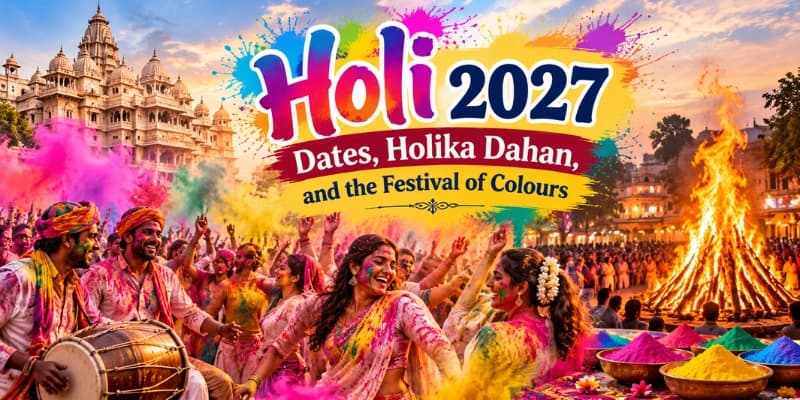
Holi 2027, the festival of colours, is celebrated on Monday, 22 March 2027, the day of Rangwali Holi, with Holika Dahan, the bonfire, on the night before, Sunday, 21 March 2027. It marks the arrival of spring and the triumph of good over evil, and is deeply tied to Lord Krishna.
Holi, the joyous festival of colours, is above all the festival of Lord Krishna, which makes it especially meaningful in his sacred city of Dwarka. This guide, from the team behind Somnath Dwarka Tour Package, a unit of Experience My India, covers the Holi 2027 dates, Holika Dahan, the legends behind the festival, its connection to Krishna and how the festival of colours is celebrated.
When is Holi 2027?
Holi 2027 will be celebrated on Monday, 22 March 2027, the main day of colours, known as Rangwali Holi, Dhulandi or Badi Holi. Holi is a two-day festival: it begins with Holika Dahan, the sacred bonfire, on the night before, Sunday, 21 March 2027 and is followed by the day of colours on 22 March. Holi falls on the full moon or Purnima, of the Hindu month of Phalguna, which usually comes in March, marking the arrival of spring. The date changes each year with the lunar calendar; in 2027 the day of colours is 22 March. The festival is celebrated across India and, increasingly, around the world, as one of the most exuberant and joyful of all Hindu festivals.
Holi 2027 at a glance
Festival | Holi, the festival of colours |
Holika Dahan | Sunday, 21 March 2027 |
Main day, Rangwali Holi | Monday, 22 March 2027 |
Marks | Spring, good over evil, Krishna and Radha |
In Gujarat | Dhuleti, the day of colours |
Purnima tithi | 6:21 PM 21 Mar to 4:13 PM 22 Mar 2027 |
The two days of Holi 2027
Holi is celebrated over two days, each with its own meaning:
Day | Date | Festival |
Chhoti Holi, Holika Dahan | Sun, 21 Mar 2027 | The sacred bonfire, night before |
Badi Holi, Rangwali Holi or Dhulandi | Mon, 22 Mar 2027 | The day of playing with colours |
On the evening of 21 March, Holika Dahan bonfires are lit to mark the burning of the demoness Holika and the triumph of good over evil and people gather around the flames to pray and celebrate. The next day, 22 March, is the great day of colours, when people of all ages come out onto the streets to smear and splash each other with brightly coloured powders or gulal and water, in a riot of joy. The Purnima tithi for 2027 begins about 6:21 PM on 21 March and ends about 4:13 PM on 22 March; as with all such timings, these are indicative and can vary by location, so confirm the local Holika Dahan muhurat before the festival. The Holika Dahan is performed at an auspicious time in the evening after moonrise, so the exact muhurat is worth checking with a local panchang.
What is Holi?
Holi is the festival of colours and of spring, one of the most ancient and beloved festivals of India. It celebrates the arrival of spring after winter, the triumph of good over evil and the divine love of Radha and Krishna. Over two days, it combines the solemn bonfire of Holika Dahan with the wild, joyful play of colours on Rangwali Holi, when social barriers dissolve and everyone, young and old, rich and poor, plays together as equals in a riot of colour. It is a time for forgiveness and fresh starts, for laughter and music and feasting and for the pure joy of colour, water and community. Few festivals anywhere in the world capture such exuberant, unrestrained happiness as Holi. Today it is celebrated not only across India but by communities around the world, its message of joy, renewal and togetherness reaching far beyond its ancient roots.
The legends of Holi
Prahlad and Holika. The bonfire of Holika Dahan comes from the story of the boy-devotee Prahlad, whose father, the demon king Hiranyakashipu, tried to kill him for his devotion to Lord Vishnu. His aunt Holika, immune to fire, sat in a blaze with Prahlad on her lap to burn him, but by the lord's grace Prahlad was saved and Holika herself was consumed by the flames. The Holika Dahan bonfire celebrates this triumph of devotion and good over evil and to this day people gather around the flames to remember that faith and righteousness always prevail.
Radha and Krishna. The play of colours comes from Lord Krishna, who, self-conscious about his dark blue skin, playfully coloured the face of the fair Radha and so began the tradition of friends and lovers colouring one another. This is why Holi is above all the festival of Krishna and Radha, celebrated most gloriously in the land of Krishna's childhood, Braj and in his city of Dwarka, where the play of colours carries the memory of the lord's own playful love.
Holi and Lord Krishna
Holi is, more than any other, the festival of Lord Krishna, which makes it deeply meaningful in his sacred city of Dwarka. The tradition of playing with colours began with Krishna and Radha in the land of Braj, around Mathura and Vrindavan, where Krishna spent his childhood and to this day the most famous Holi celebrations in the world take place there, from the Lathmar Holi of Barsana to the flower Holi of Vrindavan. Krishna later became the King of Dwarka and so his festival of colours carries a special resonance in the Dwarka of the west coast as well. For devotees of Krishna, Holi is a celebration of the lord's playful, joyful, loving nature and the temples of Krishna glow with colour and song during the festival.
Holi in Dwarka and Gujarat
In Gujarat, the day of colours is known as Dhuleti, while the bonfire night keeps the name Holi or Holika Dahan. At the Dwarkadhish temple in Dwarka, Krishna's own city, Holi is celebrated with special devotion, with colours, music and the singing of the lord's praises and the Dwarka city guide sights take on a festive air. Across Gujarat, Holika Dahan bonfires are lit on the eve and the next day the streets fill with colour and water as people celebrate Dhuleti. Visiting a Krishna temple town like Dwarka during Holi lets you experience the festival in the land of the lord himself, a joyful and devotional celebration in one of the holiest cities in India.
How Holi is celebrated
Holi is celebrated with unmatched exuberance. On the eve, communities gather around the Holika Dahan bonfire to pray, sing and mark the victory of good over evil. The next morning, the play of colours begins, as people smear each other with dry coloured powders or gulal and drench one another with coloured water from pichkaris or water guns and water balloons. Music, dance and drums fill the streets and everyone, friends and strangers alike, joins in the colourful fun. Festive foods and drinks are shared, from the sweet fried gujiya dumplings to the cooling, spiced milk drink thandai. It is a day when all barriers fall away, quarrels are forgiven and everyone celebrates together in a joyful riot of colour, one of the happiest days in the whole calendar. By evening, the colours give way to the washing off, fresh clothes and visits to family and friends, exchanging sweets and good wishes for the new season.
Tips for Holi 2027
A few pointers for the festival:
Note the day of colours is Monday, 22 March 2027, with Holika Dahan on the night of 21 March.
Confirm the local Holika Dahan muhurat for your city, as the timings vary by location.
Use natural, skin-friendly colours where you can and apply oil to your skin and hair beforehand to protect them.
Wear old clothes you do not mind staining and protect your eyes and phone from the colours and water.
Consider celebrating Holi in a Krishna temple town like Dwarka, in the very land of the lord of the festival.
Enjoy the festive foods, from gujiya to thandai and play the colours in a spirit of joy and respect.
Plan a Holi trip
Holi, in March, is a wonderful and festive time to visit the temple towns of Gujarat, as the pleasant winter gives way to spring. Experience My India can plan a trip that takes in the festival of colours along with the temples and the coast. Time your trip with the best time to visit Dwarka, plan your arrival with how to reach Dwarka, add a Gir lion safari, book Somnath Dwarka hotels and let the Experience My India Somnath Dwarka tour packages or the wider Gujarat tour packages arrange the festival, the temples and the coast. For more festivals, see our festivals section.
Related guides
To plan a festive Gujarat trip, these related guides help:
Related guide | What it covers |
Air, rail and road access to the Somnath coast. | |
The Jyotirlinga of Lord Shiva near Dwarka. | |
The sacred ghat and aarti beside the Dwarkadhish temple. | |
The top sights and spots around Dwarka. | |
The season and festivals that shape when to travel. | |
The sweets and food that fill the festive table. |
Plan your visit
Experience My India can arrange a festive Holi trip to Dwarka, Somnath and Gujarat. Browse more travel guides, message us on WhatsApp or call +91 73006 20809.

Harsh Rawat
Somnath–Dwarka circuit planning
Harsh Rawat runs Somnath Dwarka Tour Package on the ground in Gujarat, part of Experience My India. Since 2018 he has been planning and driving the Somnath–Dwarka circuit — the darshan timings, the road hours between temples and the stops worth adding — and the routes, fares and timings published across this site are the ones he maintains.