Maha Shivratri 2027: Date, Timings, Puja and Significance
Maha Shivratri 2027 falls on Saturday, March 6, 2027, the great night of Lord Shiva. It is observed with fasting, an all-night vigil, the abhishek of the Shivling, and the four-prahar night puja. At Somnath, the first Jyotirlinga, it is one of the grandest celebrations of the year.
Maha Shivratri, the Great Night of Shiva, is the most important festival for devotees of Lord Shiva and nowhere is it more powerfully felt than at his Jyotirlingas. This guide, from the team behind Somnath Dwarka Tour Package, a unit of Experience My India, covers the Maha Shivratri 2027 date and puja timings, its significance and rituals and how it is celebrated at Somnath, the first Jyotirlinga. For more, see our festivals section.
When is Maha Shivratri 2027?
Maha Shivratri 2027 falls on Saturday, March 6, 2027. The festival is observed on the fourteenth lunar day or Chaturdashi, of the waning moon in the Hindu month of Phalguna, according to the North Indian calendar or Magha in the South Indian calendar, the difference being only in the naming of the month, with both regions celebrating on the same day. Unlike most Hindu festivals, which are marked during the day, Maha Shivratri is observed through the night, which is considered the most auspicious time for the worship of Lord Shiva. The darkest night before the new moon is held to be the most powerful for Shiva worship, which is why the festival carries the name of the great night. As dates and timings follow the panchang and can vary a little by location, check your local calendar for the exact times at your city.
Maha Shivratri 2027 at a glance
Festival | Maha Shivratri, the great night of Shiva |
Date in 2027 | Saturday, March 6, 2027 |
Hindu date | Phalguna Krishna Chaturdashi |
Marks | The night of Shiva, his wedding and cosmic dance |
Main rituals | Abhishek, bilva leaves, jagran, fasting |
Grandest in Gujarat at | Somnath, the first Jyotirlinga |
Maha Shivratri 2027 puja timings
The night of Maha Shivratri is divided into four watches or prahars, each with its own worship and there is a special midnight muhurat called the Nishita Kaal. The approximate puja timings for Maha Shivratri 2027 are:
Puja | Time |
Nishita Kaal (midnight) | 12:07 AM to 12:57 AM, March 7 |
First Prahar puja | 6:24 PM to 9:28 PM, March 6 |
Second Prahar puja | 9:28 PM to 12:32 AM, March 7 |
Third Prahar puja | 12:32 AM to 3:36 AM, March 7 |
Fourth Prahar puja | 3:36 AM to 6:40 AM, March 7 |
The Nishita Kaal, around midnight, is considered the most auspicious time for the Shivratri puja, as it is believed to be when Lord Shiva appeared in the form of the lingam. Many devotees try to be at the temple or before their home shrine, at this hour for the most sacred worship of the night. These timings are for reference and can vary by city, so confirm them with your local panchang before the day and note that at a great Jyotirlinga like Somnath the temple stays open and the abhishekam continues right through all four prahars of the night.
Significance of Maha Shivratri
Maha Shivratri, meaning the great night of Shiva, holds deep spiritual significance. It is associated with several sacred events in the life of Lord Shiva. It is believed to be the night of the divine wedding of Shiva and Parvati, the reunion of the great god with his consort. It is also revered as the night on which Shiva performed the Tandava, his cosmic dance of creation, preservation and dissolution and the night when he appeared in the fiery form of the Jyotirlinga. Devotees also recall how Shiva drank the poison that emerged from the churning of the ocean to save the universe, holding it in his throat, which turned blue, earning him the name Neelkanth. On this powerful night, devotees fast, keep vigil and worship Shiva, seeking his blessings for health, prosperity, peace and spiritual growth. It is a night for overcoming the darkness and obstacles of life and the scriptures, from the Linga Purana onwards, praise the great merit of the Shivratri vrat, promising liberation to those who observe it with devotion.
Essential rituals of Maha Shivratri
Maha Shivratri is observed with a set of cherished rituals, kept through the day and the long night alike:
Abhishekam: bathing the Shivling with sacred offerings such as milk, honey, water, curd and ghee, the panchamrit, a central and beloved act of devotion.
Offerings: presenting bilva or bel, leaves, which are especially dear to Shiva, along with flowers, fruits, sandalwood and dhatura.
Jagran: keeping an all-night vigil, meditating and chanting the great mantra Om Namah Shivaya through the four prahars of the night.
Fasting: observing a strict fast or vrat, through the day and night, breaking it the following morning.
Maha Shivratri at Somnath, the first Jyotirlinga
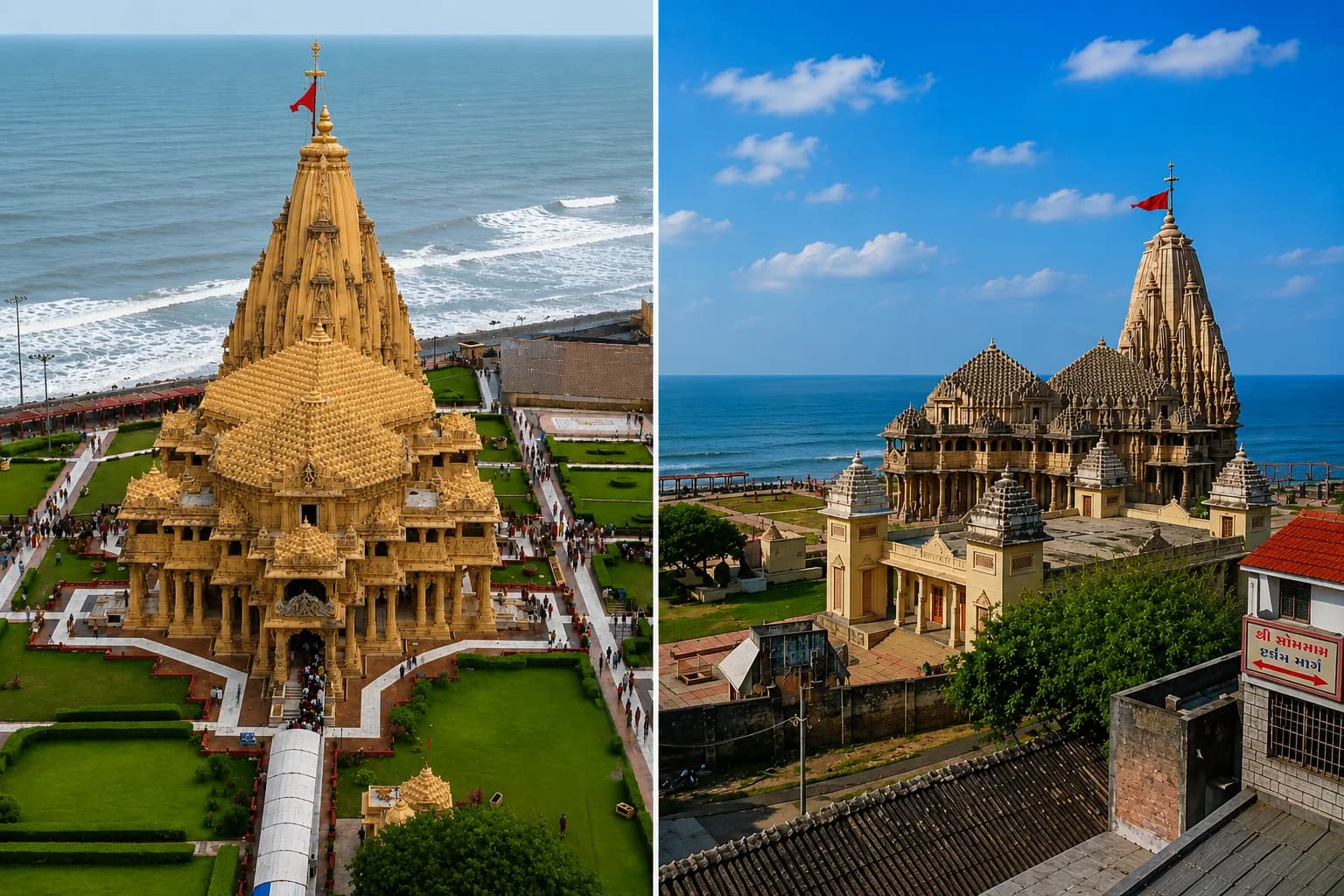
For Maha Shivratri, there is no more powerful place than a Jyotirlinga and Somnath, the first of the twelve Jyotirlingas of Lord Shiva, is one of the grandest celebrations in all of India. On this night the temple sees the heaviest footfall of the year, with continuous abhishekam of the sacred lingam, special aartis and long queues of devotees, as the great shrine by the sea glows through the night. To take darshan at Somnath on Maha Shivratri, amid the chanting, the lamps and the sound of the waves, is a deeply moving experience that stays with a devotee for a lifetime. The temple, which has itself been destroyed and rebuilt many times as a symbol of the undying power of faith, feels especially charged on the great night of the god it enshrines. Plan around the Somnath temple timings, read the Somnath temple history of the shrine and expect very large crowds on the festival, so plan your visit carefully and arrive early.
Maha Shivratri at Nageshwar and the Bhavnath fair
Gujarat has more than one great Shiva shrine to visit on this night. Near Dwarka lies the Nageshwar Jyotirlinga, another of the twelve Jyotirlingas, which is also celebrated with devotion on Maha Shivratri. Inland, at the foot of Girnar near Junagadh, the famous Bhavnath Mahadev temple hosts the grand Bhavnath fair over several days around Maha Shivratri, drawing thousands of pilgrims and Naga sadhus in a spectacular gathering. Together, Somnath, Nageshwar and the Bhavnath fair make Gujarat one of the most rewarding places to observe the great night of Shiva. A pilgrim on the Somnath and Dwarka circuit can, with a little planning, take darshan at two of the twelve Jyotirlingas around the festival, a rare and deeply blessed opportunity that few other regions of India can offer.
How to observe Maha Shivratri
You can observe Maha Shivratri at home or, best of all, at a temple, with these steps:
Rise early, bathe and take a sankalpa or resolution, to observe the fast and the night vigil with devotion.
Visit a Shiva temple, ideally a Jyotirlinga like Somnath, for darshan and the abhishek of the sacred lingam.
Bathe the Shivling with milk, honey, water, curd and ghee and offer bilva leaves, flowers and fruits with devotion.
Chant Om Namah Shivaya and the Mahamrityunjaya mantra and keep the night vigil in devotion through the four prahars.
Perform the special puja during the Nishita Kaal around midnight, held to be the most auspicious time of the night.
Break the fast the following morning after the concluding worship at the close of the fourth prahar.
Fasting food for Maha Shivratri
As a fasting day, Maha Shivratri calls for vrat food, which is light, satvik and free of ordinary grains, broken only the next morning. Popular fasting dishes include sabudana or tapioca pearls, cooked with peanuts and potato; puris and pakoras made from water chestnut or singhara and buckwheat or kuttu, flour; and fresh fruit. The cooling milk drink thandai, flavoured with nuts and spices, helps sustain those keeping a strict fast through the long night. These simple, nourishing foods let devotees observe the vrat while keeping their strength for the night vigil, so that the fast becomes a discipline of devotion rather than a hardship.
Tips for Maha Shivratri 2027
A few pointers to observe the day well:
Visit a Jyotirlinga like Somnath for the most powerful darshan of all, but expect very large crowds.
Reach the temple early to manage the long queues on this busiest of all Shiva nights.
Carry bilva leaves, flowers and offerings with you or buy them fresh at the stalls near the temple.
Keep the night vigil with mantras and perform the puja during the midnight Nishita Kaal if you can.
Eat light, satvik fasting food to sustain the vrat through the long night of vigil and worship.
Book travel and stays well in advance, as Maha Shivratri is the peak pilgrimage time of the year at Somnath.
Plan a Maha Shivratri pilgrimage
Experience My India can plan a Maha Shivratri pilgrimage to Somnath, the first Jyotirlinga and the wider coast. Combine it with the sacred Triveni Sangam, the Nageshwar Jyotirlinga near Dwarka and the Bhavnath fair at Girnar. Plan your arrival with our how to reach Somnath guide, time your trip with the best time to visit Gujarat, book Somnath Dwarka hotels and let the Experience My India Somnath Dwarka tour packages or a Somnath Dwarka taxi service handle the travel so you can focus on the darshan.
Related guides
To plan your Gujarat trip, these related guides help:
Related guide | What it covers |
Air, rail and road access to the Dwarka coast. | |
The sights within the Somnath temple town. | |
Distance, ropeway and steps for the Girnar climb. | |
The site where Krishna left his body, near Somnath. | |
One and two day plans for a Somnath visit. | |
When to add a lion safari to your pilgrimage. |
Plan your festival trip
Experience My India can arrange a Maha Shivratri pilgrimage to Somnath and the coast. Browse more travel guides, message us on WhatsApp or call +91 73006 20809.

Harsh Rawat
Somnath–Dwarka circuit planning
Harsh Rawat runs Somnath Dwarka Tour Package on the ground in Gujarat, part of Experience My India. Since 2018 he has been planning and driving the Somnath–Dwarka circuit — the darshan timings, the road hours between temples and the stops worth adding — and the routes, fares and timings published across this site are the ones he maintains.