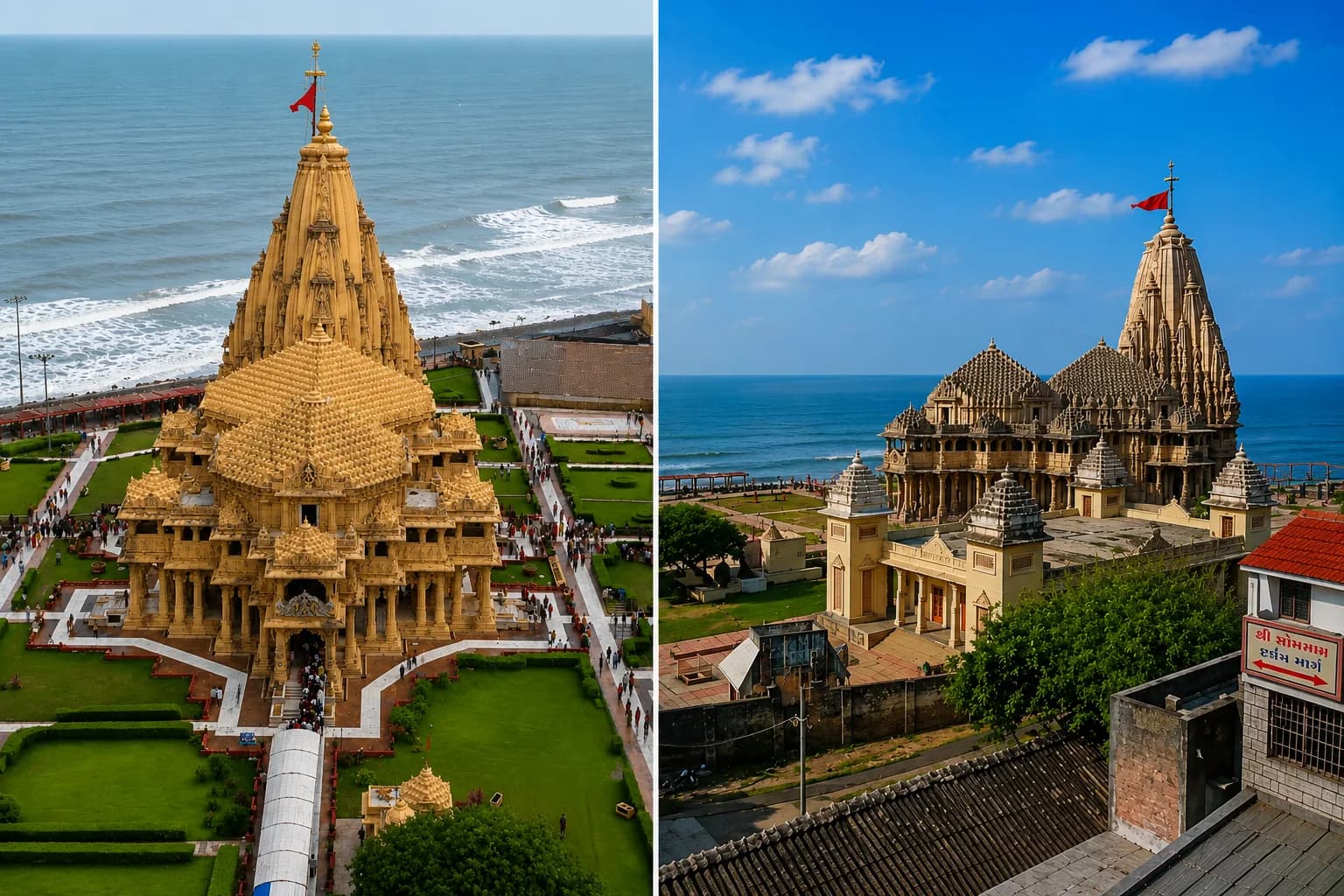
Dwarkadhish Temple Aarti Timings: The Daily Darshan Schedule
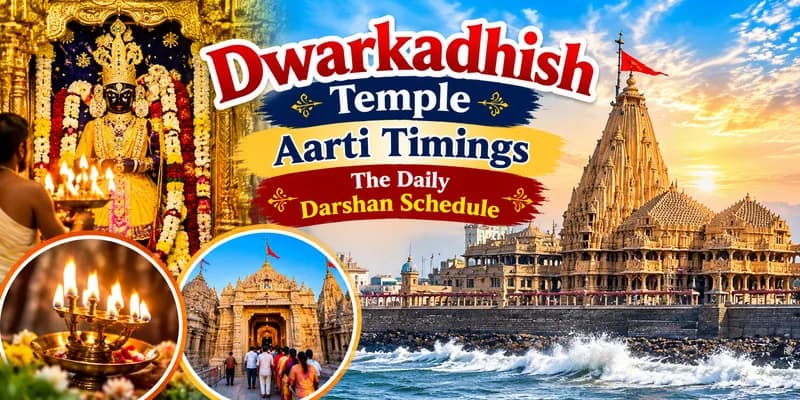
The Dwarkadhish Temple is open for darshan from 6:30 AM to 1:00 PM and 5:00 PM to 9:30 PM, closing midday for the deity's Anosar rest. Its daily aartis run from the Mangala Aarti at 6:30 AM through the Shringar, Gwal, Rajbhog, Utthapan and Sandhya aartis to the Shayan Aarti at 8:30 PM. This guide, from Experience My India, covers the full schedule.
The Dwarkadhish Temple, also known as the Jagat Mandir or Trilok Sundar, stands in the holy city of Dwarka, on the banks of the Gomti River where it meets the Arabian Sea. The temple runs on a strictly regulated, centuries-old schedule of aartis and darshan, with a distinctive midday closure for the deity's rest, so knowing the timings is essential to planning a smooth visit. This guide, from the team behind Somnath Dwarka Tour Package, a unit of Experience My India, sets out the full daily aarti and darshan schedule, explains what each aarti means and covers the unique 52-yard flag ritual, the festival timings and the practical details you need to have darshan of Lord Krishna in his own royal city.
Dwarkadhish Temple darshan hours
The Dwarkadhish Temple is open for general public darshan daily from 6:30 AM to 1:00 PM in the morning session and from 5:00 PM to 9:30 PM in the evening session. Between 1:00 PM and 5:00 PM the doors close for the deity's ritual rest, known as Anosar, so no darshan is available in the afternoon. Planning your visit around either the morning or the evening session and ideally around one of the aartis, lets you make the most of the darshan and avoid arriving during the closure. The evening session in particular, culminating in the lamp-lit Sandhya Aarti, is a beautiful time to be at the temple.
The daily aarti schedule
The temple performs a sequence of aartis through the day, each marking a moment in the Lord's daily routine. Here is the full schedule:
Aarti / Ritual | Timing | Significance |
Mangala Aarti | 6:30 AM | The first morning ritual, awakening the Lord from overnight rest |
Shringar Aarti | 7:30 to 8:00 AM | Performed after dressing and adorning the Lord with jewels and clothes |
Gwal Aarti | 10:30 AM | A mid-morning offering, representing the Lord taking the cows out to pasture |
Rajbhog Aarti | 12:00 PM | The grand midday royal feast offering, before the afternoon closure |
Anosar closure | 1:00 to 5:00 PM | The temple closes for the deity's ritual rest |
Utthapan | 5:00 PM | The opening ritual of the evening session, as the deity awakens |
Sandhya Aarti | 7:30 PM | The most attended evening lamp-lit service at dusk |
Shayan Aarti | 8:30 PM | The final aarti of the day, before the Lord is put to sleep |
A small note on timings: as with any living temple following a traditional schedule, the exact minutes can shift slightly day to day and with the season, so it is worth allowing a little flexibility and arriving a few minutes early for the aarti you wish to attend.
The seven aartis explained
Each aarti mirrors a stage in the daily life of Lord Krishna as the royal deity of Dwarka and following them through the day tells a complete story:
Mangala Aarti, 6:30 AM. The first ritual of the day, awakening the Lord from his overnight rest, a serene and auspicious start.
Shringar Aarti, around 7:30 to 8:00 AM. Performed after the Lord has been bathed, dressed and adorned with jewels and fine clothes.
Gwal Aarti, 10:30 AM. A mid-morning offering representing the Lord taking the cows out to pasture, recalling Krishna the cowherd.
Rajbhog Aarti, 12:00 PM. The grand midday royal feast offering, the principal food offering before the afternoon closure.
Utthapan, 5:00 PM. The opening ritual of the evening session, as the deity awakens from the Anosar rest.
Sandhya Aarti, 7:30 PM. The most highly attended evening lamp-lit service at dusk and for many the highlight of a visit.
Shayan Aarti, 8:30 PM. The final aarti of the day, before the Lord is ceremonially put to sleep and the temple closes.
Which aarti should you attend?
If you can attend only one, the Sandhya Aarti at 7:30 PM is the most atmospheric and the most popular, with the temple at its most vibrant in the evening lamplight. The Mangala Aarti at 6:30 AM offers a quieter, deeply peaceful start to the day as the Lord is awakened and it is wonderful for those who like to begin early. Many devotees staying overnight in Dwarka try to attend both, bracketing their day with the awakening and the evening service. The Rajbhog Aarti at noon is also a grand occasion, marking the royal feast, though it sits close to the midday closure. Whichever you choose, arriving a little early helps you find a good place as the temple fills.
The afternoon Anosar rest
One feature that surprises first-time visitors is the long midday closure. Between 1:00 PM and 5:00 PM the temple shuts its doors for the deity's Anosar, the ritual rest, during which no darshan is possible. This is a traditional part of caring for the deity as a living royal presence, who is awakened, bathed, fed, rested and put to sleep each day. For visitors it simply means planning around the gap: have your morning darshan before 1:00 PM or come for the evening session from 5:00 PM and use the afternoon to see Dwarka's other sights or to rest yourself. Knowing about the Anosar in advance saves a wasted trip to closed doors in the early afternoon.
The 52-yard Dhwaja flag ritual
The most unique living tradition at the Dwarkadhish Temple is the changing of its massive apex flag, the Dhwaja, which is shifted five times a day. Made from 52 yards of cloth and bearing the motifs of the sun and the moon, the flag symbolises that Lord Krishna's realm exists for eternity. It is changed on the main shikhar, the soaring spire, by the Aboti Brahmins who hold this hereditary honour, climbing the temple tower to replace it. Watching the colourful flag being carried in procession and hoisted high above the temple is a special sight and devotees often sponsor a Dhwaja as an offering. Because it happens five times daily, there is a good chance of witnessing a flag change during your visit and it is one of the most memorable rituals of Dwarka.
The two gateways to life
The temple has a beautiful symbolic arrangement of its doors. Devotees enter through the Swarga Dwar, the Gateway to Heaven, which faces the Gomti River steps and exit through the Moksha Dwar, the Gateway to Liberation. Passing through the temple from the Gateway to Heaven to the Gateway to Liberation is itself a small spiritual journey, echoing the pilgrim's hope of moving towards moksha. Arriving up the Gomti ghat steps and entering through the Swarga Dwar is the traditional way to approach the Lord and it adds a layer of meaning to the darshan, so it is worth entering and leaving by the correct gateways to experience the temple as it is designed to be experienced.
A brief history of the Jagat Mandir
The Dwarkadhish Temple carries an ancient lineage. Hindu tradition holds that the original temple was founded more than 2,500 years ago by Vajranabha, the great-grandson of Lord Krishna, built over the Hari Griha, the residential palace site where Krishna is said to have ruled. The historic structure was demolished by the armies of Mahmud Begada in 1472 and the magnificent five-storey temple that stands today was rebuilt during the 15th and 16th centuries in the distinctive Chalukyan architectural style, in limestone and sandstone. In the 8th or 9th century the great philosopher Adi Shankaracharya visited and established a matha here and you can read about it in our guide to the Shri Shardapeeth of Dwarka. The temple's place in the wider sacred map of Krishna's life is covered in our Krishna's three cities guide.
Spiritual significance
The Dwarkadhish Temple is one of the most significant pilgrimage sites in Hinduism. Dwarka is celebrated as one of the four Char Dham sites, alongside Badrinath, Puri and Rameshwaram, that a Hindu is encouraged to visit in a lifetime and it is also numbered among the Sapta Puri, the seven holiest ancient cities. It is revered as the legendary royal residence, the Dwarika Nagari of Lord Krishna after he moved from Mathura and as a premier gateway to spiritual liberation. Its place in the Gujarat pilgrimage circuit is set out in our Char Dham of Gujarat guide. This depth of significance is what makes darshan here, timed around the aartis, such a moving experience for pilgrims.
Janmashtami and festival timings
On major festival days the temple's schedule extends well beyond its usual hours. The greatest of these is Krishna Janmashtami, the celebration of Krishna's birth, when the temple remains open for extended hours and features a special midnight Janmotsav Aarti, with darshan continuing into the small hours of the morning. Janmashtami usually falls in August or September. If your visit coincides with it, expect enormous crowds and an electric, joyous atmosphere and plan carefully around the extended timings. Our guide to Janmashtami in Dwarka covers how Krishna's city celebrates the festival in full.
Temple rules and what to carry
Before you go, note that the Dwarkadhish Temple has strict rules. Mobile phones, cameras and leather items are prohibited inside and must be left at the official lockers near the entrance, so carry as little as possible and be ready to deposit your devices. Modest dress is expected, as at all major temples. The full set of rules is in our Dwarka temple rules guide and what to wear is covered in our Dwarka temple dress code guide, both worth reading before you arrive so you pass through smoothly in time for the aarti.
Location and how to reach
The Dwarkadhish Temple, the Jagat Mandir, stands in the heart of Dwarka, Gujarat, on the Gomti River. It is about 2.5 km from the Dwarka railway station, so it is a short ride into town and the nearest airport is at Jamnagar, roughly 130 to 136 km away. From the station or on arrival in the city, autos and taxis reach the temple easily. For the full picture of getting to Dwarka and moving around the coast, our Somnath Dwarka taxi service can arrange comfortable transport timed around the aarti sessions and the drive down to Somnath is covered in our Dwarka to Somnath distance guide.
Combining your darshan with Dwarka's sights
The afternoon Anosar closure is the perfect window to see Dwarka's other sights. Close to the temple are the Gomti Ghat steps on the river, the Gita Mandir and the Sudama Setu footbridge, while the island of Bet Dwarka and the Nageshwar area lie a short drive away. For a full plan, see our things to do in Dwarka and one day Dwarka itinerary guides and down the coast lies the great temple of Somnath.
Plan your Dwarka visit
Experience My India can plan your Dwarka darshan around the aarti sessions and the Anosar closure, with comfortable transport, a stay near the temple and a well-paced itinerary. Our Somnath Dwarka tour packages and wider Gujarat tour packages weave the temple into a fuller Saurashtra journey taking in Somnath, Gir and the coast, with a stay at well-placed Somnath Dwarka hotels.
Related guides
To plan the rest of your Dwarka visit, these related guides help:
Related guide | What it covers |
A one-day plan of Dwarka's key sights around your darshan. | |
The nine sacred Krishna temples pilgrimage near Dwarka. | |
A complete two-day plan for Krishna's holy city. |
Plan your visit
Experience My India can arrange your Dwarka pilgrimage and wider Saurashtra journey. Browse more travel guides, message us on WhatsApp or call +91 73006 20809.

Harsh Rawat
Somnath–Dwarka circuit planning
Harsh Rawat runs Somnath Dwarka Tour Package on the ground in Gujarat, part of Experience My India. Since 2018 he has been planning and driving the Somnath–Dwarka circuit — the darshan timings, the road hours between temples and the stops worth adding — and the routes, fares and timings published across this site are the ones he maintains.