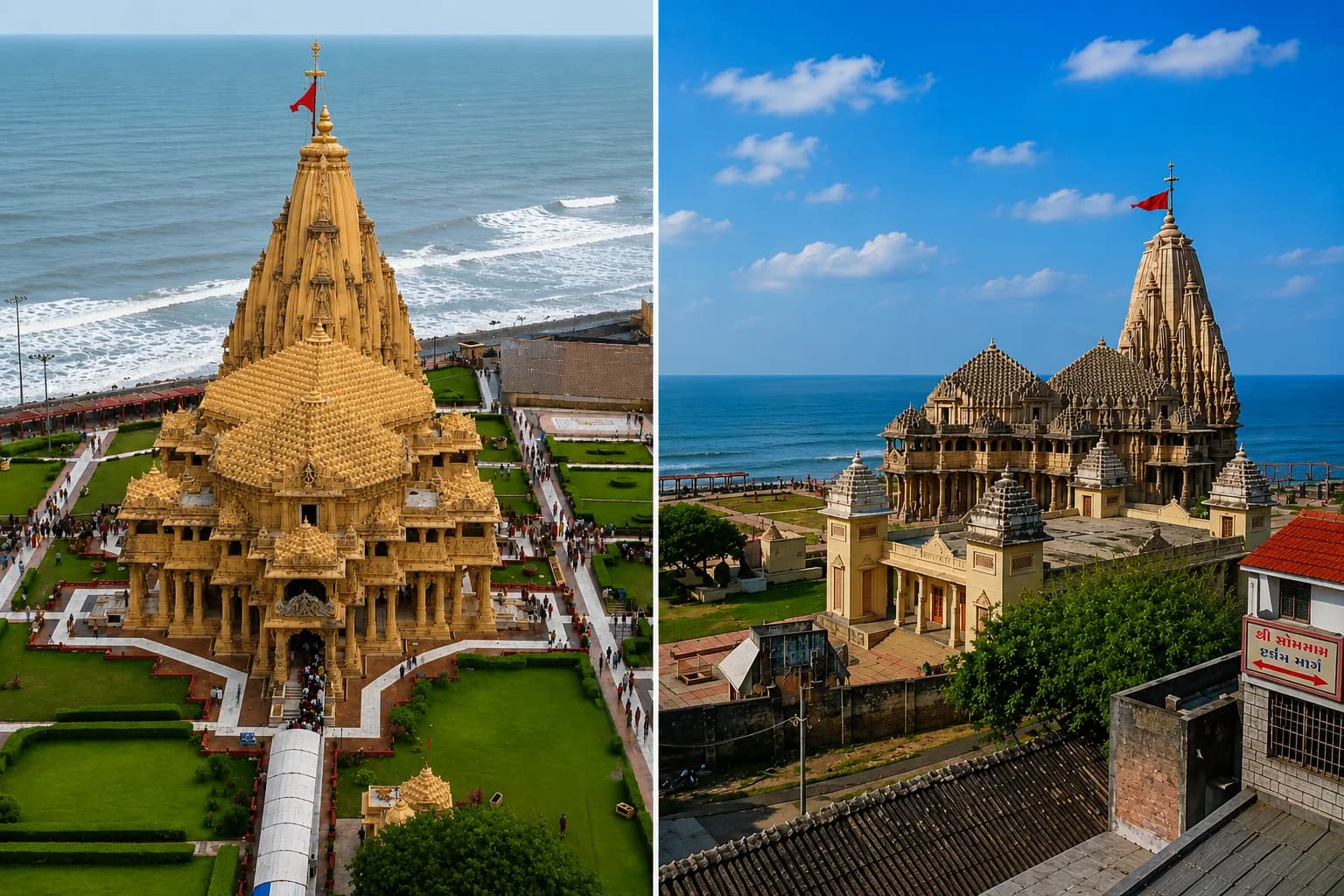
Gita Mandir Dwarka: Timings, Aarti and the Birla Marble Temple

Gita Mandir in Dwarka is a white marble temple built by the Birla family in 1970 to preserve the teachings of the Bhagavad Gita. Open 6:30 AM to 1:00 PM and 5:00 PM to 9:30 PM, with free entry, it stands near Sunset Point about 2 km from the Dwarkadhish temple, and is known for its Gita-engraved marble and a unique echo effect.
Amid the ancient temples of Dwarka, Krishna's holy city, the gleaming white Gita Mandir stands as a modern shrine to the timeless wisdom of the Bhagavad Gita. This guide, from the team behind Somnath Dwarka Tour Package, a unit of Experience My India, covers the Gita Mandir Dwarka timings and aarti schedule, its marble architecture and deities, the famous echo effect and how to reach this serene, seaside temple.
About Gita Mandir Dwarka
Gita Mandir, also spelled Geeta Mandir, is a prominent white marble temple in Dwarka, Gujarat, built in 1970 by the industrialist Birla family to preserve and promote the teachings of the Bhagavad Gita, the sacred scripture of Lord Krishna's counsel to Arjuna on the battlefield of Kurukshetra. Standing on the Arabian Sea coast near Sunset Point, it is one of a series of beautiful Gita Mandirs and Birla temples built across major Indian cities, including a sister Gita Mandir at Somnath. Serene, artistically elegant and beautifully maintained, it is a peaceful and uplifting stop on a Dwarka pilgrimage, as much a place of learning as of worship. As Dwarka is one of the four sacred Char Dham of India, the temple sits within one of Hinduism's holiest cities, giving its message of the Gita a fitting and powerful setting.
Gita Mandir Dwarka at a glance
Temple | Gita Mandir, the Birla marble temple |
Built | 1970, by the Birla family |
Dedicated to | The Bhagavad Gita and Lord Krishna |
Timings | 6:30 AM to 1:00 PM, 5:00 PM to 9:30 PM |
Entry | Free |
Location | Near Sunset Point, 2 km from Dwarkadhish temple |
Gita Mandir timings and aarti schedule
The Gita Mandir in Dwarka is open daily in two sessions, morning and evening, closed during the middle of the day. The darshan and aarti schedule is:
Event | Time |
Morning darshan | 6:30 AM to 1:00 PM |
Mangla Aarti | 6:30 AM |
Shringar Aarti | 10:30 AM |
Evening darshan | 5:00 PM to 9:30 PM |
Sandhya Aarti | 7:30 PM |
Shayan Aarti | 8:30 PM |
Timings can vary slightly with the season and temple decisions, so it is worth confirming them locally on the day of your visit. Attending an aarti, especially the morning Mangla Aarti or the evening Sandhya Aarti, is a moving experience and the temple's seaside setting near Sunset Point makes the evening particularly beautiful.
Architecture and the Bhagavad Gita
The Gita Mandir is a magnificent structure of pure white marble, artistically elegant and full of a serene, saintly atmosphere. What makes it truly special is its dedication to the Bhagavad Gita: the marble pillars and walls of the temple are engraved with the verses and summaries of the eighteen chapters or Adhyayas, of the Gita, so that the whole temple becomes a place to read and reflect on the scripture. There is also a Gita Stambh, a marble pillar inscribed with the teachings and the walls and ceilings carry beautiful paintings and depictions of Lord Krishna. To walk through the temple is to walk through the wisdom of the Gita itself, carved in stone, so that a visit is as much an education in Krishna's timeless message as an act of worship, a quality that sets Gita Mandir apart from the ancient shrines around it.
The deities of Gita Mandir
At the heart of the temple is a beautiful idol depicting the central scene of the Bhagavad Gita: Lord Krishna, holding the Sudarshana Chakra in one hand and the Panchajanya conch in the other, preaching the Gita to a kneeling Arjuna, who has laid down his Gandiva bow in surrender before the lord. It captures the very moment the eternal teaching was given. Within the temple premises stands a separate shrine dedicated to Sri Lakshminarayan, the divine couple of Vishnu and Lakshmi, adding to the sanctity of the complex. Together, the shrines make Gita Mandir a place of both Krishna devotion and the study of his teaching.
The echo effect and special features
One of the most delightful and unusual features of Gita Mandir is its acoustic echo effect. The main hall is designed so that a voice raised within the sanctum echoes back, a result of the large open space and the architecture of the roof. Visitors often pause to hear their own words or a chant, resound around the marble hall, which adds a sense of wonder to a visit. Along with the Gita-engraved pillars, the Gita Stambh, the Krishna paintings and the seaside setting, this echo makes Gita Mandir a genuinely memorable temple, quite different in feel from the ancient shrines of the old city and a favourite with children and adults alike.
Entry, dress code and rules
Entry to Gita Mandir is free for all visitors, in keeping with its purpose of sharing the teachings of the Gita. A few simple rules apply, out of respect for the sacred space:
Photography: photography is not allowed inside the temple, so store your camera and phone before entering the sanctum.
Dress code: traditional or formal clothing is recommended and modest, respectful dress is expected, as at all temples.
Timings: note the midday closure and plan your visit within the morning or evening darshan sessions.
Footwear: remove your shoes before entering, as is customary in Hindu temples.
Location and nearby temples
Gita Mandir stands on the Arabian Sea coast near Sunset Point, about 2 km from the main Dwarkadhish temple and about 4 km from Dwarka railway station, an easy trip within the town. It is very close to the Bhadkeshwar Mahadev temple, the sea-washed Shiva shrine, so the two are easily seen together, along with the sunset point and other nearby temples such as Siddheshwar Mahadev and the Gayatri Shaktipeeth. Its seaside setting, with lovely views of the Arabian Sea, makes it a peaceful and scenic spot, especially in the early evening as the sun sets over the water.
Accommodation and facilities
A special feature of Gita Mandir is that it offers accommodation for pilgrims within its premises, in a guest house or dharamshala, a great convenience for those wishing to stay near this peaceful, seaside part of Dwarka. The grounds are clean and spacious, with plenty of open space around the guest house, making it a restful base. Small stalls outside the temple sell flowers, sweets and other items for worship. For those who prefer to stay elsewhere, the temple is only a short distance from the town's main hotels and the Dwarkadhish temple.
How to reach Gita Mandir
Gita Mandir is easy to reach within Dwarka. It lies about 2 km from the Dwarkadhish temple and about 4 km from Dwarka railway station, so an auto rickshaw or taxi reaches it in a few minutes and many visitors combine it with the sunset point and Bhadkeshwar Mahadev on a short local circuit. If you are travelling to Dwarka from elsewhere, our how to reach Dwarka guide covers the air, rail and road options, with Jamnagar the nearest airport and Dwarka its own railway station. A Somnath Dwarka taxi service can include Gita Mandir in your Dwarka sightseeing.
Best time to visit
Gita Mandir can be visited year-round, but the best time is the cooler season, October to March, when the coastal weather is pleasant, in line with the best time to visit Dwarka. The early evening is especially lovely, as you can attend the Sandhya Aarti and enjoy the sunset over the Arabian Sea from the nearby Sunset Point. The temple is beautifully decorated on festival days such as Janmashtami and Holi, which are wonderful, if busy, times to visit. Plan your visit within the morning or evening darshan sessions, avoiding the midday closure.
Tips for visiting Gita Mandir
A few pointers make your visit smoother:
Combine Gita Mandir with the nearby Bhadkeshwar Mahadev temple and Sunset Point on a short local circuit.
Visit in the early evening for the Sandhya Aarti and the sunset over the Arabian Sea.
Take a moment to read the Gita verses engraved on the marble pillars and to hear the famous echo in the hall.
Dress modestly in traditional or formal clothing and leave cameras outside, as photography is not allowed.
Plan around the midday closure, visiting in the morning or evening darshan sessions.
Consider the on-site guest house if you wish to stay in this peaceful, seaside part of Dwarka.
Plan your Dwarka trip
Gita Mandir is a lovely addition to a Dwarka pilgrimage, alongside the great temple and the coast. Read our Dwarka city guide for what to see, take the aarti at Gomti Ghat, visit Bet Dwarka and the Nageshwar Jyotirlinga, book Somnath Dwarka hotels and let the Experience My India Somnath Dwarka tour packages handle the temples and the whole itinerary. You can also continue down to Somnath, which has its own Birla Gita Mandir.
Related guides
To plan the rest of your Dwarka trip, these related guides help:
Related guide | What it covers |
Air, rail and road access to the Somnath coast. | |
The season and festivals that shape when to travel. | |
The temple of Krishna's queen near Dwarka. | |
How to reach Krishna's island of Bet Dwarka. | |
The top sights and spots around Dwarka. | |
What to eat around the temple town. |
Plan your visit
Experience My India can arrange your Dwarka trip with Gita Mandir and the temples. Browse more travel guides, message us on WhatsApp or call +91 73006 20809.

Harsh Rawat
Somnath–Dwarka circuit planning
Harsh Rawat runs Somnath Dwarka Tour Package on the ground in Gujarat, part of Experience My India. Since 2018 he has been planning and driving the Somnath–Dwarka circuit — the darshan timings, the road hours between temples and the stops worth adding — and the routes, fares and timings published across this site are the ones he maintains.