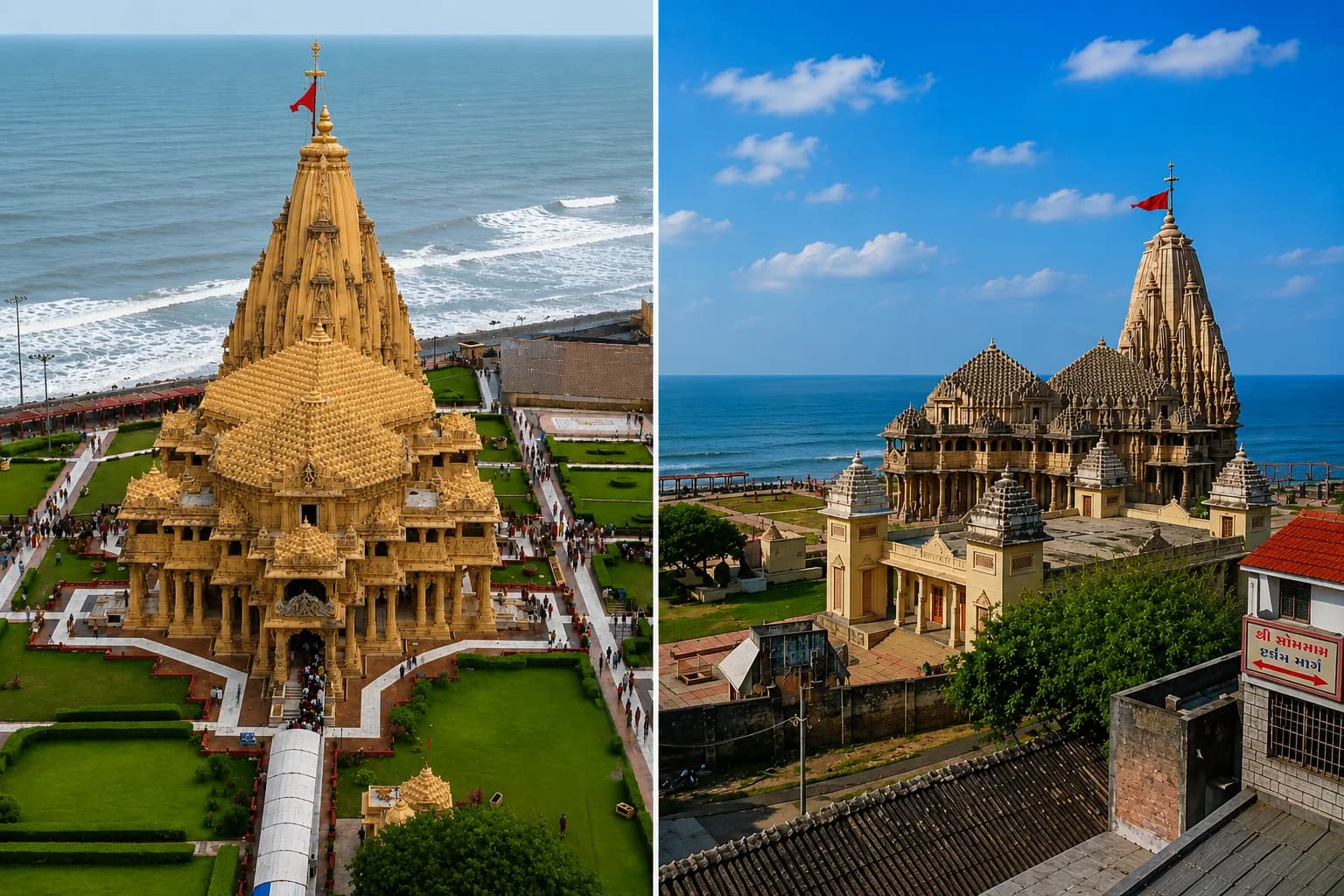
Famous Sweets of Gujarat: A Complete Guide to Gujarati Mithai
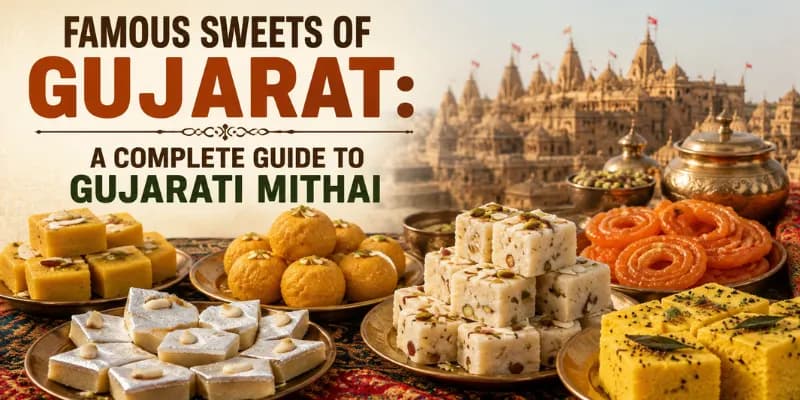
Gujarat's most famous sweets include Surat's Ghari, Mohanthal, Shrikhand, Basundi, Doodh Pak, Sutarfeni and Sukhdi, along with regional specials like Khambhat's Halvasan and the temple penda of Dwarka. Most are made with ghee, milk, jaggery or gram flour.
Gujaratis love their sweets and no festival, wedding, thali or temple visit is complete without mithai. This guide, from the team behind Somnath Dwarka Tour Package, a unit of Experience My India, rounds up the most famous sweets of Gujarat, what each is made of and where to try them. Together with the state's savoury dishes, covered in our famous food of Gujarat guide, these sweets are a delicious window into Gujarati culture.
Gujarat's love for sweets
Sweets hold a special place in Gujarati life. A festive Gujarati thali almost always includes at least one sweet dish, served first in many households and mithai is central to every celebration, from Diwali and Janmashtami to weddings and temple offerings. Made largely with ghee, milk, jaggery, sugar and gram flour, Gujarati sweets range from rich, dense fudges to delicate, thread-fine confections and cooling milk puddings. Many carry deep regional and religious associations and several towns are famous for their own signature sweet, making a journey through Gujarat's mithai a journey through its regions and traditions.
Famous sweets of Gujarat at a glance
Milk-based | Basundi, Doodh Pak, Shrikhand, Penda |
Gram flour and flour | Mohanthal, Magas, Sukhdi, Sutarfeni |
Festive | Ghari, Ghevar, Jalebi and Fafda |
Regional specials | Halvasan of Khambhat, Adadiya of Saurashtra |
Temple prasad | Mohanthal, penda and mishri |
Made with | Ghee, milk, jaggery, gram flour, dry fruits |
1. Ghari, the pride of Surat
Perhaps the most iconic of all Gujarati sweets, Ghari or Surati Ghari, is a rich, round sweet from Surat, made of a puri-like casing filled with a mixture of milk mawa, ghee, sugar and dry fruits. It comes in many flavours, from pistachio and almond-elaichi to kesar and mawa. Ghari is famously eaten on Chandani Padva, the festival the day after Sharad Purnima, when the people of Surat gather on their terraces under the full moon to enjoy it, consuming it by the tonne. Dense, luxurious and unforgettable, it is a must-try when in Surat.
2. Mohanthal
Mohanthal is a beloved fudge-like sweet made from gram flour or besan, slowly roasted in ghee until aromatic and golden, then set with sugar syrup, saffron, cardamom and nuts. It has a lovely grainy texture and a deep, rich flavour. The name itself is telling: Mohan is a name of Lord Krishna and thal means an offering and Mohanthal is traditionally offered as prasad to Krishna in temples, as well as made for festivals like Diwali and Janmashtami and for weddings. The Gujarati version is distinct from its Rajasthani cousin and it is one of the most cherished festive sweets of the state.
3. Shrikhand
Shrikhand is a creamy, luscious dessert of thick strained yogurt sweetened and flavoured with cardamom, saffron and nuts, often studded with charoli. Cool, rich and refreshing, it is a classic of the Gujarati table, most famously eaten as Shrikhand and Puri, a beloved combination served at festivals, celebrations and special lunches. Popular varieties include kesar shrikhand and the fruit-laden matho. Easy to love and deeply satisfying, Shrikhand is one of the sweets that visitors to Gujarat remember most fondly.
4. Basundi
Basundi is a rich, thickened sweet milk, simmered slowly for a long time until it reduces and deepens in flavour, then sweetened and flavoured with cardamom, saffron and slivered nuts. Served warm or chilled, it is a festive favourite across Gujarat, often accompanying puris or enjoyed on its own. Similar to but thicker than rabri, basundi is the kind of indulgent, comforting sweet made for celebrations and family gatherings and a wonderful example of Gujarat's mastery of milk-based desserts.
5. Doodh Pak
Doodh Pak is Gujarat's much-loved rice and milk pudding, a kind of festive kheer in which rice is cooked slowly in sweetened, thickened milk and perfumed with cardamom, saffron and dry fruits. Richer and creamier than everyday kheer, it is traditionally made for festivals and special occasions and often served with puris. Warm, fragrant and soothing, Doodh Pak is a staple of celebratory Gujarati meals and a comforting classic that appears at weddings and religious functions across the state.
6. Sutarfeni
Sutarfeni is a delicate, thread-fine sweet whose very name describes it: sutar means thread and feni means fine. Made from finely shredded flour roasted in ghee and blended with melted sugar, then topped with pistachios and almonds and flavoured with cardamom or rose, it has a light, flaky, almost cotton-candy-like texture. Creating its uniform strands takes real skill, making Sutarfeni a labour of love. Often enjoyed with warm milk, this elegant, melt-in-the-mouth sweet is a Gujarati speciality that also appears at festivals and celebrations.
7. Sukhdi or Gol Papdi
Sukhdi, also called Gol Papdi, is a simple, wholesome everyday Gujarati sweet made from just three humble ingredients: whole wheat flour, ghee and jaggery. The flour is roasted in ghee until fragrant, jaggery is stirred in and the mixture is set and cut into squares or diamonds. When made well, Sukhdi has a soft, crumbly, melt-in-the-mouth texture and a deep, earthy sweetness. Nourishing and quick to make, it is a comfort food of Gujarati homes, often given to children and made as a quick prasad or treat.
8. Halvasan, the pride of Khambhat
Halvasan is a unique regional sweet that originates from the town of Khambhat or Cambay. Made from wheat flour, milk and dry fruits, it is cooked slowly over low heat with constant stirring, developing the gluten in the wheat to give it a distinctively dense, chewy, slightly elastic texture, studded with visible nuts. Cut into blocks and prized for its long shelf life, Halvasan is a speciality that people specifically seek out in Khambhat and a wonderful example of how individual Gujarati towns have their own signature mithai.
9. Adadiya, the winter sweet of Saurashtra
Adadiya or Adadiya Pak, is a rich winter sweet especially popular in Saurashtra, made from urad dal flour, ghee, jaggery or sugar and a warming blend of dry fruits and spices like ginger, pepper and edible gum. Traditionally eaten in the cold months as a nourishing, warming tonic-sweet, it is dense, energising and deeply flavoured. Adadiya is the kind of seasonal speciality that appears in sweet shops across Saurashtra in winter, a reminder that Gujarati mithai changes with the seasons as well as the regions.
10. Magas or Magaj
Magas, also known as Magaj or Besan na Ladu when shaped into balls, is a festive sweet made from gram flour roasted in ghee with sugar, enriched with saffron, nutmeg, cardamom and nuts. Similar in spirit to Mohanthal but with its own texture and character, it is prepared especially for festivals and weddings, filling the home with its warm, roasted aroma. Rich and satisfying, Magas is a classic of the Gujarati festive spread and a favourite Diwali sweet in many households across the state.
11. Jalebi and Fafda
No list of Gujarati sweets is complete without Jalebi, the crisp, syrup-soaked spirals of fermented batter beloved across India but especially cherished in Gujarat. Here it has a famous partner: the Jalebi and Fafda combination, sweet jalebi paired with the savoury, crunchy gram-flour fafda, is the traditional treat of Dussehra, eaten across the state on the festival morning. Hot, crisp and dripping with syrup, jalebi is a joyful, everyday indulgence and a festive essential, often enjoyed fresh from the sweet shop with a cup of tea.
12. Penda and mishri, the temple prasad
Among the sweets most tied to Gujarat's temples is the penda, a soft, round sweet of thickened milk and sugar, flavoured with cardamom and often saffron, distributed as prasad at shrines across the state. The temple town of Dwarka is especially known for its penda and for mishri, the crystallised sugar offered and shared as sacred prasad after darshan. Picking up a box of penda or mishri from Dwarka is a cherished ritual for pilgrims, carrying the blessings of the Dwarkadhish temple home in the sweetest possible form.
Sweets as temple prasad in Gujarat
Many Gujarati sweets are inseparable from devotion. Mohanthal is offered to Lord Krishna, penda and mishri are shared as prasad at Dwarka and other temples and rich milk sweets like basundi and doodh pak grace festival and prasad thalis. When you visit the great temples of the coast, from Dwarka to Somnath, tasting the local prasad sweets is part of the spiritual experience, connecting the palate with the pilgrimage in a way that is uniquely Gujarati.
Where to try Gujarat's famous sweets
The best way to enjoy these sweets is fresh from the source:
Surat: for the legendary Ghari, especially around Chandani Padva and for Ghari shops open year-round.
Khambhat: for the chewy, long-keeping Halvasan, a true local speciality.
Saurashtra towns: for winter Adadiya and everyday Sukhdi and Magas.
Temple towns: for penda and mishri as prasad, especially in Dwarka.
Any Gujarati sweet shop: for Shrikhand, Basundi, Doodh Pak, Sutarfeni, Mohanthal and Jalebi, made fresh.
Tips for enjoying Gujarati sweets
A few pointers to make the most of the mithai:
Buy from busy, reputed sweet shops for the freshest and most authentic mithai.
Try the town specialities where they are made, like Ghari in Surat and Halvasan in Khambhat.
Pair Shrikhand or Basundi with hot puris for the classic Gujarati experience.
Seek out seasonal sweets like Adadiya in winter and Ghari around Chandani Padva.
Carry back long-keeping sweets like Halvasan, Sukhdi or Ghari as edible souvenirs.
Take home penda and mishri from Dwarka as blessed prasad from the temple.
Plan a Gujarat food and temple trip
Gujarat's sweets are best enjoyed alongside its temples, coast and culture. Combine a Dwarka and Somnath pilgrimage with the local mithai and street food, sampling penda in Dwarka and the flavours in our famous street food in Dwarka guide. Plan the season with the best time to visit Gujarat and explore the wider state with our Gujarat tour packages. Experience My India can weave together the temples, the coast and the tastes of Gujarat into one memorable trip.
Plan your Gujarat trip
Experience My India can plan a Gujarat trip that takes in its temples, coast and cuisine. Browse the Somnath Dwarka tour packages, book Somnath Dwarka hotels and let a Somnath Dwarka taxi service handle the travel while you savour the state.
Related guides
To plan the rest of your Gujarat trip, these related guides help:
Related guide | What it covers |
Air, rail and road access to the Dwarka coast. | |
Access for the Somnath end of the coast. | |
The best months for the Dwarka coast. | |
When to plan a lion safari on your trip. | |
The sacred ghat and aarti beside the Dwarkadhish temple. | |
The sights within the Somnath temple town. |
Plan your visit
Experience My India can arrange your Gujarat trip, temples, coast and cuisine together. Browse more travel guides, message us on WhatsApp or call +91 73006 20809.

Harsh Rawat
Somnath–Dwarka circuit planning
Harsh Rawat runs Somnath Dwarka Tour Package on the ground in Gujarat, part of Experience My India. Since 2018 he has been planning and driving the Somnath–Dwarka circuit — the darshan timings, the road hours between temples and the stops worth adding — and the routes, fares and timings published across this site are the ones he maintains.