The Maldhari Tribe of Gir: The People Who Live with Lions
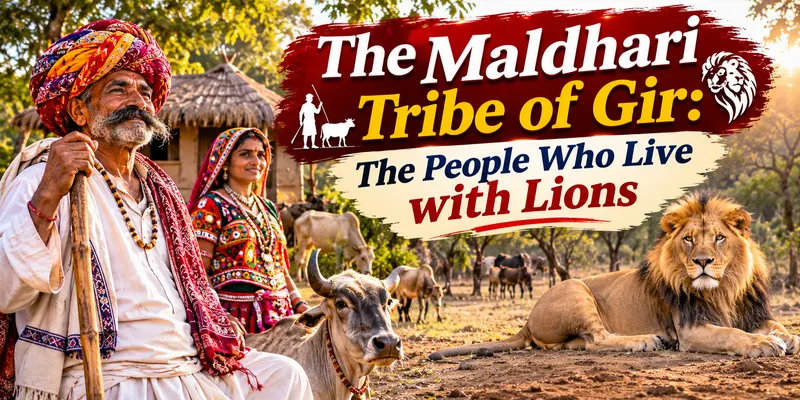
The Maldhari are a semi-nomadic pastoralist community living inside the Gir forest in Gujarat, renowned for their centuries-old peaceful coexistence with the endangered Asiatic lion. Their name comes from Mal, meaning animal stock and Dhari, meaning keeper, reflecting their life as cattle herders and dairymen. They live in forest settlements called nesses and are widely credited with helping save the lion from extinction. This guide, from Experience My India, tells their story.
The story of Gir is not only about its lions but about the people who have shared the forest with them for generations. The Maldhari, the semi-nomadic cattle herders of Gir, are one of the world's most remarkable examples of humans and large predators living side by side and they are widely credited with helping save the Asiatic lion from extinction. This guide, from the team behind Somnath Dwarka Tour Package, a unit of Experience My India, tells the story of the Maldhari: who they are, their forest settlements and way of life, their extraordinary coexistence with the lions, their history and their culture, so you can understand the human heart of the Gir conservation story when you visit.
Who are the Maldhari?
The Maldhari are a semi-nomadic pastoralist community living inside the Gir Wildlife Sanctuary, whose entire way of life revolves around their livestock. Their name says it all: it comes from the Gujarati words Mal, meaning animal stock and Dhari, meaning keeper, so a Maldhari is literally a keeper of animals, reflecting their traditional livelihood as cattle herders and dairymen. Maldhari is really an occupational title shared by several groups in Gir, primarily Hindu pastoral castes such as the Rabari, Bharwad and Charan, alongside some Muslim pastoralist families. Despite these different origins, they share a common forest-dwelling, cattle-rearing way of life that has shaped Gir for centuries. Living simply and close to nature, the Maldhari are inseparable from the identity of the Gir forest itself.
The nesses: forest settlements
The Maldhari live in traditional forest settlements called nesses, which are the heart of their world. A ness is a small cluster of mud-walled, thatched-roof huts, surrounded by a thorn fencing known as a zok, built to protect the livestock from predators at night, the lions and leopards that share the forest. There are roughly 54 nesses inside the sanctuary buffer zones, including around 24 in Gir East and 30 in Gir West, though following government relocation programmes there are now zero settlements inside the core national park zone. Visitors on safari may glimpse these settlements and the Maldhari herders along the designated routes, a window into a way of life little changed in centuries. The nesses, scattered through the forest the lions also roam, are the physical expression of the Maldhari and wildlife coexistence that makes Gir unique, as covered alongside the wildlife in our Gir National Park animals guide.
Settlements | Nesses: clusters of mud-walled, thatched huts |
Zok | Thorn fencing around a ness to protect livestock at night |
Number | Roughly 54 nesses in the buffer zones (about 24 in Gir East, 30 in Gir West) |
Core zone | Zero settlements, following relocation programmes |
Current residents | Around 4,000 Maldharis with about 19,000 livestock |
Coexistence with the Asiatic lion
The most extraordinary thing about the Maldhari is their peaceful coexistence with the Asiatic lion and they are widely credited with helping save the species from extinction. Living in the same forest the lions roam, the Maldhari inevitably lose some livestock to predation, yet, remarkably, the community rarely retaliates. Many view the loss of an animal to a lion not as a tragedy to be avenged but as prasad, a divine offering to the forest, a worldview of acceptance and reverence that has protected the lions for generations. This tolerance, at a time when big cats elsewhere were being hunted and poisoned, gave the Gir lions a refuge and is a major reason the lion population survived and recovered. The Maldhari relationship with the lion is studied worldwide as a model of human and wildlife coexistence and it is the human foundation beneath Gir's conservation triumph.
The Maldhari economy and cattle
The Maldhari economy rests entirely on their animals and they are renowned cattle breeders. They rear prized indigenous breeds, notably the Gir cow, famous across India for its hardiness and rich milk and the Jafrabadi buffalo, one of the largest and most productive buffalo breeds. Their livelihood depends on selling organic milk, pure ghee and natural manure in the nearby towns, products valued for their quality and traditional production. This dairy economy, built on indigenous breeds adapted to the dry forest, is both the Maldhari's sustenance and a contribution to the region's wider agriculture, since Gir cattle are sought after far beyond the forest. The health of their herds, grazed in the same landscape the lions hunt, is central to the delicate balance between the community, their livestock and the wildlife that occasionally preys upon it.
A simple, traditional lifestyle
The Maldhari lead a simple, traditional life deeply attuned to the forest. Living in their nesses without electricity or modern infrastructure, they follow a largely vegetarian diet and a rhythm of life set by their cattle and the seasons. Their culture is rich despite its material simplicity: the women are renowned for intricate mirror-work embroidery, traditional jewellery and folk songs, arts passed down through generations and part of the wider craft heritage of the region explored in our famous art and craft of Gujarat guide. This way of life, close to nature and governed by old customs, is what allows the Maldhari to live in harmony with the forest and its predators and it gives Gir a living human culture alongside its wildlife, something few national parks can offer.
Origins and history
The Maldhari were originally nomadic herders who migrated from Rajasthan, Sindh and Kutch, settling in the Gir region well over 125 to 300 years ago. For much of their history, they supplied fresh milk, ghee and cheese to the royal palaces of the local rulers, their dairy products prized by the courts of Saurashtra. Over the centuries they became an integral part of the Gir forest, their nesses and herds woven into its landscape long before it became a protected sanctuary. This deep history explains why the Maldhari are not seen as outsiders in Gir but as part of its fabric, a community whose presence predates the park and whose traditional tolerance of the lions helped the species endure through the dangerous decades when it came close to extinction elsewhere.
The relocation programmes
The relationship between the Maldhari and the protected forest has not been without tension. Starting in 1972 under the Gir Lion Sanctuary Project, the government resettled hundreds of families outside the core park area, with the aim of reducing cattle overgrazing and allowing the wild prey populations, the deer and antelope the lions depend on, to recover. This was a significant and sometimes difficult change for a community so bound to the forest. The result is that there are now no settlements inside the core national park zone, while around 4,000 Maldharis and some 19,000 livestock continue to reside in the sanctuary's buffer nesses. The relocation reflects the ongoing effort to balance the needs of the community, the recovery of the wild prey base and the thriving of the Asiatic lion, a balance that remains central to managing Gir today.
Seeing the Maldhari way of life
Visitors to Gir can glimpse the Maldhari way of life, but with important courtesies. The nesses are residential communities, not ticketed monuments, so they have no separate opening hours; instead, tourists primarily observe the Maldhari herders and their settlements along the designated safari routes inside the park. The jeep safaris that offer these glimpses run in their usual daily slots and require permits booked online in advance, as set out in our Gir safari booking online guide, with the whole forest closed from 16 June to 15 October for the monsoon. Visitor etiquette is essential: you are strictly prohibited from stepping out of the safari vehicle, from entering a ness without official permission and from photographing Maldhari villagers without their explicit consent. Respecting their privacy and dignity is part of being a responsible visitor to their forest home.
Why the Maldhari matter to conservation
The Maldhari are far more than a cultural curiosity; they are integral to the Gir conservation story. Their centuries-old tolerance of the lions, viewing livestock losses as a divine offering rather than a provocation to retaliate, created the social conditions in which the lions could survive when they were being wiped out elsewhere. Today, the balance between the Maldhari, their herds and the wildlife is managed through state compensation for livestock losses, rescue programmes and the relocation efforts, part of a conservation model that explicitly includes the human community rather than excluding it. Gir is studied worldwide as a case of successful human and wildlife coexistence and the Maldhari are the human half of that story. To understand Gir fully is to understand that its lions survived not in spite of the people who shared their forest, but in large part because of them.
Experiencing Maldhari culture on a Gir trip
A Gir trip is richer for an appreciation of the Maldhari. Beyond the chance to glimpse their nesses and herders on safari, travellers can enjoy the famed Gir cow milk and ghee in the region, admire Maldhari mirror-work embroidery and crafts and reflect on the remarkable coexistence that underpins the whole landscape. Some lodges and community initiatives around Sasan offer respectful, consent-based opportunities to learn about the culture. Combining the wildlife safari with an understanding of the Maldhari gives a far deeper sense of what makes Gir special and it fits naturally into a wider Saurashtra journey. Our how to plan a Gir tour guide helps you build a trip that takes in both the lions and the living culture of their forest home.
Plan your Gir trip
Experience My India can plan a Gir journey that combines the wildlife safari with an appreciation of the Maldhari culture and the wider Saurashtra region, with permits and guides arranged, a comfortable stay near Sasan and a well-paced itinerary. Our Somnath Dwarka tour packages and wider Gujarat tour packages weave Gir into a fuller journey that can also take in Somnath and the coast, with a stay at well-placed hotels and comfortable local transport throughout.
Related guides
To plan your Gir trip further, these related guides help:
Related guide | What it covers |
The rich birdlife of the Gir forest. | |
Sights and day trips around the national park. | |
Accommodation options near the Gir gate. |
Plan your visit
Experience My India can arrange your Gir trip and wider Gujarat journey. Browse more travel guides, message us on WhatsApp or call +91 73006 20809.

Harsh Rawat
Somnath–Dwarka circuit planning
Harsh Rawat runs Somnath Dwarka Tour Package on the ground in Gujarat, part of Experience My India. Since 2018 he has been planning and driving the Somnath–Dwarka circuit — the darshan timings, the road hours between temples and the stops worth adding — and the routes, fares and timings published across this site are the ones he maintains.