Pancha Dwarka: The Five Sacred Krishna Temples of Gujarat and Rajasthan
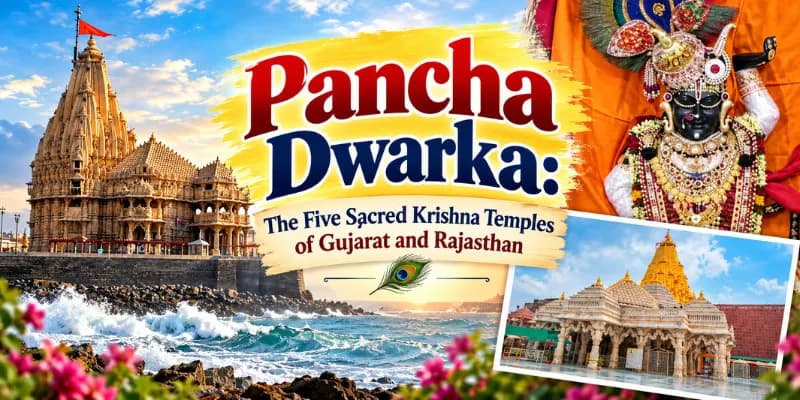
Pancha Dwarka refers to the five sacred temples of Lord Krishna across Gujarat and Rajasthan: the Dwarkadhish temple at Dwarka, Bet Dwarka, the Ranchhodraiji temple at Dakor, the Shrinathji temple at Nathdwara, and the Dwarkadhish temple at Kankroli. Together they trace different chapters of Krishna's divine life.
For devotees of Lord Krishna, the Pancha Dwarka pilgrimage is one of the most cherished journeys and it begins at Dwarka, the golden city where the whole tradition centres. This guide, from the team behind Somnath Dwarka Tour Package, a unit of Experience My India, covers what Pancha Dwarka is, the five sacred temples and their significance, a suggested itinerary and how to plan this beautiful Krishna pilgrimage across Gujarat and Rajasthan.
What is Pancha Dwarka?
Pancha Dwarka, also spelled Panch Dwarka, refers to a set of five sacred temples dedicated to Lord Krishna, spread across the western states of Gujarat and Rajasthan. Each of the five shrines is associated with a different chapter of Krishna's divine life, from his rule as king of Dwarka to his later manifestations worshipped by the Vaishnava and Pushtimarg traditions. Together, the Pancha Dwarka temples form a single, deeply meaningful pilgrimage circuit for Krishna devotees, tracing his story across the land. The circuit has become so popular that a dedicated Pancha Dwarka Yatra train now connects the five temples, making the pilgrimage easier than ever for the many devotees who wish to complete it. For a true Krishna bhakt, completing the Pancha Dwarka is a lifelong aspiration, a journey that binds together the golden city of Dwarka with the great Vaishnava shrines of Rajasthan into one continuous act of devotion.
The five Pancha Dwarka temples at a glance
Here are the five Pancha Dwarka temples, their locations and their significance, in the order most pilgrims visit them:
Temple | Location | Significance |
Dwarkadhish, the Jagat Mandir | Dwarka, Gujarat | Where Krishna ruled as king |
Bet Dwarka | Off Okha, Gujarat | Krishna's island residence |
Ranchhodraiji | Dakor, Gujarat | Krishna as Ranchhod |
Shrinathji | Nathdwara, Rajasthan | Krishna lifting Govardhan hill |
Dwarkadhish | Kankroli, Rajasthan | The Bade Dwarkadhish |
The five Pancha Dwarka temples in detail
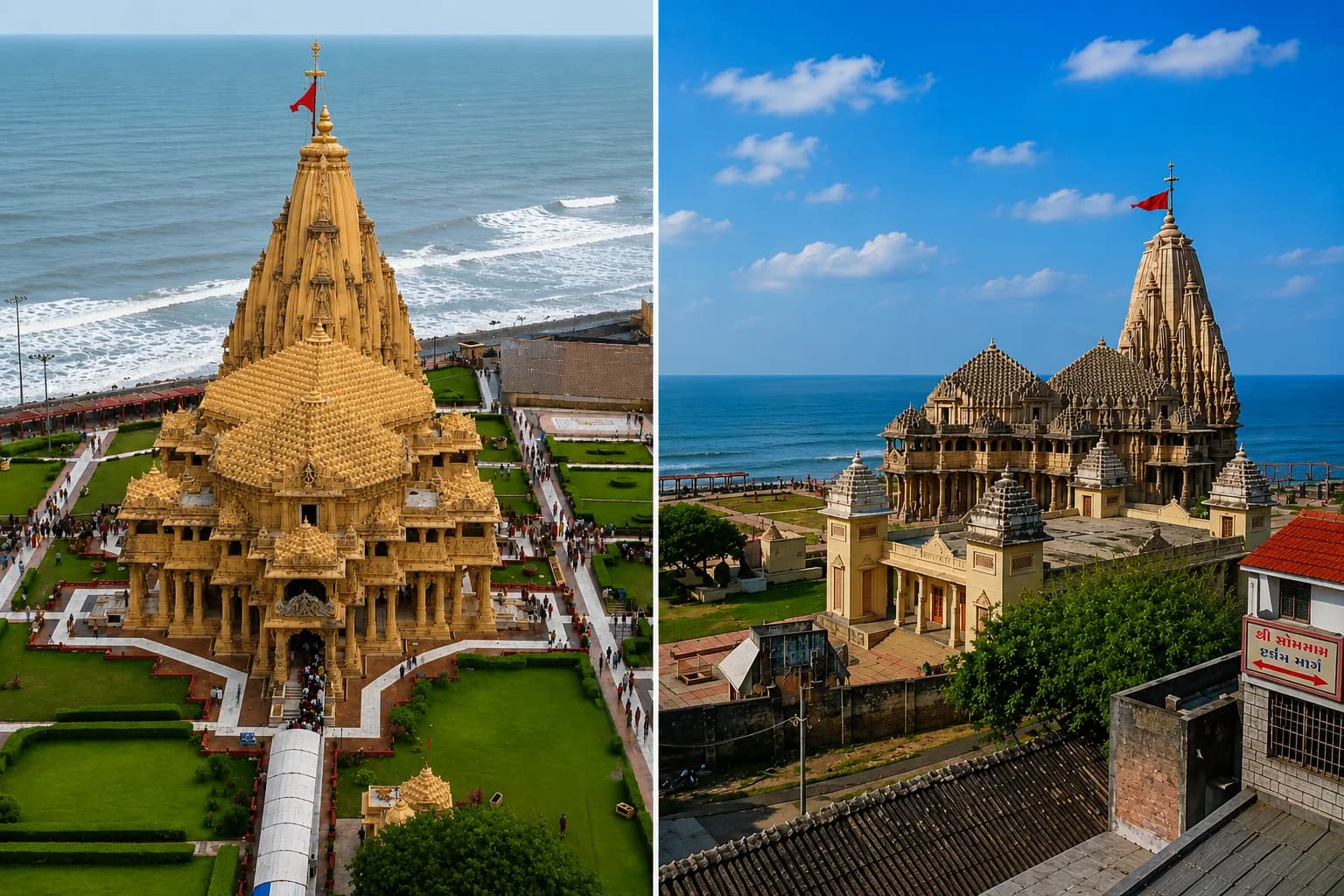
1. Dwarkadhish Temple, Dwarka. Also known as the Jagat Mandir, the Dwarkadhish temple stands on the banks of the Gomti River at Dwarka, where Lord Krishna ruled as king. The majestic five-storey limestone structure, its history dating back over 2,250 years, is the heart of the Pancha Dwarka pilgrimage and one of the four Char Dham of India. Its towering spire, crowned with a great flag that is changed several times a day, is visible from far out at sea and the darshan of Dwarkadhish, the King of Dwarka, is the spiritual high point of the whole circuit.
2. Bet Dwarka. An island about 3 km off the Okha coast, reached by boat and jetty, Bet Dwarka is believed to be the original residential palace where Lord Krishna lived with his family and his consort Rukmini. It is a serene and sacred island, a beloved part of the Dwarka pilgrimage, where the boat ride across the turquoise water and the temple of Krishna make for a memorable half-day from Dwarka.
3. Ranchhodraiji Temple, Dakor. About 60 km from Ahmedabad, the temple at Dakor marks the place associated with Lord Krishna as Ranchhod, one who left the battlefield, the name he earned after tactically retreating from the demon king Jarasandha to save the people of Mathura. It is one of the most revered Krishna shrines in Gujarat, drawing huge crowds especially on full moon days and at festivals and the story of Ranchhod ties Dakor to the same chapter of Krishna's life that leads to Dwarka itself.
4. Shrinathji Temple, Nathdwara. Near Udaipur in Rajasthan, this prominent Pushtimarg shrine houses a black-stone manifestation of Lord Krishna as a seven-year-old child, lifting the Govardhan hill. Worship here follows the Pushtimarg tradition of seva and bhakti and each darshan reveals a different mood of the lord through the day, from his morning awakening to his night repose, making Nathdwara one of the most beloved and lovingly served Krishna temples in all of India.
5. Dwarkadhish Temple, Kankroli. On the banks of the Rajsamand Lake near Udaipur, this Vallabhacharya-sect Vaishnava temple, known as the Bade Dwarkadhish, houses an idol originally brought from Mathura to protect it from destruction. It is the fifth and final temple of the Pancha Dwarka circuit and its serene lakeside setting, in the same spirit as Dwarka's main shrine, makes a fitting and peaceful conclusion to the pilgrimage across the two states.
Pancha Dwarka and the wider Nava Dwarka
While the classic Pancha Dwarka is the set of five temples above, some Gujarat traditions speak of a wider group of sacred Krishna sites, sometimes called the Nava Dwarka or nine Dwarkas. This extended set adds several revered coastal shrines to the five, including Mool Dwarka near Kodinar, where Krishna is said to have first stayed after leaving Mathura, along with the Rukmini temple, the Sudama temple at Porbandar and other sites. Whether you follow the classic five or the wider set, the heart of the pilgrimage is the same: to trace the story of Lord Krishna across the sacred land of Gujarat, from the golden city of Dwarka to the shrines that mark the chapters of his divine life. Many devotees begin with the classic five and add the coastal Gujarat shrines over time, so the pilgrimage can grow and deepen with each visit to the region.
Suggested Pancha Dwarka itinerary
A classic Pancha Dwarka pilgrimage takes about six days, starting from Ahmedabad and covering the Gujarat and Rajasthan temples in a smooth loop. A suggested itinerary is:
Day | Plan |
Day 1 | Arrive Ahmedabad, travel to Dwarka via Jamnagar, visit Bala Hanuman temple |
Day 2 | Dwarkadhish temple, ferry to Bet Dwarka, Nageshwar Jyotirlinga and Rukmini temple |
Day 3 | Depart Dwarka, via Mool Dwarka and Porbandar, Sudama temple, to Somnath |
Day 4 | Somnath temple and Bhalka Tirth, then drive towards Ahmedabad |
Day 5 | Ranchhodraiji temple at Dakor, then on to Udaipur |
Day 6 | Shrinathji at Nathdwara and the Kankroli temple, concluding the journey |
This route weaves the Pancha Dwarka temples together with the Somnath Jyotirlinga and the Nageshwar Jyotirlinga, making it a complete Krishna and Shiva pilgrimage. The itinerary can be shortened, extended or reversed to suit your time and starting point and many travellers add Diu, Gir or the Sudama temple at Porbandar along the way, turning the Pancha Dwarka into a fuller tour of Saurashtra and Rajasthan.
The Pancha Dwarka Yatra by rail
In recent years, the Pancha Dwarka pilgrimage has been made far easier by a dedicated Pancha Dwarka Yatra train, launched under the Bharat Gaurav train initiative, which connects the five Krishna temples across Gujarat and Rajasthan in a single, comfortable circuit. This special pilgrimage train has opened the Pancha Dwarka to many more devotees, offering a seamless way to take darshan at all five shrines without the logistics of arranging each leg separately, with meals, transfers and guided visits often included. For those who prefer the flexibility of a private tour, a car and driver or a tour package, remains the most comfortable way to cover the circuit at your own pace, letting you linger longer at the temples that move you most and adjust the route to your interests.
Best time for the Pancha Dwarka pilgrimage
The best time for the Pancha Dwarka pilgrimage is the cool season, October to March, when the weather across Gujarat and Rajasthan is pleasant for the temples and the long drives, as covered in our best time to visit Dwarka. The summer, April to June, is extremely hot in both states, making temple queues and long journeys tiring, so it is best avoided, while the monsoon can affect the Bet Dwarka ferry. Janmashtami, the birthday of Lord Krishna, is a magnificent but very busy time at all the temples, especially Dwarka and Nathdwara. Plan the pilgrimage in the winter for the most comfortable and rewarding experience.
Tips for the Pancha Dwarka pilgrimage
A few pointers for the pilgrimage:
Start at Dwarka, the heart of the circuit, with the Dwarkadhish temple and the island of Bet Dwarka.
Allow about six days to cover all five temples across Gujarat and Rajasthan comfortably without rushing.
Combine the circuit with the Somnath and Nageshwar Jyotirlingas of Gujarat for a fuller Krishna and Shiva pilgrimage.
Consider the Pancha Dwarka Yatra train or a private car and driver for the greatest flexibility and comfort.
Travel in the cool months, October to March and book well ahead around Janmashtami.
Follow the Pushtimarg darshan timings at Nathdwara and Kankroli, which open and close at set times through the day.
Plan your Pancha Dwarka trip
Experience My India can plan your Pancha Dwarka pilgrimage, starting with the Gujarat temples we know best. Begin at Dwarka with the Dwarkadhish temple and Bet Dwarka, take darshan at the Rukmini Devi temple and the Gomti Ghat, add the Somnath Jyotirlinga, book Somnath Dwarka hotels and let the Experience My India Somnath Dwarka tour packages or a Somnath Dwarka taxi service handle the temples and the drives across the Pancha Dwarka circuit. You can also explore the wider Gujarat tour packages to extend the pilgrimage into Rajasthan.
Related guides
To plan your Pancha Dwarka trip, these related guides help:
Related guide | What it covers |
Air, rail and road access to Dwarka, the heart of the circuit. | |
Air, rail and road access to the Somnath coast. | |
How to reach Krishna's island of Bet Dwarka. | |
The top sights and spots around Dwarka. | |
The site where Krishna left his body, near Somnath. | |
The season and festivals that shape when to travel. |
Plan your visit
Experience My India can arrange your Pancha Dwarka pilgrimage across Gujarat and Rajasthan. Browse more travel guides, message us on WhatsApp or call +91 73006 20809.

Harsh Rawat
Somnath–Dwarka circuit planning
Harsh Rawat runs Somnath Dwarka Tour Package on the ground in Gujarat, part of Experience My India. Since 2018 he has been planning and driving the Somnath–Dwarka circuit — the darshan timings, the road hours between temples and the stops worth adding — and the routes, fares and timings published across this site are the ones he maintains.