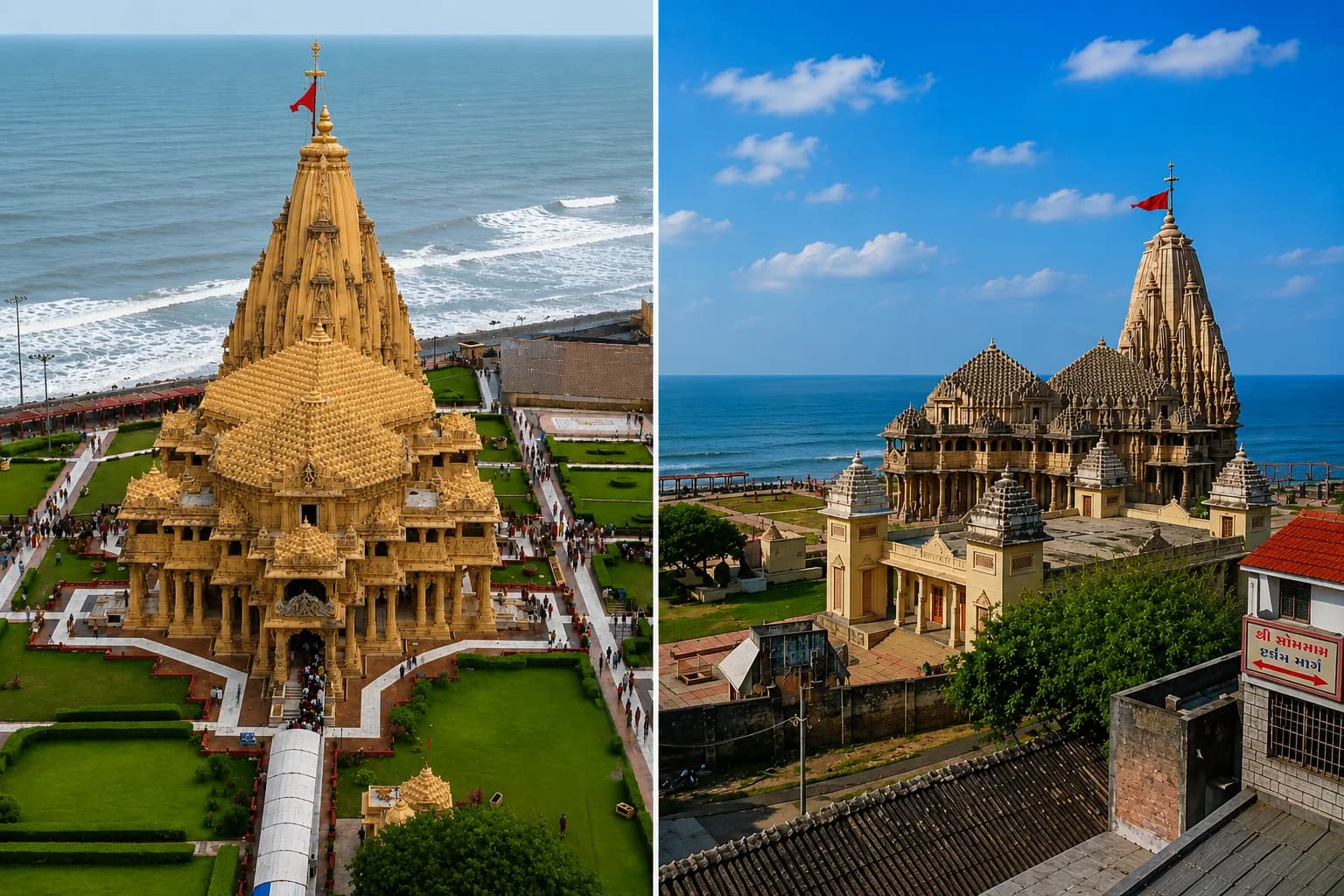
Raksha Bandhan 2026: Date, Shubh Muhurat, How and Where to Celebrate in Gujarat
Raksha Bandhan 2026 falls on Friday, 28 August. The shubh muhurat to tie the rakhi is the morning, from about 5:57 AM to 9:48 AM IST, while the Purnima tithi is running and there is no Bhadra. Avoid the Rahu Kaal from 10:46 AM to 12:22 PM.
Raksha Bandhan is the festival of the bond between brothers and sisters and 2026 is unusually simple for timing. This detailed guide, from the team behind Somnath Dwarka Tour Package, a unit of Experience My India, sets out the exact date and muhurat, the reason the morning is the right window this year, the mythology behind the festival, how to perform the ritual step by step, its many names and forms across Gujarat, the coastal Nariyal Purnima, the festive food and where to celebrate it. Timings are for New Delhi and IST, so confirm your local panchang before you tie the rakhi.
When is Raksha Bandhan 2026?
Raksha Bandhan 2026 is on Friday, 28 August 2026. It falls on Shravan Purnima, the full moon day that closes the sacred month of Sawan in the Hindu lunar calendar. Because the festival is anchored to the full moon itself, rather than to a regional calendar, the date is the same across the whole country, so families everywhere observe Rakhi on 28 August. The Sawan month is devoted to Lord Shiva and its final full moon is regarded as especially auspicious, which gives Raksha Bandhan both a family and a spiritual weight.
Raksha Bandhan 2026 shubh muhurat and timings
The one thing every family asks is the muhurat and this year the answer is easy. Here are the key timings in IST:
Festival date | Friday, 28 August 2026 |
Purnima Tithi begins | 9:08 AM, 27 August |
Purnima Tithi ends | 9:48 AM, 28 August |
Shubh Muhurat (tie the rakhi) | 5:57 AM to 9:48 AM, 28 August |
Avoid (Rahu Kaal) | 10:46 AM to 12:22 PM, 28 August |
Bhadra | Entirely on 27 August; none on the 28th |
Throughout the morning window the Purnima tithi is still current and there is no Bhadra, so the whole span is auspicious and you do not need to hunt for a narrow slot. Just tie the rakhi before 9:48 AM, when the Purnima ends and keep clear of the Rahu Kaal from 10:46 AM to 12:22 PM.
Why is Raksha Bandhan 2026 celebrated in the morning?
In many years the rakhi is tied in the afternoon, but 2026 is different and it is worth understanding why. Two rules decide the timing:
The sunrise rule: a festival is observed on the tithi present at sunrise. The Purnima begins only at 9:08 AM on 27 August, so it is not present at sunrise that day, but it is present at sunrise on 28 August, which fixes the festival on the 28th.
The Bhadra rule: rakhi must never be tied during Bhadra, an inauspicious period. Tradition holds that a rakhi tied during Bhadra brought ruin, so the thread is offered only after it passes. In 2026 Bhadra falls entirely on 27 August and ends that night, leaving the 28th completely clear from sunrise.
Because the Purnima ends at 9:48 AM on the 28th, the clear, auspicious window is the early morning rather than the afternoon. That is why families this year tie the rakhi soon after sunrise and why an early start matters more than usual.
Raksha Bandhan 2026 timings in Gujarat
The timings above are calculated for New Delhi. In Gujarat, sunrise is a little later than in Delhi, by roughly 15 to 25 minutes depending on the city, so the auspicious window opens slightly later, around 6:10 AM in Ahmedabad and Surat and closer to 6:20 to 6:25 AM on the western coast near Dwarka. The end of the window does not change, since the Purnima tithi ends at the same absolute moment everywhere, at about 9:48 AM. In practice, in Gujarat you should tie the rakhi between local sunrise and 9:48 AM. Always cross-check a local panchang for your exact city.
What is the significance of Raksha Bandhan?
Raksha Bandhan celebrates the bond of love and protection between siblings. The word Raksha means protection and Bandhan means bond, so the thread itself is a promise made visible. A sister ties a sacred rakhi on her brother's right wrist and prays for his long life and wellbeing and the brother, in return, offers a gift and a lifelong pledge to guard and support her. The festival is a reminder that protection is not only physical but also emotional and ethical and that the ties of family are meant to be renewed, out loud, once a year. In its wider sense the rakhi can be tied to cousins, close friends or anyone who offers care and protection, which is why it has grown into a broad celebration of chosen bonds as well as blood ones.
The legends behind Raksha Bandhan
Several stories give the festival its depth and knowing them adds meaning to the thread you tie:
Goddess Lakshmi and King Bali: when Lord Vishnu went to guard the kingdom of the devoted King Bali in the netherworld, Goddess Lakshmi tied a rakhi on Bali, made him her brother and asked for Vishnu's return as her gift. This story is the root of the Gujarati name Balev.
Krishna and Draupadi: when Lord Krishna cut his finger, Draupadi tore a strip from her sari to bind the wound and Krishna vowed to protect her, a promise he kept in her hour of need. The tale is closely tied to Krishna's city of Dwarka.
Rani Karnavati and Humayun: the widowed queen of Chittor is said to have sent a rakhi to the Mughal emperor Humayun seeking protection and he set out to help her, a story often cited as the festival's historical face.
Yama and Yamuna: the river goddess Yamuna tied a rakhi on her brother Yama, the god of death, who was so moved that he blessed her, establishing the promise of a brother's protection.
Indra and Sachi: in the Puranas, Indrani tied a protective thread, a raksha sutra, on Indra before his battle with the demons, one of the earliest mentions of the protective thread.
How to celebrate Raksha Bandhan
The ritual is simple, warm and quick. A typical celebration goes like this:
Prepare the thali: arrange the rakhi, roli or kumkum, unbroken rice grains (akshat), a diya, incense and sweets on a decorated puja plate.
Face the right way: the brother sits facing east or north and the sister stands before him during the morning muhurat.
Apply the tilak: the sister applies a tilak of roli and rice on her brother's forehead.
Tie the rakhi: she ties the rakhi on his right wrist, the wrist used for auspicious acts and performs a small aarti with the diya.
Exchange sweets and gifts: the siblings feed each other sweets, the brother gives a gift and his pledge of protection and both seek the blessings of the elders.
Many families recite a traditional shloka as the rakhi is tied: Yena baddho Bali raja danavendro mahabalah, tena tvam abhibadhnami rakshe ma chala ma chala. It means, I tie you with the same thread that once bound the mighty King Bali; O protective thread, do not waver, do not waver.
Raksha Bandhan gift ideas
The gift is a small token of the brother's pledge, so it need not be extravagant. Popular choices include:
Traditional sweets and dry fruit boxes.
Clothing, accessories or jewellery for a sister.
Personalised or eco-friendly rakhis made of seeds, beads or cloth rather than plastic.
A shared experience, such as a family trip or a temple visit, which many now prefer over objects.
For siblings far apart, a rakhi and gift posted in advance, tied over a video call in the muhurat.
Raksha Bandhan in Gujarat: Balev, Nariyal Purnima and Pavitropana
In Gujarat the same full moon carries several names and observances, layered over the sibling festival:
Balev: the Gujarati name for Raksha Bandhan, drawn from the story of King Bali and Goddess Lakshmi. The word joins Bali and eva, meaning a sacrifice made in this way.
Nariyal Purnima: the coconut full moon, observed on the coast, when communities that depend on the sea offer coconuts to the sea god Varuna and mark the start of a new season.
Pavitropana: in many Gujarati temples the day is marked by special worship of Lord Shiva, fitting for the last Purnima of the Shiva month of Sawan.
Shravani Upakarma: Brahmin communities change their sacred thread, the janoi, on this day, with prayers and atonement rites.
This layering is part of why the festival feels so alive in Gujarat, from the Gujarat festivals of the cities to the quiet coast.
Nariyal Purnima on the Saurashtra coast
For Gujarat's fishing communities, Shravan Purnima is Nariyal Purnima, one of the most important days of the year. Along the Saurashtra coast, at ports like Veraval near Somnath, the first Jyotirlinga and at Porbandar and Okha near Dwarka, the monsoon fishing ban lifts around this time and the sea calms. In the days before, fishermen repair their nets, paint and decorate their boats with flowers and buntings and then, on the full moon, offer coconuts to the sea god Varuna in thanks and in prayer for a safe season. Many take a short, auspicious sail before the real fishing resumes. If you are on the coast for a temple trip, catching this quiet, colourful ritual at a fishing harbour is a memorable sight and our guide to sightseeing places in Somnath points to the shore spots nearby.
Gujarati festive food for Raksha Bandhan
No Gujarati festival is complete without a spread and Raksha Bandhan is a fine excuse for one. Families prepare sweets and snacks to share after the rakhi is tied. Typical treats include basundi, the thickened sweet milk, vedmi or vedhmi, a sweet stuffed flatbread, mohanthal and magaj, ghughra dumplings and the everyday favourites of khaman, dhokla, patra and fafda. For a fuller taste of the state's cooking, see our guide to the famous food of Gujarat.
Where to celebrate Raksha Bandhan in Gujarat
Gujarat marks Raksha Bandhan with lively markets, family gatherings and plenty of sweets and the state's temple towns and coast add a special glow to the day. A few ideas:
Celebrate at Dwarka, Lord Krishna's own city, especially fitting given the Krishna and Draupadi rakhi legend and take darshan at the Dwarkadhish temple.
Pair the festival with a visit to Somnath, the first Jyotirlinga, for a blessing at the start of a family trip, in keeping with the Shiva theme of Sawan.
Watch Nariyal Purnima at a Saurashtra fishing harbour, a side of the festival few travellers see.
Explore the festive Rakhi Bazaars of Ahmedabad, Vadodara and Surat for rakhis, sweets and gifts.
Plan the trip for the pleasant season using the best time to visit Gujarat and note that Janmashtami at Dwarka follows soon after Raksha Bandhan.
If you want to combine the festival with a temple trip, Experience My India can arrange it. Book Somnath Dwarka hotels near the shrines and a Somnath Dwarka taxi service makes it easy to move between them on the day. To plan your arrival, see how to reach Somnath.
Things to avoid on Raksha Bandhan
A few simple cautions keep the day auspicious:
Do not tie the rakhi during Bhadra; in 2026 this is a non-issue, as Bhadra is confined to 27 August.
Avoid the Rahu Kaal from 10:46 AM to 12:22 PM for the ceremony.
Try to complete the tying before 9:48 AM, while the Purnima tithi is still running.
Keep the thali and the ritual simple and unhurried; the intention matters more than show.
Raksha Bandhan 2026 at a glance
Date | Friday, 28 August 2026 |
Occasion | Shravan Purnima, the full moon of Sawan |
Shubh Muhurat | 5:57 AM to 9:48 AM IST (morning) |
In Gujarat | From local sunrise, about 6:10 to 6:25 AM, to 9:48 AM |
Avoid | Rahu Kaal, 10:46 AM to 12:22 PM |
Bhadra | None on the 28th; falls entirely on the 27th |
Other names in Gujarat | Balev, Nariyal Purnima, Pavitropana, Shravani Purnima |
Which wrist | The right wrist |
Meaning | The bond of love and protection between siblings |
Related guides
Planning a Gujarat trip around the festival? These Experience My India guides help:
Related guide | What it covers |
Krishna's city, the Jagat Mandir and what to see. | |
One and two day plans for a Somnath visit. | |
Darshan hours and aarti times for Somnath. | |
The best months for the Dwarka coast. | |
Air, rail and road access to Dwarka. | |
Distance, ropeway and steps for the Girnar climb. |
Plan a Gujarat trip around the festival
Experience My India can plan a Dwarka and Somnath trip around Raksha Bandhan and the festive season. Browse the Somnath Dwarka tour packages or more travel guides, message us on WhatsApp or call +91 73006 20809.

Harsh Rawat
Somnath–Dwarka circuit planning
Harsh Rawat runs Somnath Dwarka Tour Package on the ground in Gujarat, part of Experience My India. Since 2018 he has been planning and driving the Somnath–Dwarka circuit — the darshan timings, the road hours between temples and the stops worth adding — and the routes, fares and timings published across this site are the ones he maintains.