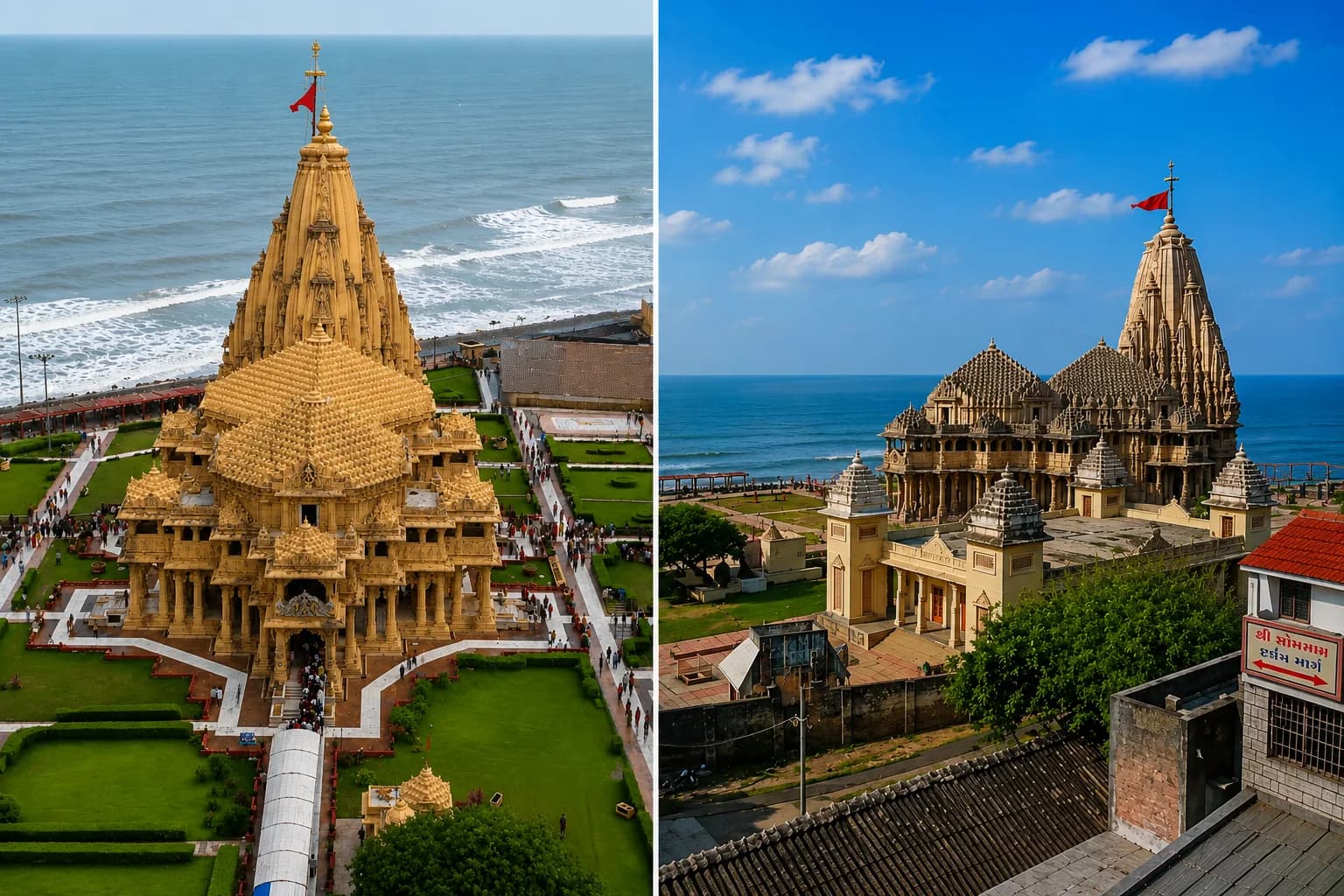
Suraj Mandir Somnath: The Ancient Sun Temple of Prabhas Patan

The Suraj Mandir or Sun Temple, near Somnath is an ancient shrine to Surya Dev in the old lanes of Prabhas Patan, one of the rare surviving ancient sun temples of Western India. Built in the Solanki style, it is famed for its Surya chariot carvings and its Mahabharata link. It is open 6:00 AM to 8:00 PM, best in the morning. This guide, from Experience My India, covers it.
The Suraj Mandir is one of the most rewarding offbeat sights around Somnath, an ancient, historically rich temple dedicated to the Sun God that is often visited alongside the main Jyotirlinga shrine yet draws far smaller crowds. It offers a peaceful, atmospheric look into pre-medieval architectural traditions, with beautifully weathered carvings and a legend reaching back to the Mahabharata. This guide, from the team behind Somnath Dwarka Tour Package, a unit of Experience My India, covers the temple's history and age, its striking architecture and sculptures, the sacred Surya Kund, its link to the Pandavas and the timings, location and travel details you need to add this quiet gem to your Somnath visit.
What is the Suraj Mandir?
The Suraj Mandir or Sun Temple, is an ancient shrine dedicated to the Sun God, Surya Dev, standing in the old quarter of Prabhas Patan near Somnath. It is one of the rare surviving ancient sun temples in Western India, predating the modern reconstruction of the main Jyotirlinga and it offers visitors a quieter, more contemplative experience than the great temple nearby. Weathered by centuries and raids, its stone structure is a window into the devotional and architectural world of medieval Gujarat and its carvings and legends make it a genuine treasure for anyone with an interest in history, art or mythology. For travellers who want to go beyond the obvious and feel the deep antiquity of the Somnath region, the Suraj Mandir is an essential and deeply atmospheric stop.
Suraj Mandir at a glance
What it is | An ancient temple of the Sun God, Surya Dev |
Location | Old lanes of Prabhas Patan, Veraval, Gir Somnath |
Current structure | Around the 14th century, Solanki architectural style |
Distance from main temple | Roughly 1 km east of the Somnath Jyotirlinga |
Opening hours | 6:00 AM to 8:00 PM daily |
Best time | Morning, when the rising sun lights the east-facing shrine |
Nearby | Triveni Ghat and the Panch Pandav Gufa |
History and age
The origins of sun worship at this site run parallel to the earliest eras of the neighbouring Somnath Temple, placing the roots of the shrine deep in antiquity. Like the main temple, this region suffered multiple historic raids and plundering over the centuries and the Suraj Mandir bears the marks of that turbulent history in its weathered, battered stone. The structure standing today largely dates to around the 14th century, built in the traditional Solanki or Chaulukya, architectural style that is characteristic of medieval Gujarat and celebrated for its refined carving and proportion. That the temple has survived at all, through invasion and the passage of so many centuries, is part of what makes it so remarkable, a quiet witness to the same long and resilient story that surrounds Somnath itself.
Architecture and sculptures
The real delight of the Suraj Mandir lies in its sculpture. The entrance doorway features a beautiful depiction of Surya Dev with his two consorts, Chhaya and Sangna, riding a chariot pulled by seven horses, the classic iconography of the Sun God that rewards a close and unhurried look. The walls are embellished with detailed carvings of lions, birds and elephants, full of life and movement, along with niches containing images of the great divine pairs, Vishnu and Lakshmi, Brahma and Saraswati and Shiva and Parvati. Together these carvings make the temple a small gallery of medieval Gujarati stonework and in the soft morning light, with the east-facing shrine catching the rising sun, the detail stands out beautifully. For lovers of temple art, the Suraj Mandir repays careful attention far beyond its modest size.
The Surya Kund
The temple complex includes a small, stepwell-style sacred water body known as the Surya Kund. Such sacred tanks are a classic feature of sun temples and of medieval Gujarati temple architecture more broadly, used for ritual bathing and as a serene architectural counterpoint to the shrine itself. The Surya Kund adds to the quiet, contemplative character of the Suraj Mandir and its stepped stone form is worth pausing over as part of a visit. It is a reminder that these ancient temples were conceived as complete sacred environments, uniting shrine, sculpture and water and it rounds out the experience of exploring this peaceful corner of old Prabhas Patan.
The Mahabharata connection
The Suraj Mandir carries a resonant link to the great epic the Mahabharata. According to local lore and Hindu tradition, the Pandavas prayed to Lord Surya at this exact spot during their Agyatvas, the period of exile they spent living in disguise. This association deepens the temple's significance, tying it to one of the most beloved narratives in Indian culture and it is reflected in the surrounding geography, for the temple stands right next to the historic Panch Pandav Gufa, the Pandava Caves. Visiting the Suraj Mandir and the nearby caves together lets you trace this epic connection on the ground and it gives the shrine a layer of meaning beyond its architecture, placing it within the living mythology of the Somnath region.
A rare surviving ancient sun temple
What gives the Suraj Mandir its special importance is its rarity. It is one of the few ancient sun temples of Western India to survive and it predates the modern reconstruction of the main Somnath Jyotirlinga temple. While the great temple nearby has been rebuilt many times, most recently after independence, the Suraj Mandir stands as an older, weathered original, carrying the authentic texture of centuries in its stone. This makes it a precious link to the pre-medieval and medieval devotional traditions of the region and a counterpoint to the gleaming, reconstructed grandeur of the main shrine. For visitors who appreciate antiquity and authenticity, that surviving ancientness is exactly the appeal.
Timings and the best time to visit
The Suraj Mandir is open daily from 6:00 AM to 8:00 PM, giving a long and flexible window for a visit. The morning hours are especially recommended, because the temple faces east and the rising sun beautifully illuminates its intricate architecture, lighting up the Surya chariot over the doorway and the carvings along the walls. A morning visit also means cooler temperatures and a quieter atmosphere, ideal for appreciating the detail and the serenity of this offbeat shrine. If you are already up early for the morning aarti at the main temple, the Suraj Mandir makes a natural and rewarding next stop while the light is still soft and golden.
Festivals and busy periods
The Suraj Mandir is open year-round, but it is worth being aware of the major regional festivals that bring heavy pilgrim traffic to the whole Somnath area. The massive Kartik Purnima Fair, held annually in November near the full moon and the holy month of Shravan, which falls across July and August, both draw large crowds to the region. Visiting during these periods means a more crowded but intensely devotional atmosphere across the Somnath sites, while visiting outside them gives you the quiet, unhurried experience that suits the Suraj Mandir best. Planning your trip with these dates in mind, whichever you prefer, helps you get the experience you are after.
Location and how to reach
The Suraj Mandir is located in the old, narrow lanes of the Prabhas Patan neighbourhood in Veraval, in the Gir Somnath district of Gujarat. It sits just north of the Triveni Ghat, the holy confluence of the Hiran, Kapila and Saraswati rivers and roughly 1 km east of the primary Somnath Jyotirlinga Temple complex, so it is an easy addition to a visit to the main temple. The old lanes are best explored on foot once you are near and a taxi or auto-rickshaw brings you comfortably from the temple town. Somnath is well connected by road, rail and air, with Veraval the nearest railhead, as set out in our how to reach Somnath guide and our Somnath Dwarka taxi service can arrange local transport to take in the offbeat sites.
Combining the Suraj Mandir with Somnath's sites
The Suraj Mandir is best woven into a wider round of the Somnath pilgrimage sites. The great temple is the heart of any visit, with its rituals in our Somnath aarti timings guide and its visitor rules in our Somnath Temple dress code guide. Close by is the sacred Baldev Gufa, the cave of Lord Balarama's departure and there is much more to see as covered in our things to do in Somnath and sightseeing places in Somnath guides. Further afield lie Krishna's city of Dwarka, the lions of Gir and the heritage of Junagadh and Girnar.
Tips for visiting the Suraj Mandir
A few pointers help you get the most from a visit:
Come in the morning, when the east-facing temple is beautifully lit by the rising sun and the air is cool.
Look closely at the entrance doorway for Surya Dev on his seven-horse chariot with his consorts Chhaya and Sangna.
Study the wall niches for the divine pairs: Vishnu-Lakshmi, Brahma-Saraswati and Shiva-Parvati.
Visit the adjoining Panch Pandav Gufa to trace the temple's Mahabharata connection.
Pause at the stepwell-style Surya Kund within the complex.
Pair it with the main Somnath temple and Baldev Gufa, as all lie within the Prabhas Patan area.
For a quiet visit, avoid the Kartik Purnima and Shravan crowds; for devotional intensity, come during them.
Plan your Somnath visit
Experience My India can plan your Somnath pilgrimage to include the Suraj Mandir alongside the main temple, Baldev Gufa, the Triveni Sangam and the town's other sacred sites, with comfortable transport and an itinerary timed for the soft morning light. Our Somnath Dwarka tour packages and wider Gujarat tour packages weave these sites into a fuller Saurashtra journey taking in Dwarka, Gir and the coast, with a stay at well-placed Somnath Dwarka hotels. To choose your season, see our best time to visit Somnath guide.
Related guides
To plan the rest of your Somnath visit, these related guides help:
Related guide | What it covers |
How to arrange a quicker darshan at the main temple. | |
Another of the twelve Jyotirlingas, near Dwarka up the coast. | |
The drive from the Somnath coast to the Gir lions. |
Plan your visit
Experience My India can arrange your Somnath pilgrimage and wider Saurashtra journey. Browse more travel guides, message us on WhatsApp or call +91 73006 20809.

Harsh Rawat
Somnath–Dwarka circuit planning
Harsh Rawat runs Somnath Dwarka Tour Package on the ground in Gujarat, part of Experience My India. Since 2018 he has been planning and driving the Somnath–Dwarka circuit — the darshan timings, the road hours between temples and the stops worth adding — and the routes, fares and timings published across this site are the ones he maintains.