Chotila Chamunda Temple: The Hilltop Shrine on the Highway
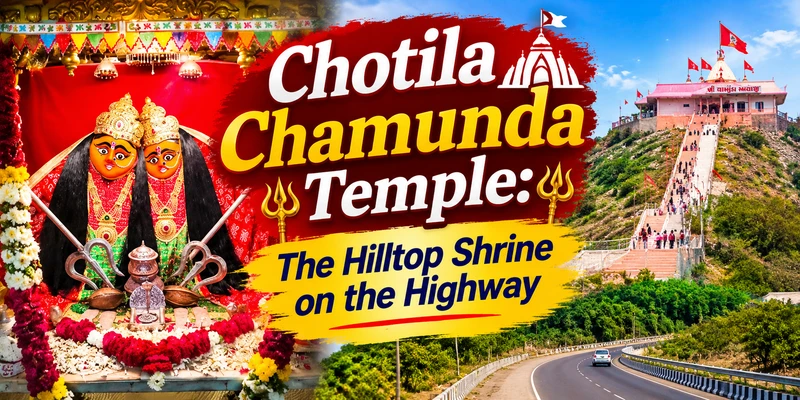
The Chamunda Mataji Temple sits atop Chotila Hill, around 1,173 to 1,250 feet high, in Chotila town, Surendranagar district, right on the Ahmedabad to Rajkot highway. Reaching the main shrine means climbing roughly 620 to 700 stone steps. It is a powerful Shakti shrine and the Kuldevi of many Gujarati communities, open from around 5:00 AM to evening, with a replica idol at the foothill for those who cannot climb. This guide, from Experience My India, covers the climb, timings, story and how to visit.
For countless travellers driving between Ahmedabad and Rajkot, the hill of Chotila rising from the plains, crowned by the temple of Chamunda Mataji, is a familiar and sacred sight. A powerful Shakti shrine reached by a climb of hundreds of steps, it is one of Saurashtra's most visited goddess temples and the Kuldevi of many communities across Gujarat. This guide, from the team behind Somnath Dwarka Tour Package, a unit of Experience My India, covers everything you need to plan a visit: the hilltop location and the climb, the darshan and aarti timings, the story and mythology of Chamunda Mata, the history of Chotila and practical tips including the option for those who cannot manage the steps.
Quick facts
Temple | Chamunda Mataji Temple, Chotila |
Location | Chotila Hill, Chotila, Surendranagar district, Gujarat 363520 |
Hill height | About 1,173 to 1,250 feet |
The climb | Roughly 620 to 700 stone steps to the shrine |
Darshan | About 5:00 AM to 7:30 PM or 8:00 PM (festival timings differ) |
On the highway | Ahmedabad to Rajkot highway, NH 47 |
Note | A replica idol at the foothill serves those who cannot climb |
Where is the Chotila Chamunda Temple?
The Chamunda Mataji Temple sits atop Chotila Hill, which rises around 1,173 to 1,250 feet above the surrounding plains, in Chotila town in the Surendranagar district of Gujarat. Its position is part of what makes it so visited: the hill stands right along the Ahmedabad to Rajkot highway, NH 47, the main artery across Saurashtra, so it is an easy and natural stop for the many travellers passing between the two cities. The temple is about 47 to 50 km from Rajkot, roughly an hour by road and about 150 to 175 km from Ahmedabad, between two and a half and four hours depending on traffic. From the hilltop shrine, reached by the long flight of steps, there are sweeping views over the flat Saurashtra landscape, which add to the sense of having climbed to a place apart.
How to reach Chotila
Chotila is very easy to reach thanks to its highway location. By road, it is directly accessible by buses, taxis and private cars on NH 47 between Ahmedabad and Rajkot and most visitors simply break their journey here. By train, the nearest railway station is Than Junction, about 21 km away, while Rajkot Junction, about 47 to 49 km away, offers wider rail connectivity. By air, the closest airport is Rajkot, about 48 to 60 km away, with Ahmedabad as an alternative for wider connections. Because it sits on the main Saurashtra highway, Chotila fits effortlessly into a wider Gujarat journey and many pilgrims combine it with the great shrines of Somnath and Dwarka or a visit to the Gir forest, all within a day or two's drive.
The climb to the shrine
Reaching the main Chamunda shrine means climbing the hill, a pilgrimage in itself. The ascent is up roughly 620 to 700 or more stone steps, well made and lined with railings, shops and resting points and most reasonably fit visitors manage it in around twenty to forty minutes at an easy pace. The climb is part of the devotional experience and many pilgrims make it barefoot as an act of faith. It is best done early in the morning, both to avoid the heat and the crowds and to enjoy the cool air and the views as the plains wake below. For those who cannot manage the steps, there is an important provision: a foothill shrine houses a replica idol, so that the elderly, the very young and those with mobility difficulties can still take darshan of the goddess without the climb. Carrying water and wearing comfortable footwear for the ascent is wise.
Darshan, aarti and bhojanalay timings
The temple generally opens early and stays open into the evening. Darshan hours are typically from around 5:00 AM or 5:30 AM to about 7:30 PM or 8:00 PM, though trust notices adjust the opening times during major festivals and fairs, when the temple may open very early indeed. The morning aarti is generally held around 6:00 AM from Monday to Saturday and 5:30 AM on Sundays, with an evening or sandhya aarti around sunset or 6:00 PM and special timings on Purnima and festival days. A bhojanalay serves prasad meals, usually from around 11:00 AM to 2:00 PM. Note that overnight stays at the hilltop temple are not permitted after the evening closing rituals, so plan to descend before nightfall. Because festival schedules can shift significantly, it is always worth checking locally on special days.
Darshan | About 5:00 AM to 7:30 PM or 8:00 PM (festival days differ) |
Morning aarti | Around 6:00 AM (Mon to Sat), 5:30 AM on Sundays |
Evening aarti | Around sunset or 6:00 PM |
Bhojanalay | Prasad meals usually 11:00 AM to 2:00 PM |
Overnight | Not permitted at the hilltop temple after closing |
The story of Chamunda Mata
The goddess of Chotila is Chamunda, a fierce warrior form of Goddess Durga or Mahakali. According to Hindu texts and local lore, she emerged to defeat the demons Chanda and Munda and it is from vanquishing this pair that she earned the name Chamunda. At Chotila, local tradition holds that the Swayambhu or self-manifested, idol was revealed after the goddess appeared in a devotee's dream, guiding the faithful to the spot. As a powerful Shakti shrine, Chotila is revered as the Kuldevi or family deity, for many communities across Gujarat and Saurashtra and devotees come to seek strength, protection and blessings. The fierce, protective nature of Chamunda, combined with the dramatic hilltop setting, gives the shrine an intensity of devotion that is palpable, especially during the Navratri nights when the goddess is worshipped with special fervour.
A distinctive aarti
One of the most memorable features of Chotila is its distinctive style of worship. Unlike the sung chants heard at many temples, the aarti here is traditionally performed with dhoop and lamps to the rhythm of drum beats, a powerful, resonant form of worship that fills the hilltop shrine and echoes over the plains. Witnessing this drum-driven aarti, especially at dawn or dusk with the lamps glowing against the sky, is a stirring experience and one of the reasons pilgrims time their visit to coincide with the aarti. It reflects the fierce, martial character of Chamunda Mata and it sets Chotila apart from the gentler devotional atmosphere of some other shrines, giving the visit a raw, elemental power that stays with you.
History of Chotila
Chotila's history adds depth to the sacred hill. The town was historically known as Chotgadh and it was once held by the Sodha Parmars before being conquered by the Khachar Kathi rulers in the 16th century, around 1566 CE, giving the area its long association with the Kathi community of this part of Saurashtra. Chotila is also notable as the birthplace of the renowned Gujarati writer, poet and freedom fighter Jhaverchand Meghani, one of the great literary figures of the state, which gives the town a cultural significance beyond its temple. So while the hilltop shrine draws the pilgrims, Chotila also carries a history of Rajput and Kathi rule and a proud place in Gujarati letters, making it more than simply a wayside temple stop on the highway.
Significance and when to visit
Chotila is revered as a powerful Shakti shrine and, as the Kuldevi of many communities, it holds deep personal significance for countless Gujarati families, who visit for strength, protection and blessings at important moments in their lives. The temple's peak seasons are Navratri, both the Chaitra and Sharad festivals and Purnima days, which draw massive crowds, while the cooler months of October to March offer the most comfortable weather for the climb. For a calmer darshan, an ordinary weekday outside the festival season is ideal, while for the full charged atmosphere of thousands of devotees, Navratri is unmatched. Starting early in the morning helps you avoid both the heat and the crowds and leaves time to continue your journey along the highway afterwards. The shrine pairs well with the wider festival and temple circuit of the region, from Tarnetar to the great fairs of Saurashtra.
Visitor tips for Chotila
A few practical pointers help your visit:
Climb early: start the ascent in the early morning to avoid the heat and crowds and to enjoy the cool air and views.
Wear good footwear: comfortable shoes for the 600-plus step climb, though many pilgrims go barefoot as an act of faith.
Use the foothill shrine if needed: those who cannot climb can take darshan of the replica idol at the base.
Time the aarti: the drum-driven dhoop aarti at dawn or dusk is the highlight, so plan around it.
Dress modestly: traditional, modest attire is expected at this devotional shrine.
Descend before dark: overnight stays at the hilltop are not permitted, so plan to come down before closing.
Chotila in a Saurashtra journey
Because it sits right on the Ahmedabad to Rajkot highway, Chotila is the easiest of temple stops to fold into a Gujarat road trip. Travellers heading from Ahmedabad into Saurashtra, toward Rajkot, Somnath, Dwarka or Gir, can break the journey at Chotila for a quick, uplifting darshan without any detour. It makes a natural first or last stop on a Saurashtra circuit and its highway position means you lose little time. To weave Chotila into a fuller journey across the region's temples, wildlife and coast, our 7 days Gujarat tour itinerary guide offers a ready framework and the shrine adds a moment of devotion and a fine viewpoint to any Saurashtra drive.
Plan your Saurashtra pilgrimage
Experience My India can plan a Saurashtra pilgrimage that includes the Chotila Chamunda temple alongside the great shrines of Somnath and Dwarka and the sights of the region, with a comfortable stay, a well-paced itinerary and transport that makes the highway stops easy. Our Somnath Dwarka tour packages and wider Gujarat tour packages can weave Chotila into a fuller journey, with a stay at well-placed hotels and comfortable local transport throughout.
Related guides
To plan your Saurashtra temple trip further, these related guides help:
Related guide | What it covers |
The four great pilgrimage shrines of the state. | |
The Navratri dances central to Shakti worship. | |
The region's beloved sweets to taste on the trip. |
Plan your visit
Experience My India can arrange your Saurashtra pilgrimage and wider Gujarat journey. Browse more travel guides, message us on WhatsApp or call +91 73006 20809.

Harsh Rawat
Somnath–Dwarka circuit planning
Harsh Rawat runs Somnath Dwarka Tour Package on the ground in Gujarat, part of Experience My India. Since 2018 he has been planning and driving the Somnath–Dwarka circuit — the darshan timings, the road hours between temples and the stops worth adding — and the routes, fares and timings published across this site are the ones he maintains.