Garba and Dandiya in Gujarat: The Dances of Navratri
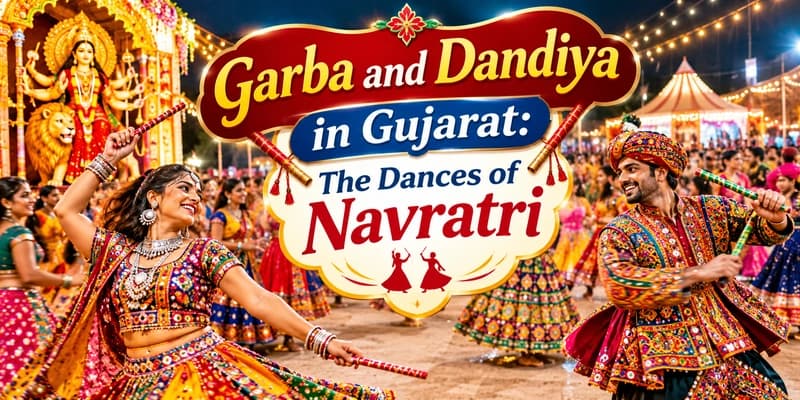
Garba and Dandiya Raas are Gujarat's traditional Navratri dances honouring the divine feminine, Shakti. Garba is danced in circles around a lamp-lit earthen pot, the Garbo, while Dandiya Raas is danced in pairs with colourful sticks, dramatising the Goddess's battle. Both are UNESCO-recognised and performed through the nine nights of Navratri. This guide, from Experience My India, explains them.
Garba and Dandiya are the beating heart of Navratri in Gujarat, two joyous folk dances that fill the state's nights with colour, rhythm and devotion through the nine-night festival. More than entertainment, they are acts of worship of the divine feminine energy, danced by millions from mega grounds to village squares and they are now recognised by UNESCO as a treasure of world heritage. This guide, from the team behind Somnath Dwarka Tour Package, a unit of Experience My India, explains what Garba and Dandiya Raas are, how they differ, the deep symbolism of the Garbo pot, their spiritual meaning and how and where to experience them during Gujarat's most vibrant festival.
What are Garba and Dandiya?
Garba and Dandiya Raas are the two traditional dances performed across Gujarat during Navratri, the nine-night festival of the Goddess. Both originate from the folk traditions of Gujarat dedicated to honouring the divine feminine energy, Shakti and both are danced communally in large, swirling groups. Garba is the circular dance performed around a sacred lamp-lit pot, while Dandiya Raas is the paired stick dance. Together they turn every Navratri night into a spectacle of movement and music and they are so central to Gujarati identity that the dance form has been formally inscribed on the UNESCO Intangible Cultural Heritage List. The festival they belong to is covered in full, with its dates, colours and where to celebrate, in our Navratri in Gujarat guide; this guide focuses on the dances themselves.
Garba and Dandiya at a glance
What they are | The traditional Navratri dances of Gujarat |
Garba | A circle dance around the lamp-lit Garbo pot |
Dandiya Raas | A paired dance with colourful sticks |
Honours | The divine feminine energy, Shakti |
When | The nine nights of Sharad Navratri, around September to October |
Recognition | On the UNESCO Intangible Cultural Heritage List |
Where | All across Gujarat, from mega grounds to village squares |
Garba: the circle dance
Garba is the older and more devotional of the two dances, performed in graceful concentric circles that wheel around a central focus. At that centre stands the Garbo, an earthen pot with a lamp burning inside, around which the dancers move. The pot is rich with meaning: it symbolises the womb, the spark of life and the universe itself, with the flame within representing the divine presence and the eternal soul. As the dancers circle it with clapping, spinning and rhythmic footwork, the whole dance becomes a moving meditation on the cycle of creation around the unchanging divine centre. Garba is danced by all ages, in traditional chaniya choli and kediyu and it builds from gentle early rounds to an exhilarating, fast-whirling climax as the night deepens. It is this circling of the sacred pot that gives Garba its name and its soul.
Dandiya Raas: the stick dance
Dandiya Raas is the dance's energetic, dramatic partner. Danced in pairs using colourful decorated bamboo sticks, the dandiyas, it is a lively, rhythmic performance in which partners strike their sticks together in time with the music as they weave through interlocking patterns. The dance is a rhythmic dramatisation of the Goddess fighting with swords, the clashing sticks standing in for the clash of weapons in Durga's battle with the demon Mahishasura. Faster and more playful than Garba, Dandiya Raas is a joyous, flirtatious and high-energy dance that typically follows the Garba later in the evening, filling the grounds with the bright clack of sticks and swirling colour. Learning even the basic step is easy and great fun, which is why visitors are so often swept into the circles.
The difference between Garba and Dandiya
Though often spoken of together, Garba and Dandiya Raas are distinct. Garba is danced in circles around the Garbo pot, usually without props, with clapping and spinning and it is traditionally performed before the aarti as an act of devotion to the Goddess. Dandiya Raas is danced in pairs with sticks, is more energetic and dramatic and typically comes after the aarti, representing the Goddess's battle. In practice a Navratri night often flows from devotional Garba into exuberant Dandiya as the energy rises, so most celebrations feature both. Knowing the difference helps you appreciate what you are watching: the meditative circling of the sacred pot and then the mock-combat of the clashing sticks, two expressions of the same worship of Shakti.
History and UNESCO recognition
Garba originates from the traditional folk dances of Gujarat dedicated to honouring the divine feminine energy, Shakti and its roots run deep in the devotional and village culture of the state. Over centuries it has grown from intimate temple-courtyard worship into the vast communal celebration seen today, while never losing its sacred core. That journey has earned it global recognition, for the dance holds such cultural importance that it has been formally inscribed on the UNESCO Intangible Cultural Heritage List, placing Gujarat's Navratri Garba among the world's treasured living traditions. This recognition has brought fresh pride and international attention to the dance and it affirms what Gujaratis have always known, that Garba is not merely a folk pastime but a profound and beautiful expression of faith and community.
Spiritual significance
Both dances are woven around a single great story, the triumph of good over evil. Navratri celebrates Goddess Durga's epic nine-day battle and her ultimate victory over the demon Mahishasura and the dances enact and honour that victory. The Garbo pot at the centre of the Garba embodies the womb, the spark of life and the universe, the creative power of the divine feminine, while the clashing sticks of Dandiya Raas dramatise the Goddess's combat with the demon. To dance through the nine nights is therefore to participate in a sacred drama, moving in devotion around the source of life and acting out the defeat of darkness by divine power. This spiritual depth is what lifts Garba and Dandiya far above ordinary dancing and gives Navratri in Gujarat its extraordinary, electric devotion.
When the dancing happens
The dances come alive during Sharad Navratri, the nine-night autumn festival that follows the Hindu lunar calendar, usually falling across late September and October. As an illustration, in 2027 the festival runs from 30 September to 8 October, with the Vijayadashami finale on 9 October, though the exact dates shift each year with the lunar calendar. On each night, the dancing generally begins after the evening rituals and aarti, around 8:00 to 9:00 PM and the mega grounds remain active well past midnight under special holiday permits. The middle to later nights, especially Saptami and Ashtami, see the maximum crowds and the highest energy. For the full festival calendar, colours and schedule, see our Navratri in Gujarat guide.
Where to experience Garba and Dandiya
Garba and Dandiya are danced everywhere in Gujarat during Navratri, so you are never far from a celebration. The cultural capitals of Ahmedabad and Vadodara host the largest commercial and traditional gatherings, from huge ticketed party plots and elite clubs to the intimate street-corner sheri garbas of the old neighbourhoods and the village squares. Huge devotional events also take place at the great Shakti Peethas, such as the Ambaji Temple, Pavagadh and Bahucharaji, where the dancing carries an especially sacred charge. For the temple side of this, our Ambaji Mandir timing guide helps with a visit and our Navratri in Gujarat guide lists where to celebrate in detail. Whether you want a grand organised event or an authentic neighbourhood circle, Gujarat offers the full range.
Tips for joining the dancing
A few pointers help you enjoy Garba and Dandiya as a visitor:
Wear traditional dress if you can, a chaniya choli for women or a kediyu and kafni for men, which most grounds encourage.
Arrive for the start, around 8:00 to 9:00 PM, to watch the devotional Garba before the energetic Dandiya later.
Learn the basic three-step Garba clap and the simple Dandiya strike beforehand; both are easy to pick up.
For the biggest atmosphere, go on the peak nights of Saptami and Ashtami, but expect the largest crowds.
Carry your own pair of dandiya sticks or buy them at the venue for the stick dance.
Respect the devotional Garba around the Garbo pot, which is an act of worship, not just a performance.
Check whether an event is ticketed or a free community sheri garba and plan transport for the late finish.
Experiencing Gujarat's wider culture
Garba and Dandiya are a gateway into Gujarat's rich culture, which rewards a deeper visit. The state's craftsmanship is celebrated in our famous art and craft of Gujarat guide and its cuisine in our Kathiyawadi food and Gujarati thali guide, perfect after a night of dancing. The autumn full moon just after Navratri is covered in our Sharad Purnima guide. To build a trip around the festival season, see our Gujarat itinerary, which can be combined with the coastal pilgrimage to Somnath and Dwarka.
Plan your Navratri visit
Experience My India can plan a trip around Gujarat's Navratri, with the dancing at its heart, arranging stays, transport and access to the best Garba and Dandiya events and weaving in the state's temples, food and craft. Our Gujarat tour packages and Somnath Dwarka tour packages can build the festival into a fuller journey, with a stay at well-placed hotels and comfortable local transport.
Related guides
To plan your Navratri and Gujarat culture trip, these related guides help:
Related guide | What it covers |
The mithai to enjoy during the festival season. | |
The four sacred dhams of Gujarat for a pilgrimage add-on. | |
Pair the festival with the Asiatic lions of Gir. |
Plan your visit
Experience My India can arrange your Navratri and Gujarat culture trip. Browse more travel guides, message us on WhatsApp or call +91 73006 20809.

Harsh Rawat
Somnath–Dwarka circuit planning
Harsh Rawat runs Somnath Dwarka Tour Package on the ground in Gujarat, part of Experience My India. Since 2018 he has been planning and driving the Somnath–Dwarka circuit — the darshan timings, the road hours between temples and the stops worth adding — and the routes, fares and timings published across this site are the ones he maintains.