Sharad Purnima 2026: Date, Timings, Significance and Puja Vidhi
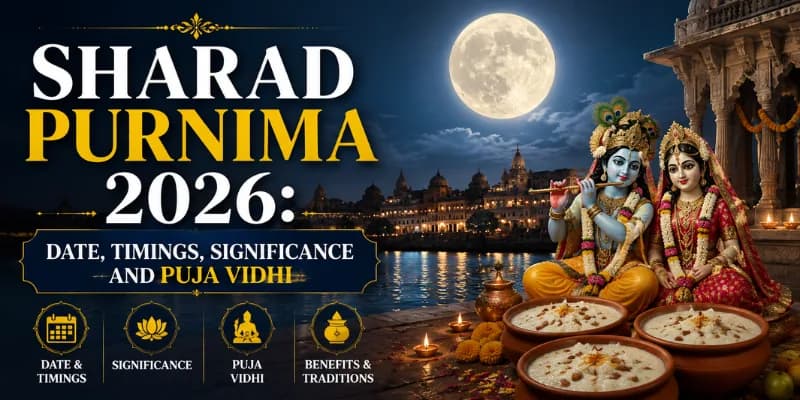
Sharad Purnima 2026 falls on Sunday, October 25, 2026, the Ashwin full moon when the moon is said to shine with all sixteen kalas. Devotees place kheer under the moonlight and perform the Kojagara Lakshmi Puja. It is also revered as the night of Lord Krishna's Raas Leela.
Sharad Purnima is one of the most luminous and beloved full moon festivals of the Hindu year, celebrated for its healing moonlight, the sacred kheer ritual, the worship of Goddess Lakshmi and its deep connection with Lord Krishna. This guide, from the team behind Somnath Dwarka Tour Package, a unit of Experience My India, covers the Sharad Purnima 2026 date and timings, its significance and a step-by-step Kojagara Lakshmi Puja vidhi to perform at home. For more on the state's celebrations, see our festivals section.
When is Sharad Purnima 2026?
Sharad Purnima 2026 falls on Sunday, October 25, 2026, the full moon day of the Hindu month of Ashwin. As the moonlit-night rituals are central to the festival, the main observance is the night of October 25. The key timings are:
Event | Date and time |
Purnima tithi begins | 11:55 AM, October 25, 2026 |
Purnima tithi ends | 09:41 AM, October 26, 2026 |
Moonrise | Around 05:00 PM, October 25, 2026 |
Sharad Purnima main night | Sunday, October 25, 2026 |
Because the Purnima tithi runs from the late morning of October 25 into the morning of October 26, some regions and panchangs observe or complete certain rituals on October 26, while the moonlit kheer and the night vigil are kept on the night of October 25. Moonrise times also vary slightly by city, so check your local panchang for exact timings at your location. As a rule, the night on which the full moon is visible high in the sky, October 25 in 2026, is the one kept for the moonlit rituals.
Sharad Purnima 2026 at a glance
Festival | Sharad Purnima (Kojagari or Raas Purnima) |
Date in 2026 | Sunday, October 25, 2026 |
Hindu month | Ashwin Shukla Purnima, the autumn full moon |
Key belief | The moon shines with all sixteen kalas |
Main rituals | Moonlit kheer, Kojagara Lakshmi Puja, night vigil |
Krishna link | Revered as the night of the Raas Leela |
Significance of Sharad Purnima
Sharad Purnima marks the end of the monsoon and the arrival of the sharad or autumn, season and it carries profound spiritual meaning. It is believed to be the only night of the year when the moon shines with all sixteen of its divine kalas or phases, at their fullest. Tradition holds that on this night the moon's rays are filled with amrit, the nectar of immortality, showering healing and nourishing energy upon the earth. This is why the night is considered so auspicious for worship, for the moonlit kheer ritual and for staying awake in devotion to receive the moon's and the goddess's blessings. In many parts of India it is also observed as a harvest festival, giving thanks for the new grain, which is why one of its names, Navanna Purnima, refers to the fresh harvest.
Sharad Purnima and Lord Krishna's Raas Leela
For devotees of Lord Krishna, Sharad Purnima holds a special place, as it is revered as the very night of the Maha Raas Leela, the divine dance Krishna performed with the gopis of Vrindavan under the glowing autumn moon. It is said that Krishna multiplied himself so that each gopi felt he danced with her alone and that this single night of divine love lasted as long as an age of Brahma, billions of human years. This connection makes Sharad Purnima especially meaningful in the land of Krishna, Dwarka, where the legends of his life and the love of the gopis are woven into the very coast, as told in our Dwarka history. For Vaishnavas, then, Sharad Purnima is not only a festival of the moon and the goddess, but a night that celebrates divine love in its purest and most joyful form.
The moonlit kheer ritual
The most beloved and distinctive tradition of Sharad Purnima is the kheer ritual. Devotees prepare rice kheer, a sweet pudding of rice cooked in milk and place it under the open moonlight overnight, covered with a thin mesh cloth. It is believed that the moon's nectar-filled rays infuse the kheer with healing and nourishing properties through the night. The next morning, this moonlight-blessed kheer is consumed and distributed as prasad and is thought to bring good health and wellbeing. For many families, preparing and sharing this kheer is the heart of the entire celebration, a simple act that binds together devotion, health and togetherness under the brightest moon of the year.
Kojagara Lakshmi Puja and the night vigil
In many regions, Sharad Purnima is celebrated as Kojagari or Kojagara Purnima, dedicated to the worship of Goddess Lakshmi. Devotees perform the Lakshmi Puja at night and observe a jagran or night vigil, staying awake in prayer, bhajans and devotion. The name Kojagari comes from the belief that Goddess Lakshmi roams the earth on this night, asking Ko jagarti, meaning who is awake and blesses with prosperity and abundance those she finds awake and devoted. Staying awake through the night, then, is both an act of devotion and an invitation for the goddess's grace and families often gather together to keep each other company through the moonlit hours.
Kojagara Lakshmi Puja vidhi at home
You can perform the Kojagara Lakshmi Puja at home on Sharad Purnima with a simple, heartfelt vidhi. First, gather the puja materials or samagri:
Idols or images of Goddess Lakshmi and Lord Kuber.
Kheer, lotus or red flowers, betel leaves or paan, nuts, fruits and sweets as offerings.
A wooden platform or chauki, red cloth, a ghee lamp, incense sticks, a kalash or copper pot and a coconut.
Then follow these steps:
1. Purification and setup: clean the puja room, spread a red cloth on the wooden platform and place the idols of Goddess Lakshmi and Lord Kuber facing east or north. Set up a kalash filled with water, topped with mango leaves and a coconut, beside the idols.
2. Dhyana and sankalpa: meditate on Goddess Lakshmi with closed eyes to invoke her presence, then take water in your right hand and make a sankalpa or resolution, to perform the puja with devotion.
3. Abhishek and shringar: sprinkle holy water or panchamrit, made of milk, curd, honey, ghee and sugar, on the idols, apply kumkum and akshat and offer red or lotus flowers and a garland.
4. Offerings or bhog: light the ghee lamp and incense and offer fruits, sweets, paan and the specially prepared rice kheer.
5. Aarti and prayers: perform the Lakshmi aarti while ringing a small bell and recite the Lakshmi Chalisa or the Sri Suktam to invite wealth and positivity.
6. The moonlight ritual and vigil: place the kheer vessel under the open moonlight for at least three to four hours or overnight, covered with a thin mesh cloth. Keep the night vigil, waking at midnight to chant mantras or play devotional music, as Goddess Lakshmi is believed to visit and bless those who are awake. Distribute the moonlight-infused kheer as prasad the next morning.
Other names and regional traditions
Sharad Purnima is known by many names across India, reflecting its many meanings. It is called Kojagari or Kojagara Purnima for the Lakshmi vigil, Raas Purnima for Krishna's dance, Kaumudi and Kumara Purnima and Navanna Purnima where it marks a harvest festival. In Bengal and Odisha it is observed as Kojagari Lakshmi Puja, in Vaishnava regions it celebrates Krishna's Raas Leela and elsewhere devotees also worship Lord Shiva and perform the Satyanarayan Puja. Unmarried women in some regions fast for a good match. Everywhere, though, the moonlit kheer remains a shared and cherished tradition, a beautiful thread of unity linking the festival's many regional forms across the country.
Celebrating Sharad Purnima in Dwarka and Gujarat
In the land of Krishna, Sharad Purnima carries a special glow. Along the Dwarka coast, tied so closely to Krishna and the gopis and at the Gopi Talav pond linked to the Raas Leela, the festival's connection to the Maha Raas feels especially alive. A visit to Bet Dwarka, the Dwarkadhish temple and the sacred Gomti Ghat around this time lets you experience the autumn full moon in one of the holiest settings in India, combining the festival's devotion with the beauty of Krishna's city. Experience My India can plan such a visit around the festival, so you enjoy the moonlit night in a truly special place.
Tips for Sharad Purnima 2026
A few pointers to make the night meaningful:
Prepare the rice kheer fresh in the evening and place it under the open moonlight soon after moonrise.
Cover the kheer with a thin, clean mesh cloth to keep it pure while it absorbs the healing moonlight.
Perform the Lakshmi puja in the evening after moonrise and keep the night vigil with bhajans and mantras.
Check your local panchang for the exact moonrise time in your city.
Enjoy the kheer as prasad the next morning and share it with family, neighbours and guests.
If travelling for the festival, book stays and travel early, as autumn is a popular season across Gujarat.
Plan a Krishna pilgrimage
Experience My India can plan a trip to the land of Krishna around Sharad Purnima or any time. Explore the Somnath Dwarka tour packages, plan the season with the best time to visit Dwarka, use our how to reach Dwarka guide, book Somnath Dwarka hotels and let a Somnath Dwarka taxi service handle the travel so you can focus on the darshan.
Related guides
To plan your Gujarat trip, these related guides help:
Related guide | What it covers |
Air, rail and road access to the Somnath coast. | |
The season and festivals that shape when to travel. | |
The temple of Krishna's queen near Dwarka. | |
Darshan and ferry timings for Bet Dwarka. | |
The Jyotirlinga of Lord Shiva near Dwarka. | |
The sights within the Somnath temple town. |
Plan your festival trip
Experience My India can arrange a trip to the land of Krishna around Sharad Purnima. Browse more travel guides, message us on WhatsApp or call +91 73006 20809.

Harsh Rawat
Somnath–Dwarka circuit planning
Harsh Rawat runs Somnath Dwarka Tour Package on the ground in Gujarat, part of Experience My India. Since 2018 he has been planning and driving the Somnath–Dwarka circuit — the darshan timings, the road hours between temples and the stops worth adding — and the routes, fares and timings published across this site are the ones he maintains.