Jalandhar Beach Diu: The Quiet Shore of Legend
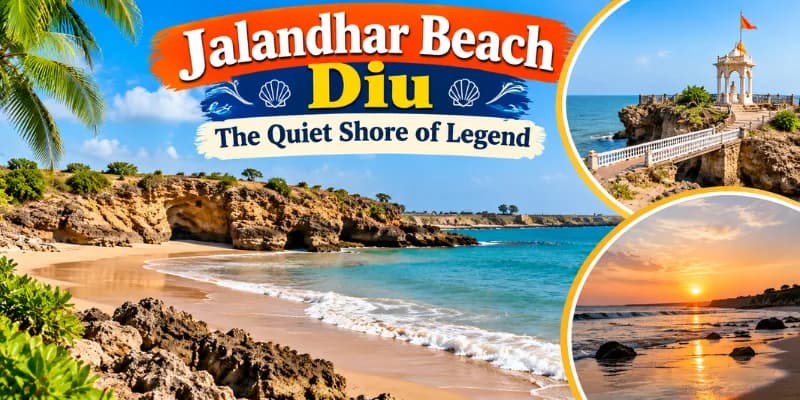
Jalandhar Beach, also spelled Jallandhar, is a serene, small C-shaped beach on the southern shore of Diu, about 1 km from town. Named after the mythological demon Jalandhar slain here, it has a hilltop temple, a captured Pakistani navy boat and clean, uncrowded sands, a peaceful alternative to Nagoa. This guide, from Experience My India, covers it.
Jalandhar Beach is one of the quiet treasures of Diu Island, a small, serene curve of sand on the southern shore steeped in Hindu legend and maritime history. Away from the crowds of the island's busier beaches, it offers tranquillity, a famous myth and lovely sea views. This guide, from the team behind Somnath Dwarka Tour Package, a unit of Experience My India, covers what Jalandhar Beach is, the legend behind its name, the hilltop temple and memorials, the beach experience and how to visit, as one of the gentler sights alongside the Diu Fort and the island's other attractions.
What is Jalandhar Beach?
Jalandhar Beach, also spelled Jallandhar, is a serene, small coastal destination on the southern shore of Diu Island, the union territory off the coast of Gujarat. Unlike the island's standard recreational shorelines, it is as much a place of legend and history as of leisure, a quiet, rocky, clean little beach set beneath a hillock crowned with a mythological monument and a temple. It is famously sparsely crowded, which makes it a peaceful retreat and an exceptional alternative to the busier, noisier tourist beaches of the island. The beach takes its name from a figure of Hindu mythology and its shore also holds relics of modern maritime history, so a visit here combines a gentle seaside stop with a touch of myth and a glimpse of the recent past. For travellers who want calm, beauty and a story rather than crowds and water-sports hustle, Jalandhar Beach is one of the most rewarding corners of Diu.
Jalandhar Beach at a glance
What it is | A small, serene C-shaped beach on southern Diu |
Also spelled | Jallandhar |
Size | A C-shaped curve of roughly 100 metres |
Named after | The mythological demon king Jalandhar |
On the hill | A stone face of the demon and a Chandrika temple |
Also here | A captured Pakistani boat and a war memorial |
Character | Rocky, clean and sparsely crowded |
The legend of the demon Jalandhar
Jalandhar Beach is heavily tied to regional Hindu mythology and it derives its very name from the legend of the Asura king or demon, Jalandhar. According to local folklore, this powerful demon was slain here by Lord Vishnu or by Lord Krishna in some local variations of the tale and the beach is remembered as the site of that mythological event. This gives the quiet shore a resonance quite beyond its modest size, for in Hindu tradition such places where the divine vanquished a great demon are charged with meaning. The story is part of what sets Jalandhar Beach apart from an ordinary stretch of sand, turning a visit into a brush with the sacred geography of the region, where myth and landscape are woven together. For many visitors, knowing the legend as they stand on the shore, looking up at the hillock where the demon is memorialised, is what makes the place memorable.
The hilltop memorial and Chandrika temple
Atop a hillock overlooking the beach sits the monument that gives the legend physical form. Here stands a stone face structure of the demon Jalandhar, a striking carved visage that serves as a legendary memorial to the figure the beach is named for, gazing out over the sea. Beside it is a temple dedicated to Goddess Chandrika, a place of worship that adds a living devotional dimension to the mythological site. The short climb up the hillock rewards visitors not only with these monuments but with fine views over the C-shaped beach and the open sea beyond, making it the natural focal point of a visit. Together the stone face and the temple turn the hill above Jalandhar Beach into a small sacred landmark, where the ancient story of the slain demon and the worship of the goddess meet above the quiet shore, a combination found nowhere else on the island.
Modern maritime relics
Reflecting more recent history, the Jalandhar Beach area also houses relics of modern maritime and military history, which add another layer to the visit. Here you can see a preserved Pakistani boat that was captured by the Indian Navy, displayed on the shore as a piece of living history, alongside a regional war memorial honouring the sacrifices of the armed forces. These modern relics sit intriguingly alongside the ancient mythology of the demon Jalandhar, so that the beach spans the sacred and the martial, the mythological and the historical, in a single small space. For visitors interested in India's naval and military heritage, this is a meaningful addition, echoing the story told more fully at the island's great naval memorial and it gives Jalandhar Beach a depth and variety that few small beaches can match.
The beach experience
As a place simply to be by the sea, Jalandhar Beach is quietly delightful. It is a small, perfect C-shaped curve of shore spanning roughly 100 metres, intimate in scale and framed by its rocky setting. It is famously sparsely crowded, as well as rocky and clean, which together make it an exceptional alternative to the noisy tourist crowds of the island's busier beaches. The clear, beautiful waters are ideal for sunset and sunrise viewing and for photography and the peace of the place is its great attraction, a spot to sit quietly, watch the sea and the sky and escape the bustle. The rocky character means it is more a beach for contemplation and views than for long sandy walks or swimming and that is precisely its charm. For anyone seeking a calm, scenic and uncrowded corner of Diu, with a story and a view, this little beach is hard to beat.
Jalandhar Beach or Nagoa Beach?
Diu's two best-known beaches offer very different experiences and it helps to know which suits you. Nagoa Beach is the island's famous, lively, hu-shaped main beach, a long sweep of sand with water sports, shacks, crowds and a buzzing holiday atmosphere, the place for action and fun. Jalandhar Beach, by contrast, is small, quiet, rocky and steeped in legend, a peaceful retreat for those who want calm, myth and sea views rather than crowds and commotion. Many visitors enjoy both, Nagoa for the lively beach day and Jalandhar for a tranquil, reflective stop with its temple and monuments. If you want buzz, water sports and company, choose Nagoa; if you want peace, a story and a sunset in solitude, Jalandhar is the one. Together they show the two faces of Diu's coast.
Safety and activities
A word of caution is important at Jalandhar Beach. While it offers clear, beautiful waters that are perfect for sunset and sunrise viewing and for photography, swimming is generally restricted or prohibited here, because of the rough waves and the hidden currents beneath the rocks, which make the water dangerous despite its inviting appearance. Visitors should respect this and enjoy the sea from the shore rather than entering the water. That said, the shore does provide seasonal access to water sports such as jet-skiing and parasailing, depending on local operations and conditions, for those who want some activity in a safe, operator-led setting. So the beach can be both a place of peaceful contemplation and, in season, a spot for a little adventure on the water, but always within the bounds of safety, keeping well clear of swimming in the rough, rocky shallows where the hidden currents lurk.
Location and how to reach Jalandhar Beach
Jalandhar Beach is very conveniently located, sitting roughly 1 km from the Diu town centre and the Diu Fort, right near the South Pole Point on the southern shore. It is highly accessible, just about 6 km, a 10-minute drive, from Diu Airport and visitors can easily reach it by local auto-rickshaw, a rented scooter or even a short walk from the nearby city attractions. Diu itself is reached by road from the Saurashtra coast and sits close to the Somnath region, so it is often combined with a Somnath and Gujarat trip, as covered in our places to visit near Somnath and Diu guide and the Diu to Somnath distance guide. For comfortable transport around the region, the Experience My India Somnath Dwarka taxi service can include Diu and our how to reach Somnath guide covers the approach to this corner of the coast.
Best time to visit
Jalandhar Beach is at its most beautiful at sunrise and sunset, when the clear waters and the sky over the open sea put on their finest show and the light is perfect for photography, so timing a visit for either end of the day is ideal, with sunset especially popular. The cooler months from October to March are the most pleasant overall for a Diu visit, with comfortable coastal weather for enjoying the beach and climbing the hillock to the temple and monument, as covered in our best time to visit Gujarat guide. Because the beach is small and quiet, it rarely feels crowded whenever you come, but the early morning and the golden hour before sunset are the magical times to be here, watching the sea in peace beneath the hill of the slain demon and the goddess's temple.
Combining the beach with Diu's sights
Being so close to town, Jalandhar Beach combines easily with Diu's other attractions. Nearby stand the mighty fort, the crimson Zampa Gateway, the rock-cut Naida Caves and the two historic churches, the Baroque St Paul's Church and the Diu Museum in the old St Thomas Church. The moving INS Khukri Memorial and the unique Gangeshwar Mahadev Temple complete the picture. Together they make Diu a destination with a rich blend of history, faith, nature and legend, well worth a day or two as part of a wider Somnath, Gir and Junagadh Girnar journey through Saurashtra.
Tips for visiting Jalandhar Beach
A few pointers help you enjoy the visit:
Visit at sunrise or sunset for the finest light over the sea and the best photography.
Climb the hillock to see the stone face of the demon Jalandhar and the Chandrika temple and enjoy the views.
Do not swim, as swimming is generally restricted here due to rough waves and hidden currents beneath the rocks.
Choose Jalandhar for peace and legend and Nagoa Beach for a livelier beach day with water sports and crowds.
Look for the captured Pakistani boat and the war memorial, a glimpse of modern maritime history on the shore.
It is just 1 km from town, so pair it easily with the fort and other nearby sights on foot or by rickshaw.
Wear sturdy footwear, as the beach and hillock are rocky and carry water and sun protection.
Plan your Diu visit
Experience My India can plan your Diu visit to include Jalandhar Beach alongside the island's forts, churches, beaches and temples, with comfortable transport and a well-paced itinerary. You can combine Diu with the Somnath temple, the lions of Gir, the heritage of Junagadh and the holy town of Dwarka, stay at well-placed Somnath Dwarka hotels and let the Experience My India Somnath Dwarka tour packages or the wider Gujarat tour packages bring the island and the whole region together in one journey.
Related guides
To plan the rest of your Diu and Saurashtra trip, these related guides help:
Related guide | What it covers |
When to add a Gir safari to your Diu and Saurashtra trip. | |
The full library of Somnath, Dwarka and Diu guides. |
Plan your visit
Experience My India can arrange your Diu trip and wider Saurashtra journey. Browse more travel guides, message us on WhatsApp or call +91 73006 20809.

Harsh Rawat
Somnath–Dwarka circuit planning
Harsh Rawat runs Somnath Dwarka Tour Package on the ground in Gujarat, part of Experience My India. Since 2018 he has been planning and driving the Somnath–Dwarka circuit — the darshan timings, the road hours between temples and the stops worth adding — and the routes, fares and timings published across this site are the ones he maintains.