Ram Navami in Gujarat: Date, Muhurat and Celebrations
Ram Navami celebrates the birth of Lord Rama on the ninth day of Chaitra Navratri, falling on 15 April in 2027. In Gujarat it is observed with a day-long fast, midday Madhyahna puja at the birth moment, Shobha Yatras and temple festivities and it coincides with Swaminarayan Jayanti. This guide, from Experience My India, covers the timings, customs and where to celebrate.
Ram Navami is one of the most sacred days in the Hindu calendar, marking the birth of Lord Rama and in Gujarat it carries a special double significance as it coincides with Swaminarayan Jayanti. Celebrated with fasting, midday prayers at the exact moment of Rama's birth, grand processions and joyous temple festivities, it is the culmination of Chaitra Navratri. This guide, from the team behind Somnath Dwarka Tour Package, a unit of Experience My India, covers the date and the all-important midday muhurat, the Swaminarayan Jayanti intersection, where the festival is celebrated across Gujarat and the history, rituals and food that make the day so meaningful.
What is Ram Navami?
Ram Navami celebrates the birth of Lord Rama, the seventh avatar of Lord Vishnu, who was born to King Dasharatha and Queen Kaushalya in Ayodhya to destroy evil and establish Dharma, righteousness. It falls on the ninth and final day of Chaitra Navratri, the spring Navratri and is observed across India with devotion and fasting. The heart of the festival is the Madhyahna puja at midday, the exact phase that marks the moment of Rama's birth, when the main prayers and rituals are performed. In Gujarat the day is celebrated with particular fervour through grand Shobha Yatra processions, bhajans and Maha-Aartis and uniquely it shares the date with the birth anniversary of Bhagwan Swaminarayan, so that two great celebrations unfold together. It is a day of spiritual renewal, when devotees honour Rama as the ideal human and the embodiment of virtue.
Ram Navami at a glance
What it celebrates | The birth of Lord Rama, the seventh avatar of Vishnu |
When | The ninth day of Chaitra Navratri, usually March or April |
2027 date | Thursday, 15 April 2027 |
Key ritual | The midday Madhyahna puja at the birth moment |
In Gujarat | Coincides with Swaminarayan Jayanti |
Observance | A day-long fast until the midday puja |
Celebrated with | Shobha Yatras, bhajans, Maha-Aartis, charity |
2027 date and Gujarat puja timings
Ram Navami in 2027 falls on Thursday, 15 April. Because it follows the Chaitra Shukla Navami tithi of the lunar calendar, the date shifts each year, usually landing in late March or April. The crucial point is that the main prayers must be concluded during the midday Madhyahna window, the exact phase marking the birth of Lord Rama. The local astronomical timings vary slightly by city with sunrise and sunset and here are the details for Ahmedabad and central Gujarat in 2027:
Navami tithi begins | 03:23 PM on Wednesday, 14 April 2027 |
Navami tithi ends | 01:20 PM on Thursday, 15 April 2027 |
Madhyahna puja window | 11:29 AM to 02:00 PM, about 2 hours 31 minutes |
Madhyahna peak birth moment | Around 12:44 PM |
The Madhyahna peak, around 12:44 PM in central Gujarat, is the central birth moment, so devotees aim to complete the main Ram Navami puja within the midday window. As the timings differ a little by location, it is worth checking the exact muhurat for your city, but the midday is always the sacred focus of the day.
The midday Madhyahna puja and the fast
The spiritual heart of Ram Navami is the Madhyahna Kaal, the midday period when Lord Rama is believed to have been born, under the Punarvasu nakshatra at exactly midday according to the Valmiki Ramayana. Devotees observe a strict vrat, a fast, from sunrise until the midday Madhyahna puja is completed, breaking it only after the birth moment has been honoured. At the puja, the infant Rama, Ram Lalla, is ceremonially welcomed, often by rocking his image in an ornamented cradle and the household and temple fill with the chanting of the Ramayana and devotional bhajans. This disciplined focus on the exact birth hour, preceded by fasting and devotion, gives Ram Navami its intensity and completing the midday puja is the culmination of the whole day's observance for a Gujarati family.
Ram Navami and Swaminarayan Jayanti
In Gujarat, Ram Navami carries a special second meaning. Chaitra Sud Nom, the same ninth lunar day, is also celebrated as Swaminarayan Jayanti, marking the birth anniversary of Bhagwan Swaminarayan, who was born on Chaitra Sud 9 in Samvat 1837. As a result, the major temples of the Swaminarayan Sampradaya, such as the historic Kalupur Mandir in Ahmedabad and the BAPS mandirs across Gujarat and around the world, celebrate both Ram Navami and Swaminarayan Jayanti together. The celebrations feature joint morning and evening sabhas, the swinging of the murtis in cradles in a joyous janmotsav and readings from the Ramayana and the Satsangi Jeevan. This intersection makes Ram Navami an especially grand occasion in Gujarat, doubly celebrated in the state's great Swaminarayan temples.
Key celebrations and locations in Gujarat
Ram Navami is celebrated with immense devotional fervour throughout Gujarat, marked by Shobha Yatra processions, bhajans and Maha-Aartis. Prominent places to witness the biggest celebrations include the Dwarkadhish Temple in Dwarka, where, although it is predominantly a Krishna temple, special prayers are offered to Lord Rama as the seventh avatar of Vishnu and thousands gather for the changing of the flag; the Akshardham Temple in Gandhinagar, with its elaborate displays and devotional programmes on the life of Rama; the ISKCON temples in Ahmedabad, Vadodara and Surat, which host magnificent kirtans and distribute the Chappan Bhog, 56 varieties of food offerings; and the local Ramji Mandirs found in almost every city and town, such as in the historic quarters of Rajkot, Jamnagar and Surat, where communities gather for the midday birth aarti. For temple etiquette at Dwarka, see our Dwarka temple rules guide.
History and significance
According to the ancient Valmiki Ramayana, Lord Rama was born on the ninth day of the Chaitra lunar month, under the Punarvasu nakshatra, at exact midday. He descended to earth as the seventh incarnation of Lord Vishnu to defeat the demon king Ravana and restore equilibrium to the cosmos. Rama is revered not only as a deity but as the Maryada Purushottama, the ultimate emblem of righteousness, virtue and unwavering duty, whose life sets the standard for being an ideal son, an ideal brother and an exemplary, fair ruler. Ram Navami therefore celebrates far more than a divine birth: it honours an ideal of how to live, which is why the day is observed with such reverence and why the reading of Rama's story is central to it. It also marks the ninth and final day of Chaitra Navratri, giving it the character of a grand culmination.
Observances and traditional food
For Gujarati families, Ram Navami marks a spiritual restart. The core observances are the day-long vrat, the rocking of the infant Ram Lalla in ornamented cradles, the chanting of the Ramayana and readings from the Ramcharitmanas, the singing of bhajans and acts of community charity. The traditional offerings prepared for the day include Panchamrit, the holy mixture of honey, jaggery or sugar, milk, yogurt and ghee and Panjiri, along with the fruits and simple fasting foods eaten until the midday puja is complete. These devotional foods and rituals, centred on the birth of Rama, give the day its warm, family character. For more of the state's festival cuisine, see our Kathiyawadi food and Gujarati thali and famous sweets of Gujarat guides.
Experiencing Ram Navami in the Saurashtra region
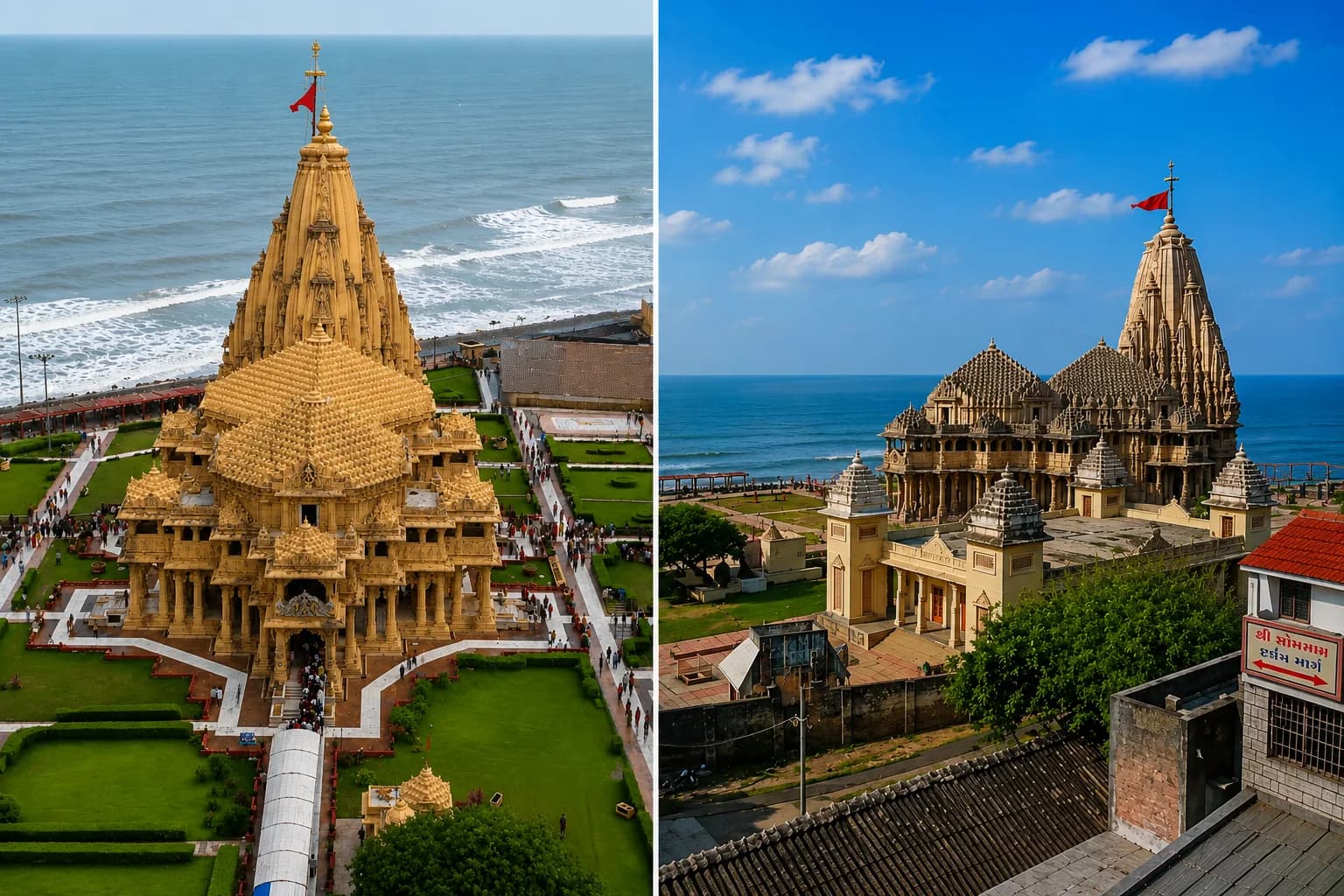
While the grandest Swaminarayan and ISKCON celebrations are in the larger cities, the Saurashtra coast and its towns observe Ram Navami warmly too, with local Ramji Mandirs in Rajkot, Jamnagar and across the region holding the midday birth aarti. A visit timed for the festival pairs naturally with the wider pilgrimage, taking in Krishna's city of Dwarka and the temple of Somnath, with the lions of Gir and the heritage of Junagadh and Girnar inland. Ram Navami also marks the start of the famous Madhavpur fair on the coast, so the season is a vibrant time to travel. To build a trip around the festival, see our Gujarat itinerary.
Tips for experiencing Ram Navami
A few pointers help you observe or witness the festival well:
Plan to be at a temple for the midday Madhyahna puja, the sacred birth moment, which in central Gujarat peaks around 12:44 PM in 2027.
Check the exact muhurat for your city, as the timings vary slightly with local sunrise and sunset.
For the grandest celebrations, visit a Swaminarayan temple such as Kalupur or a BAPS mandir or an ISKCON centre.
If observing the vrat, keep the fast from sunrise until the midday puja is completed.
Join or watch a Shobha Yatra procession and enjoy the bhajans and Maha-Aartis at local Ramji Mandirs.
Try the traditional Panchamrit and fasting foods and take part in the spirit of community charity.
Expect large, joyous crowds, as the day doubles as Swaminarayan Jayanti across Gujarat.
Plan your Gujarat visit
Experience My India can plan a trip around Ram Navami, arranging temple visits for the midday celebrations, stays and transport and weaving the festival into a fuller Gujarat journey. Our Gujarat tour packages and Somnath Dwarka tour packages can combine the day with the coastal pilgrimage and the wider state, with a stay at well-placed hotels and comfortable local transport.
Related guides
To plan your Gujarat festival trip, these related guides help:
Related guide | What it covers |
The birth festival of Lord Hanuman, Rama's great devotee. | |
The state's great festival of the Goddess and folk dance. | |
The four sacred dhams of Gujarat for a pilgrimage trip. |
Plan your visit
Experience My India can arrange your Gujarat festival and pilgrimage trip. Browse more travel guides, message us on WhatsApp or call +91 73006 20809.

Harsh Rawat
Somnath–Dwarka circuit planning
Harsh Rawat runs Somnath Dwarka Tour Package on the ground in Gujarat, part of Experience My India. Since 2018 he has been planning and driving the Somnath–Dwarka circuit — the darshan timings, the road hours between temples and the stops worth adding — and the routes, fares and timings published across this site are the ones he maintains.