Shopping in Dwarka: What to Buy, Markets and Timings
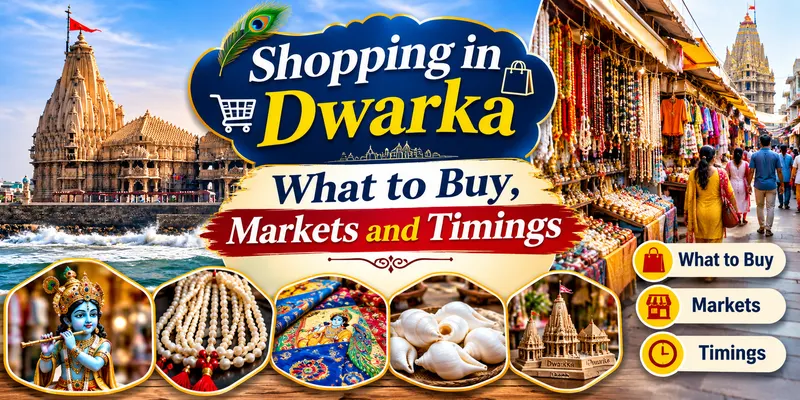
Shopping in Dwarka centres on lively street bazaars and commercial plazas near the Dwarkadhish Temple, selling traditional Gujarati textiles, handicrafts and religious souvenirs. Look for Patola silk and Bandhani sarees, mirror-work dress materials, brassware, embroidered mojris, Lord Krishna idols, rudraksha and prasad. Markets open roughly 9:00 AM to 9:30 PM, best explored on foot. This guide, from Experience My India, covers what to buy and where.
A pilgrimage to Dwarka leaves you wanting to carry a piece of the holy city home and its markets make that a joy. Shopping in Dwarka revolves around vibrant street bazaars and commercial plazas near the Dwarkadhish Temple, offering traditional Gujarati textiles, handicrafts and religious souvenirs and the markets reflect both the city's deep spiritual heritage and its historic role as an ancient maritime trading hub. This guide, from the team behind Somnath Dwarka Tour Package, a unit of Experience My India, walks you through what to buy, the best markets and plazas, the timings and the bargaining, so you shop well and bring home the right keepsakes and gifts.
Shopping in Dwarka: an overview
Dwarka's shopping is concentrated in the heart of the town, within walking distance of the main temple, which makes it easy to combine a browse with your darshan. The experience has two sides. The first is the cluster of bustling street bazaars, narrow, lively lanes lined with artisan stalls, textile shops, souvenir sellers and street-food vendors, where the atmosphere is at its most colourful. The second is a set of modern commercial plazas offering organised retail space for garments, footwear and household goods. Together they cover everything from a quick prasad box to a fine Patola saree. Because the markets sit right around the shrine, a shopping stroll fits naturally between temple visits and timing it around the Dwarkadhish temple aarti timings lets you shop in the gaps between darshan.
What to buy in Dwarka
Dwarka's bazaars offer authentic Saurashtra craftsmanship alongside devotional items, so there is something for every taste and budget. Here is a quick guide to the signature buys:
What to buy | Details |
Patola silk sarees | The famous double-ikat woven silk of Gujarat, prized and collectible. |
Bandhani textiles | Traditional tie-dye fabrics in bright colours, as sarees and dupattas. |
Ghagra-cholis and dress materials | Embroidered with mirror work, beadwork and sequins. |
Brassware and handicrafts | Intricate brass items, home decor and showpieces. |
Mojris (traditional footwear) | Colourful embroidered leather and fabric slippers. |
Krishna idols and photos | Deity idols, framed images and ornate clothing for deities. |
Rudraksha and spiritual books | Prayer beads, scripture and devotional reading. |
Prasad and sweets | Dwarkadhish peda and prasad boxes to carry home. |
Traditional textiles
Textiles are the jewel of Dwarka's shopping, reflecting Gujarat's renowned weaving and dyeing traditions. The most prized are Patola silk sarees, the exquisite double-ikat weave in which the pattern is dyed into both warp and weft before weaving, a painstaking craft that makes a genuine Patola a collector's treasure. Equally beloved is Bandhani, the traditional tie-dye technique that produces intricate patterns of tiny dots in vivid colours, seen in sarees, dupattas and dress materials. You will also find traditional ghagra-cholis and dress materials richly decorated with mirror work, beadwork and sequins, the hallmark of Saurashtra embroidery. These fabrics make beautiful, meaningful purchases and shopping for them is a window into the living craft heritage of the region, which our guide to the
famous art and craft of Gujarat explores further.
Handicrafts and brassware
Beyond textiles, Dwarka's artisans offer a wealth of handicrafts. Brassware is a highlight, with intricately worked brass items, lamps, pooja articles and decorative pieces that reflect the city's temple culture. You will find handcrafted home decor and showpieces and colourful embroidered mojris, the traditional pointed footwear, in leather and fabric. These handicrafts are both practical and decorative and they carry the stamp of local craftsmanship. A brass diya or a pair of mojris makes a distinctive gift that captures something of Dwarka's character and browsing the stalls where these are sold, often alongside the artisans themselves, is part of the pleasure of shopping in the old bazaars.
Religious souvenirs and spiritual items
Given Dwarka's status as Lord Krishna's city and one of the Char Dham, religious souvenirs are naturally the most sought-after buys. Stalls near the temple specialise in Lord Krishna idols of every size, framed photographs of the deity and ornate clothing and ornaments made for home deities. You will also find rudraksha beads, prized for their spiritual significance, spiritual books and scripture and of course the famous Dwarkadhish peda and prasad boxes to carry home as blessed offerings. These devotional items are the heart of Dwarka's shopping, bought by pilgrims to keep the memory and blessing of their visit alive and they make the most meaningful gifts for family and friends who could not make the journey.
Where to shop: markets and plazas
Most shopping hubs are within walking distance of the main temple complex in the heart of town. Knowing the key areas helps you head straight to what you want:
Local street markets | The lanes around Dwarkadhish Temple, Bathan Chowk, Ananya Mata Chowk and Shri Ram Bazaar, the liveliest artisan and souvenir hubs |
Shopping plazas | Pankaj Plaza, Supreme Plaza, Dwarkadeep, Bansal Plaza, Vardhman Plaza, Odeon Plaza, Sagar Plaza and Aditya Plaza, for organised retail |
Near the ghats | Stalls around Gomti Ghat and the temple market for prasad, idols and quick souvenirs |
The narrow, lively alleys of the street markets are where you will find the artisan stalls and local street-food vendors, so they are best for textiles, handicrafts and souvenirs, while the plazas suit organised shopping for garments, footwear and household goods. Many visitors browse the bazaars near the Gomti Ghat after a bath or darshan, grazing on local street food as they go.
Market timings and best time to visit
Dwarka's markets keep long, flexible hours, so there is plenty of time to shop around your sightseeing. Local markets generally stay open from about 9:00 AM to 9:30 PM, though exact opening and closing times vary by individual shopkeepers. The time of day changes the experience: visiting in the morning helps you avoid the crowds and often yields better bargains, as shopkeepers are keen for the day's first sale, while the evening offers a vibrant atmosphere of glowing lights, busy streets and fresh local snacks. For the season, the most comfortable months to explore the outdoor markets are October to March, when temperatures stay between roughly 15 and 30 degrees Celsius. The markets reach their peak festivity and variety around Janmashtami, in August or September and during Diwali, when the whole town is at its most colourful.
Daily hours | About 9:00 AM to 9:30 PM (varies by shop) |
Best time of day | Mornings for quiet browsing and bargains; evenings for atmosphere and snacks |
Best season | October to March, roughly 15 to 30 degrees Celsius |
Peak festivity | Janmashtami (August or September) and Diwali |
Bargaining and shopping tips
A little know-how helps you shop smart in Dwarka's bazaars:
Bargain politely: in the street markets, haggling is expected, so start lower and settle at a fair price, always with good humour.
Shop in the morning: come soon after the markets open for the best bargains and a calmer browse before the crowds.
Check authenticity: for a genuine Patola or fine Bandhani, buy from established shops and ask about the weave and dye.
Carry cash: many smaller stalls and artisans prefer cash, though plazas usually accept cards and digital payments.
Buy prasad from trusted sellers: purchase peda and prasad from reputable shops near the temple for quality and freshness.
Compare before you buy: walk a few stalls for textiles and brassware, as prices and quality vary, before committing.
The history behind Dwarka's markets
Dwarka's bazaars are not a recent creation but the heirs of an ancient trading tradition. Archaeological excavations have uncovered stone jetties and anchors proving that Dwarka was a major port and between roughly the 15th and 18th centuries it served as a vital trade gateway between India and Arabia. The submerged remains of the ancient city, explored in our guide to how deep underwater Dwarka is, attest to its maritime past. Layered on top of this is the pilgrimage economy: as one of the sacred Char Dham of Gujarat and Sapta Puri sites, Dwarka has welcomed pilgrims for centuries and its markets evolved to sustain the millions of devotees who come, blending religious commerce with the traditional folk art of Saurashtra. So when you shop here, you are taking part in a commerce as old as the city itself.
Combining shopping with sightseeing
The best way to shop in Dwarka is to weave it into your sightseeing, since the markets sit among the main sights. After darshan at the Dwarkadhish Temple and a bath at the Gomti Ghat, the surrounding bazaars are right there for souvenirs. A walk across the Sudama Setu bridge, a visit to the Nageshwar Jyotirlinga and a boat to Bet Dwarka fill the rest of a classic Dwarka itinerary, with shopping slotted into the evenings when the markets glow. For a full plan of the city's sights, see our best places to visit in Dwarka guide, so you can balance temples, ghats and bazaars over your stay.
Plan your Dwarka trip
Experience My India can plan a Dwarka pilgrimage that leaves time for its markets as well as its temples, with a comfortable stay near the bazaars, a well-paced itinerary and transport that makes getting around easy. Our Somnath Dwarka tour packages and wider Gujarat tour packages weave Dwarka into a fuller Saurashtra journey, with a stay at well-placed hotels near the temple and markets, covered in our Dwarka hotels near temple guide and comfortable local transport throughout.
Related guides
To plan your Dwarka visit further, these related guides help:
Related guide | What it covers |
A compact plan of the holy city's key sights. | |
Krishna's journey from Mathura to Dwarka. | |
Darshan customs and etiquette for the Dwarka shrines. |
Plan your visit
Experience My India can arrange your Dwarka pilgrimage and wider Gujarat journey. Browse more travel guides, message us on WhatsApp or call +91 73006 20809.

Harsh Rawat
Somnath–Dwarka circuit planning
Harsh Rawat runs Somnath Dwarka Tour Package on the ground in Gujarat, part of Experience My India. Since 2018 he has been planning and driving the Somnath–Dwarka circuit — the darshan timings, the road hours between temples and the stops worth adding — and the routes, fares and timings published across this site are the ones he maintains.