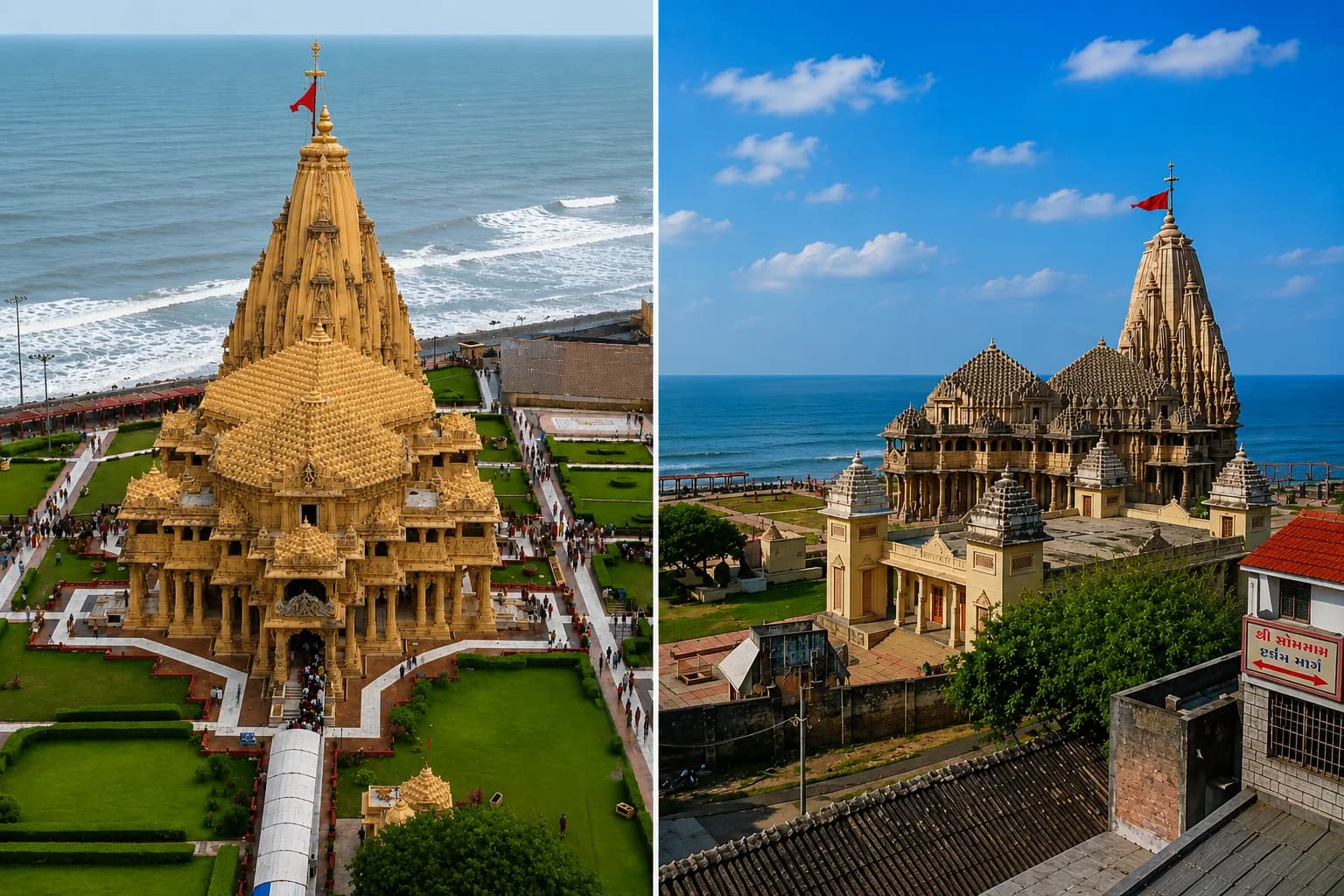
Girnar Jain Temples: The Sacred Neminath Tirth of Junagadh

The Girnar Jain temples are a sacred cluster of 16 marble temples on the first plateau of Mount Girnar in Junagadh, revered as the moksha site of Lord Neminath, the 22nd Jain Tirthankara. Open 6:00 AM to 5:00 PM with free entry, they are reached by climbing about 3,800 steps or by the Girnar ropeway.
High on the ancient, sacred slopes of Mount Girnar near Junagadh, the Girnar Jain temples are among the holiest and most beautiful Jain pilgrimage sites in India. This guide, from the team behind Somnath Dwarka Tour Package, a unit of Experience My India, covers the history and legend of the temples, their timings and rules and how to reach the sacred plateau, whether on foot or by the ropeway.
About the Girnar Jain temples
The Girnar Jain temples are an ancient and deeply sacred cluster of 16 marble temples perched on the first major plateau of Mount Girnar, in the Junagadh district of Gujarat. Set on a ledge at the top of a great cliff, at a height of about 3,800 steps above the base, they form a kind of temple-fort, enclosed and dense with exquisite carving. The site is famous above all as the liberation site of Lord Neminath, the 22nd Jain Tirthankara and has been a place of Jain pilgrimage since ancient times, sacred to both the Digambara and Svetambara sects. For Jains, Girnar is revered as Mount Neminath, one of their most important tirthas. Mount Girnar itself is said to be older than the Himalayas and its slopes hold hundreds of Hindu and Jain temples across five peaks, but it is this Jain temple plateau, part of the way up, that draws Jain pilgrims from across India and the world.
Girnar Jain temples at a glance
Site | Girnar Jain temples, the Neminath Tirth |
Deity | Lord Neminath, the 22nd Jain Tirthankara |
Location | First plateau of Mount Girnar, Junagadh |
Timings | 6:00 AM to 5:00 PM daily |
Entry | Free admission |
Reached by | About 3,800 steps or the Girnar ropeway |
Lord Neminath, the 22nd Tirthankara
The Girnar Jain temples are inseparable from the story of Lord Neminath. According to Jain tradition, Neminath, the 22nd Tirthankara, was on his way to his own wedding when he heard the cries of animals caged and destined to be slaughtered for the wedding feast. Moved to deep compassion and sorrow, he renounced all worldly pleasures on that very day, turned away from the marriage and came to Mount Girnar, where he lived as a monk in meditation. Here he is believed to have attained Keval Gyan or supreme knowledge and finally moksha, liberation from the cycle of birth and death. His betrothed, Rajul, also renounced the world and became a nun. This is why Girnar is revered as the Nirvana Kshetra, the liberation site, of Lord Neminath. The story, with its message of compassion for all living beings and the renunciation of worldly desire, lies at the very heart of Jain teaching, which is why pilgrims feel so drawn to make the long, arduous climb to the place where it unfolded.
The 16 temples and their architecture
The complex is a treasury of Jain art and devotion. The main shrine, dedicated to Lord Neminath, is the largest and oldest of the group, a magnificent structure with exquisite marble carvings, housing an ancient black-stone idol of the Tirthankara and it remains open through the day. The oldest portions of the present complex date to around 1129 CE, built in the pristine Maru-Gurjara architectural style, with additions made continuously through the 15th century. A notable structure is the triple temple of Mallinath, dedicated to the ninth Tirthankara, built in 1177 CE by two brothers, along with many other shrines funded by wealthy merchants over the centuries. Together, their mosaic-decorated domes, elaborate stupas and intricate carving make the plateau a breathtaking sight and the sheer effort of building such temples so high on the mountain, stone by stone carried up by hand, is a testament to the devotion of the generations who created them.
Timings, entry and rules
The Girnar Jain temples are open daily from 6:00 AM to 5:00 PM and entry is free for all. It is best to visit early in the morning, both to enjoy the cool of the day for the climb and to have time for a peaceful darshan. As at all Jain temples, certain rules apply: leather items, cameras and mobile phones are strictly prohibited inside the sanctum areas, out of respect for the sanctity of the shrines. Dress modestly and follow the guidance of the temple attendants. Some of the smaller temples may close in the middle of the day, roughly between 11 AM and 3 PM, though the main Neminath temple stays open throughout, so an early start ensures you can see the most while the whole complex is active.
How to reach the Girnar Jain temples
Reaching the temples is a journey in itself. The nearest airport is Rajkot, about 103 km away, with Ahmedabad, around a six to seven hour drive, as the major hub. Junagadh Junction is the nearest railway station, well connected to Ahmedabad, Rajkot and other cities. From Junagadh city, an auto rickshaw or local taxi takes you the roughly 5 km east to Girnar Taleti, the base of the mountain. From there, you reach the Jain temple plateau either on foot or by the ropeway, as covered in our Junagadh to Girnar guide.
Climbing to the Jain plateau
From Girnar Taleti, the traditional way to reach the Jain temples is to climb the sacred stone steps. It takes about 3,800 steps to reach the Jain temple plateau, a demanding but deeply rewarding climb through beautiful, forested slopes dotted with smaller shrines and rest points. Many pilgrims make the climb in the pre-dawn hours to reach the top by sunrise, avoiding the heat of the day. For those who cannot manage the full climb, dolis or palanquins carried by porters, are available for hire. The climb is a spiritual act in itself and reaching the temple-fort at the top, high above the plains, is an unforgettable experience. Along the way, tea and refreshment stalls, resting spots and smaller shrines break the ascent and the camaraderie of fellow pilgrims making the same climb adds to the sense of shared devotion.
The Girnar ropeway
For a much easier ascent, the Girnar ropeway, known as the Udan Khatola, carries visitors from the base up towards the Ambaji temple near the top of the mountain, in a scenic ride of a few minutes that saves hours of climbing. From the ropeway's upper station, however, you still need to descend about 1,000 to 1,200 steps to reach the main Jain temple plateau and climb back up the same steps to return to the ropeway. The ropeway is a wonderful option for those short on time or unable to manage the full climb, offering breathtaking views over the Girnar forest, though the descent and climb to the Jain temples still require reasonable fitness.
Best time to visit
The best time to visit the Girnar Jain temples is the cooler season, from November to February, when the weather is pleasant for the climb, in line with the best time to visit Gujarat. Avoid the peak summer heat, which makes the long climb very taxing and take care in the monsoon, when the steps can be slippery. Start very early in the morning, ideally before dawn, to climb in the cool and reach the temples for a serene darshan. The Girnar Parikrama festival in November and the Bhavnath fair around Maha Shivratri are special but very crowded times on the mountain.
Tips for visiting the Girnar Jain temples
A few pointers make the pilgrimage smoother:
Start the climb before dawn to avoid the heat and reach the temples in time for sunrise darshan.
Carry water, wear comfortable shoes and pace yourself on the long stone steps of the ascent.
Use the ropeway if you are short on time, but be ready for the roughly 1,000 step descent to the Jain plateau.
Remove leather items and leave cameras and phones outside the sanctum, as they are prohibited.
Consider a doli or palanquin, if you cannot manage the full climb on foot.
Respect the sanctity of the shrines, dress modestly and follow the attendants' guidance.
Combine Girnar with Somnath and the coast
Girnar sits in the heart of Saurashtra, close to the region's other great sites, so it pairs beautifully with a wider trip. Somnath, the first Jyotirlinga, is a short drive away and the Gir lion sanctuary is nearby too, while Dwarka up the coast completes a classic Gujarat pilgrimage. Many travellers combine the Girnar Jain temples and the Girnar climb with Somnath, Gir and Dwarka into one rewarding Saurashtra journey, taking in Jain and Hindu shrines, a lion safari and the sea, all within a few days.
Plan your Girnar trip
Experience My India can plan a trip that includes the Girnar Jain temples along with Somnath, Gir and Dwarka. Plan your arrival with our how to reach Somnath and how to reach Gir guides, check the Somnath to Girnar distance, book Somnath Dwarka hotels and let the Experience My India Somnath Dwarka tour packages or a Somnath Dwarka taxi service handle the travel so you can focus on the pilgrimage.
Related guides
To plan the rest of your Saurashtra trip, these related guides help:
Related guide | What it covers |
Air, rail and road access to the Dwarka coast. | |
When to plan a lion safari near Girnar. | |
The sights within the Somnath temple town. | |
One and two day plans for a Somnath visit. | |
The dishes to try across the state. | |
The best months for the Dwarka coast. |
Plan your visit
Experience My India can arrange your Girnar and Saurashtra pilgrimage. Browse more travel guides, message us on WhatsApp or call +91 73006 20809.

Harsh Rawat
Somnath–Dwarka circuit planning
Harsh Rawat runs Somnath Dwarka Tour Package on the ground in Gujarat, part of Experience My India. Since 2018 he has been planning and driving the Somnath–Dwarka circuit — the darshan timings, the road hours between temples and the stops worth adding — and the routes, fares and timings published across this site are the ones he maintains.