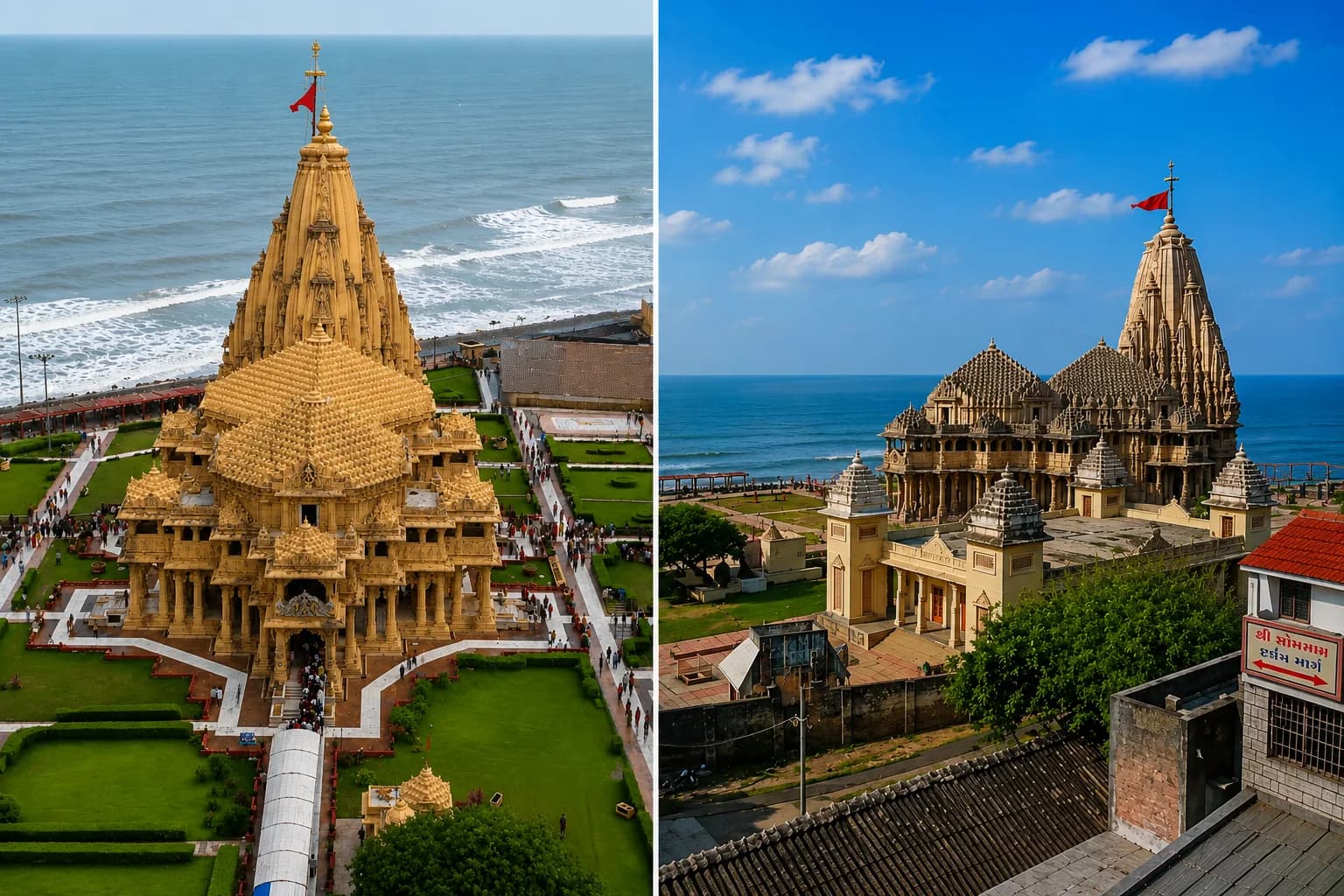
Okha Port Dwarka: The Gateway to Bet Dwarka
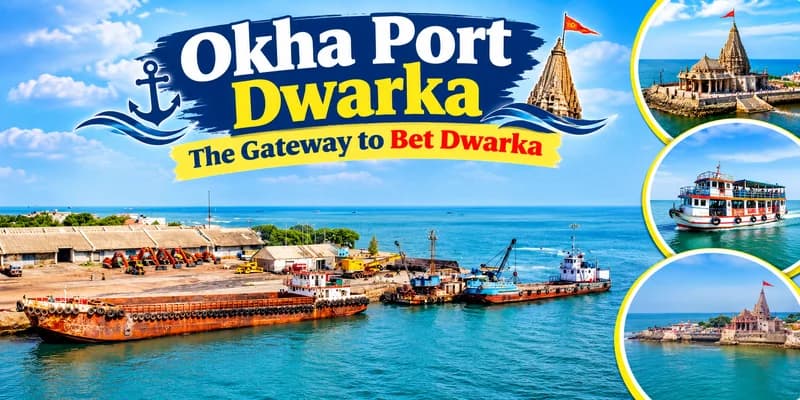
Okha Port is a historic all-weather port town at the northwestern tip of the Saurashtra Peninsula, about 30 km north of Dwarka and the mandatory gateway to the sacred island of Bet Dwarka. The cargo port runs 24/7, passenger ferries to Bet Dwarka run roughly 6:00 AM to 7:00 PM and the Sudarshan Setu road bridge is open around the clock. This guide, from Experience My India, covers it.
Okha Port is a historic and strategically vital all-weather port at the extreme northwestern tip of the Saurashtra Peninsula, in the Devbhumi Dwarka district of Gujarat. For most travellers it is best known as the gateway to the sacred island of Bet Dwarka, but it is also a working commercial harbour, a high-security naval command centre and a place with deep roots in the Krishna legend. This guide, from the team behind Somnath Dwarka Tour Package, a unit of Experience My India, covers Okha's ferry and bridge timings, its gateway role for pilgrims to Bet Dwarka, its mythological and maritime history and everything you need to pass through it smoothly on your Dwarka pilgrimage.
What is Okha Port?
Okha Port is an all-weather port city at the mouth of the Gulf of Kutch, roughly 30 km north of the holy town of Dwarka and directly across a small sea creek of about 2.9 km from the sacred Bet Dwarka island. It wears several hats at once: it is the transit hub through which pilgrims reach Bet Dwarka, a vital commercial harbour handling millions of tonnes of cargo and a command centre for India's maritime security forces, all set in a town with an ancient name drawn from the Krishna legend. For the visiting pilgrim, Okha is chiefly the point of departure for the short sea or bridge crossing to the island, but understanding its wider role adds real interest to the journey through this fascinating corner of the Gujarat coast.
Okha Port at a glance
What it is | An all-weather port town and pilgrim transit hub |
Location | Northwestern tip of Saurashtra, Devbhumi Dwarka |
Distance from Dwarka | About 30 km north |
Across from | Bet Dwarka, about 2.9 km over the creek |
Port operations | The cargo port and industrial zone run 24/7 |
Ferry to Bet Dwarka | Roughly 6:00 AM to 7:00 PM daily |
Road bridge | The Sudarshan Setu, open 24/7 |
Timings and how the crossing works
There are two ways to cross from Okha to Bet Dwarka and knowing the timings helps you plan. The traditional passenger ferries run from the Okha jetty daily from around 6:00 AM to 6:00 or 7:00 PM, with boats departing roughly every 15 to 30 minutes once they fill up, so there is rarely a long wait during the day. For an all-weather alternative, the 2.32 km Sudarshan Setu road bridge now connects the Okha mainland to Bet Dwarka by road and remains open 24 hours a day, allowing you to drive across at any time. The cargo port and industrial zone themselves operate around the clock, but these are not visitor areas. For the full details of the sea crossing, including fares and the last return boat, see our Bet Dwarka ferry timing guide.
The gateway to Bet Dwarka
Okha's greatest significance for pilgrims is as the sacred gateway to Bet Dwarka. For centuries it has been the mandatory transit hub for devotees completing the Panch Dwarka circuit, as everyone must pass through Okha to reach Bet Dwarka, also known as Shankhodhar, the island that houses the personal residence and palace of Lord Krishna. This makes Okha an essential stop on the Dwarka pilgrimage rather than a detour and the crossing itself, whether by the traditional ferry or the new bridge, is part of the experience of reaching Krishna's island home. The island's sights and shrines are covered in our places to visit in Bet Dwarka and Bet Dwarka Bethakji guides and the wider circuit in our Pancha Dwarka guide.
The history of Okha
Okha carries a rich history reaching back into myth. The city takes its name from ancient epic literature, being named after Princess Usha, vocalised as Okha in Gujarati, the daughter of the demon king Banasur. The classical 18th-century Gujarati text Okhaharan tells the story of her marriage to Aniruddha, the grandson of Lord Krishna, tying the town directly into the Krishna legend that pervades this coast. Historically, Okha was recorded as the very first port on the west coast of India encountered by ships sailing inward from Arabia and the Persian Gulf, an ancient maritime gateway to the subcontinent. In more recent times, the port was systematically modernised and brought under structured administration by the Gaekwad rulers of the Baroda State in the 19th and early 20th centuries, laying the foundations of the working harbour it is today.
A national security command centre
Because of its border proximity and strategic location at the mouth of the Gulf of Kutch, Okha serves as a high-security operational command centre for India's maritime forces. The Indian Navy, the Indian Coast Guard, Indian Customs and the Gujarat Marine Police all have a presence here, making the town an important node in the country's coastal security. For visitors this mainly means being aware that parts of the port and shoreline are sensitive, restricted areas where photography and access are limited, so it is best to keep to the pilgrim jetty and the public areas and to follow any signage and instructions from the authorities. The naval presence is a reminder that this quiet-seeming port sits at a genuinely strategic point on India's western frontier.
The industrial backbone
Okha is also a vital commercial harbour, managed by the Gujarat Maritime Board. It handles millions of tonnes of cargo every year, heavily importing Indonesian lignite and coal to fuel the state's thermal power stations and processing massive exports of bauxite, limestone and soda ash from the nearby Tata Chemicals plant at Mithapur. This industrial role runs alongside its spiritual and strategic importance and it means the port is a busy, working place as well as a pilgrim gateway. While the cargo operations are not a visitor attraction, the sight of ships, jetties and industry framing the crossing to Bet Dwarka gives Okha a distinctive character, a place where the sacred and the industrial sit side by side at the edge of the sea.
Key developments and festival timings
A couple of timings are worth noting if you are planning a 2027 trip. The biggest festival in the region is Krishna Janmashtami, celebrated grandly at the Dwarkadhish temples and on Bet Dwarka, usually in August, when Okha sees heavy pilgrim traffic crossing to the island; our Janmashtami in Dwarka guide covers the celebrations. On the infrastructure side, the major Okha to Kanalus railway doubling project, a large investment to double the 159 km track into Okha railway station, is progressing towards its execution milestones and is set to increase both tourist and freight capacity significantly, which should make reaching Okha by train easier in the years ahead.
Location and how to reach
Okha sits at the extreme northwestern tip of the Saurashtra Peninsula, in the Devbhumi Dwarka district, at the mouth of the Gulf of Kutch, about 30 km north of Dwarka. It is connected by road and rail, with Okha railway station the terminus of the line and most pilgrims reach it as a short drive north from Dwarka town. From Okha, the ferry or the Sudarshan Setu bridge takes you across to Bet Dwarka. Our Somnath Dwarka taxi service can arrange the drive from Dwarka to Okha and on around the region and for the wider city see our things to do in Dwarka guide.
Combining Okha with your Dwarka trip
Okha fits naturally into a Dwarka pilgrimage as the launch point for Bet Dwarka and the two are almost always visited together. Back in Dwarka town are the great Dwarkadhish Temple, the Gomti Ghat steps and the Sudama Setu footbridge and a sensible plan is set out in our one day Dwarka itinerary. Dwarka's place in the sacred map of Krishna's life is covered in our Krishna's three cities guide. Down the coast lies the great Somnath temple, with the lions of Gir inland, for a fuller Saurashtra journey.
Tips for visiting Okha
A few pointers help your crossing go smoothly:
Plan to cross to Bet Dwarka during ferry hours, roughly 6:00 AM to 7:00 PM or use the Sudarshan Setu bridge at any time.
For the ferry, arrive with time to spare, as boats leave every 15 to 30 minutes once full and can be busy.
Respect the restricted naval, coast guard and customs areas and avoid photographing sensitive port zones.
Combine Okha and Bet Dwarka in a single half-day trip from Dwarka town, about 30 km south.
Carry water, sun protection and small cash for the ferry and island, especially in the warmer months.
Expect heavy crowds around Janmashtami, when pilgrim traffic through Okha peaks.
Keep valuables secure and follow the boatmen's and authorities' instructions on the crossing.
Plan your Dwarka visit
Experience My India can plan your Dwarka pilgrimage to include the crossing from Okha to Bet Dwarka, alongside the Dwarkadhish darshan and the city's other sights, with comfortable transport and a well-paced itinerary. Our Somnath Dwarka tour packages and wider Gujarat tour packages weave the region into a fuller Saurashtra journey taking in Somnath, Gir and the coast, with a stay at well-placed Somnath Dwarka hotels.
Related guides
To plan the rest of your Dwarka and Bet Dwarka visit, these related guides help:
Related guide | What it covers |
Offbeat corners of Krishna's holy city beyond the main temple. | |
A complete two-day plan for Dwarka and Bet Dwarka. | |
The four sacred dhams of Gujarat, including Dwarka. |
Plan your visit
Experience My India can arrange your Dwarka pilgrimage and wider Saurashtra journey. Browse more travel guides, message us on WhatsApp or call +91 73006 20809.

Harsh Rawat
Somnath–Dwarka circuit planning
Harsh Rawat runs Somnath Dwarka Tour Package on the ground in Gujarat, part of Experience My India. Since 2018 he has been planning and driving the Somnath–Dwarka circuit — the darshan timings, the road hours between temples and the stops worth adding — and the routes, fares and timings published across this site are the ones he maintains.