Gir Interpretation Zone: Purpose, Centre and the Wildlife It Protects
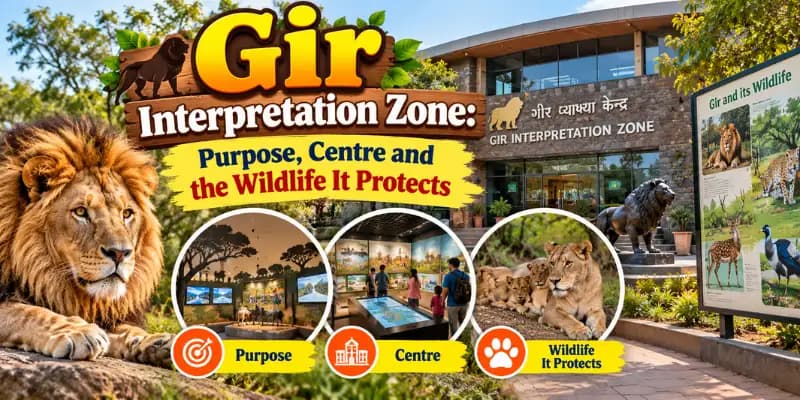
The Gir Interpretation Zone at Devalia is a gated 412-hectare eco-tourism zone within Gir National Park, created by the Gujarat forest department to showcase Asiatic lions and native wildlife while easing pressure on the wild core. This guide, from Experience My India, explains what it is, why it exists and its orientation centre.
The Gir Interpretation Zone is the official name for the gated conservation and education zone at Devalia, inside Gir National Park, popularly known to visitors as the Devalia Safari Park. While most travellers come to it for a quick, near-certain lion sighting, the zone is first and foremost an interpretation and conservation facility, built with a clear purpose. This guide, from the team behind Somnath Dwarka Tour Package, a unit of Experience My India, explains what the Gir Interpretation Zone actually is, why the forest department created it, the orientation centre at its heart and the wildlife it protects. For the full how-to-visit, safari and booking details, our dedicated Devalia Safari Park guide is the companion to this one.
What is the Gir Interpretation Zone?
The Gir Interpretation Zone, at Devalia, is a gated eco-tourism and conservation zone of about 412 hectares, roughly 4 square kilometres, located around 12 km west of Sasan Gir village, within the precinct of Gir National Park. It was created by the forest department of Gujarat as a controlled, fenced-off section of the Gir landscape where visitors can see the region's wildlife in a near-natural savanna habitat, without entering the deep wild core of the sanctuary. In effect it is a carefully managed window onto Gir, a mini version of the greater forest, where the same species live in a protected, accessible setting. The word interpretation is the key to understanding it, for the zone is designed not only to let people see wildlife but to help them understand it, through its orientation centre and its guided trail. It is this dual role, conservation and education together, that gives the Gir Interpretation Zone its name and its distinct character within the park.
Why the forest department created the interpretation zone
The primary reason the Gir Interpretation Zone exists is conservation. Gir is the last home on Earth of the endangered Asiatic lion and the wild core of the national park is a fragile ecosystem that suffers when too many vehicles and visitors pass through it. By creating a separate, enclosed zone at Devalia, the forest department gave the public a guaranteed, time-efficient way to see lions and other wildlife while reducing human interference in the sensitive core area, where the free-ranging lions actually live and breed. In this way the interpretation zone protects the wild heart of Gir by drawing some of the visitor pressure to a managed setting designed to absorb it. The animals in the zone live in a near-natural savanna habitat rather than cages, so visitors see genuine wild behaviour, while the core forest is left quieter for the conservation work that has made Gir one of India's great wildlife success stories. Understanding this purpose is what separates the interpretation zone from an ordinary safari park.
Gir Interpretation Zone at a glance
Official name | Gir Interpretation Zone, Devalia |
Popularly called | Devalia Safari Park |
Area | About 412 hectares, roughly 4 square kilometres |
Location | About 12 km west of Sasan Gir village |
Purpose | Conservation, education and easing core-area pressure |
Habitat | Gated, near-natural savanna within Gir National Park |
Created by | The forest department of Gujarat |
The interpretation and orientation centre
At the heart of the zone and the reason for its name, is its state-of-the-art orientation and interpretation centre, an attraction in its own right quite apart from the wildlife trail. The centre houses an interactive museum with life-size models of the animals of Gir, birdcall identification boards that let visitors learn to recognise the forest by its sounds and detailed scientific charts explaining the flora and fauna and the ecology of the Gir landscape. It is designed to turn a wildlife outing into genuine understanding, so that visitors leave knowing not just that they saw a lion but how the whole ecosystem fits together, what the lion eats, how the forest regenerates and why its protection matters. For families, school groups and first-time visitors in particular, the orientation centre is a wonderful introduction to Gir before or after the trail and it is this educational mission that makes the place a true interpretation zone rather than simply a place to look at animals. Spending time in the centre deepens everything you see outside it.
The wildlife of the interpretation zone
Because it is a controlled, fenced environment, the Gir Interpretation Zone offers a practically guaranteed sighting of the major carnivores, which is rare in the wild core. Multiple Asiatic lions roam the savanna landscape and a specialised open moat enclosure showcases Indian leopards, the elusive cat that is hard to see on an ordinary safari. Around these predators lives a healthy prey base and a wider community of animals, including spotted deer or chital, sambar, blue bulls or nilgai, blackbuck, chinkara, wild boar and the Indian golden jackal, along with a diverse range of birds and even critically endangered vulture species. In this sense the zone is a living cross-section of the Gir ecosystem. For the full picture of the park's fauna beyond the zone, see our Gir National Park animals guide and for its rich avifauna, the birds of Gir National Park guide, both of which cover the wider wild forest that the interpretation zone represents in miniature.
How the interpretation zone differs from the core national park
It helps to understand how the Gir Interpretation Zone differs from the main national park, because they serve different purposes. The core park is the vast wild forest where lions roam free and where the standard safari, the Gir jungle trail, is a roughly 3-hour open jeep drive on designated routes, with sightings never guaranteed because the animals are truly wild. The interpretation zone, by contrast, is a small, enclosed area offering a condensed, highly accessible experience where sightings are practically assured and the visit is short. One is the real wilderness, thrilling but uncertain; the other is a managed, educational window designed for certainty and understanding. Neither is better, they are complementary and many visitors do both, the interpretation zone for a sure sighting and the orientation centre's learning and the core safari for the wild thrill. This complementary design is exactly what lets the zone protect the core while satisfying the visitor.
Visiting the interpretation zone: the essentials
While the full visiting, safari and booking guide is on our Devalia Safari Park page, the essentials are worth noting here so you understand how access to the zone works. Visitors choose between a roughly 55-minute Gypsy or jeep safari and an enclosed safari bus tour of the trail. The zone is open daily from 7:00 AM to 11:00 AM and from 3:00 PM to 5:00 PM and it is strictly closed every Wednesday, which catches many visitors out, so never plan a Wednesday visit. Entry needs a permit, issued in a limited daily number on a first-come, first-served basis and bookable up to three months ahead on the official Gujarat forest department portal, with a single permit covering up to 6 adults and 1 child between 3 and 12 years. You must carry the original physical photo ID used in the booking to cross the main gate and for Gypsy bookings the guide and vehicle charges are often payable separately on site. The timings and fees sit alongside the wider park schedule in our Gir National Park timings and Gir safari ticket price guides.
When to visit the interpretation zone
The Gir Interpretation Zone follows the broad rhythm of the park and the cooler winter months from around November to March are the most pleasant for the trail and the orientation centre alike, as covered in our best time to visit Gir guide. A great advantage of the zone is that, being a managed facility, it offers reliable viewing through the open season even when the deep core can be harder and its short, fixed slots make it easy to fit into a busy itinerary. Remember the Wednesday closure when planning and aim for the first morning slot for the most active wildlife and the coolest, most comfortable conditions. For how to get to the Sasan Gir area that serves the zone, see our how to reach Gir guide.
Tips for the Gir Interpretation Zone
A few pointers help you get the most from a visit:
Never plan a Wednesday visit, as the interpretation zone is strictly closed that day every week.
Give the orientation centre and museum real time, as its models, birdcall boards and charts make the wildlife you see far more meaningful.
Book your e-permit in advance on the official Gujarat forest department portal, up to three months ahead, as daily permits are limited.
Carry the original physical photo ID used in the booking, as it is checked at the main gate and without it you may be refused entry.
Take the first morning slot, from 7:00 AM, for the most active wildlife and the coolest conditions on the trail.
Treat the zone as a complement to a wild core safari, not a replacement, for both a sure sighting and the real wilderness.
Remember that for Gypsy bookings the guide and vehicle charges are often paid separately on site, so keep some cash handy.
Plan your Gir visit
Experience My India can plan your Gir visit around the interpretation zone and the wild core alike, with permits arranged, the Wednesday closure accounted for and the orientation centre, the Devalia trail and a core lion safari all fitted into your days. You can combine Gir with the Somnath temple and Dwarka, stay at well-placed Somnath Dwarka hotels and let the Experience My India Somnath Dwarka tour packages or the wider Gujarat tour packages bring the lions, the learning and the sacred coast together in one well-planned journey.
Related guides
To plan the rest of your Gir and Saurashtra trip, these related guides help:
Related guide | What it covers |
The drive from the Somnath coast across to Gir. | |
The forest goddess shrine deep in the Gir core. | |
The fort city and sacred mountain next to Gir. | |
The sights of the Somnath temple town nearby. |
Plan your visit
Experience My India can arrange your Gir trip and wider Saurashtra journey. Browse more travel guides, message us on WhatsApp or call +91 73006 20809.

Harsh Rawat
Somnath–Dwarka circuit planning
Harsh Rawat runs Somnath Dwarka Tour Package on the ground in Gujarat, part of Experience My India. Since 2018 he has been planning and driving the Somnath–Dwarka circuit — the darshan timings, the road hours between temples and the stops worth adding — and the routes, fares and timings published across this site are the ones he maintains.