The Somnath Jyotirlinga Story: Chandra's Curse and the Shrine Eternal
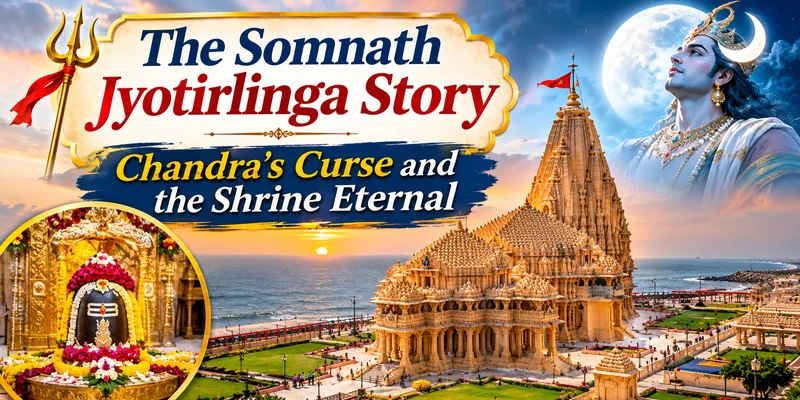
The Somnath Jyotirlinga at Prabhas Patan near Veraval is the first of the twelve Jyotirlingas of Lord Shiva. Its legend tells how the Moon God, Chandra, cursed to fade away by his father-in-law Daksha, did penance here until Shiva softened the curse into the waxing and waning of the moon. In gratitude Chandra built a golden shrine and named it Somnath. This guide, from Experience My India, tells the story and its history.
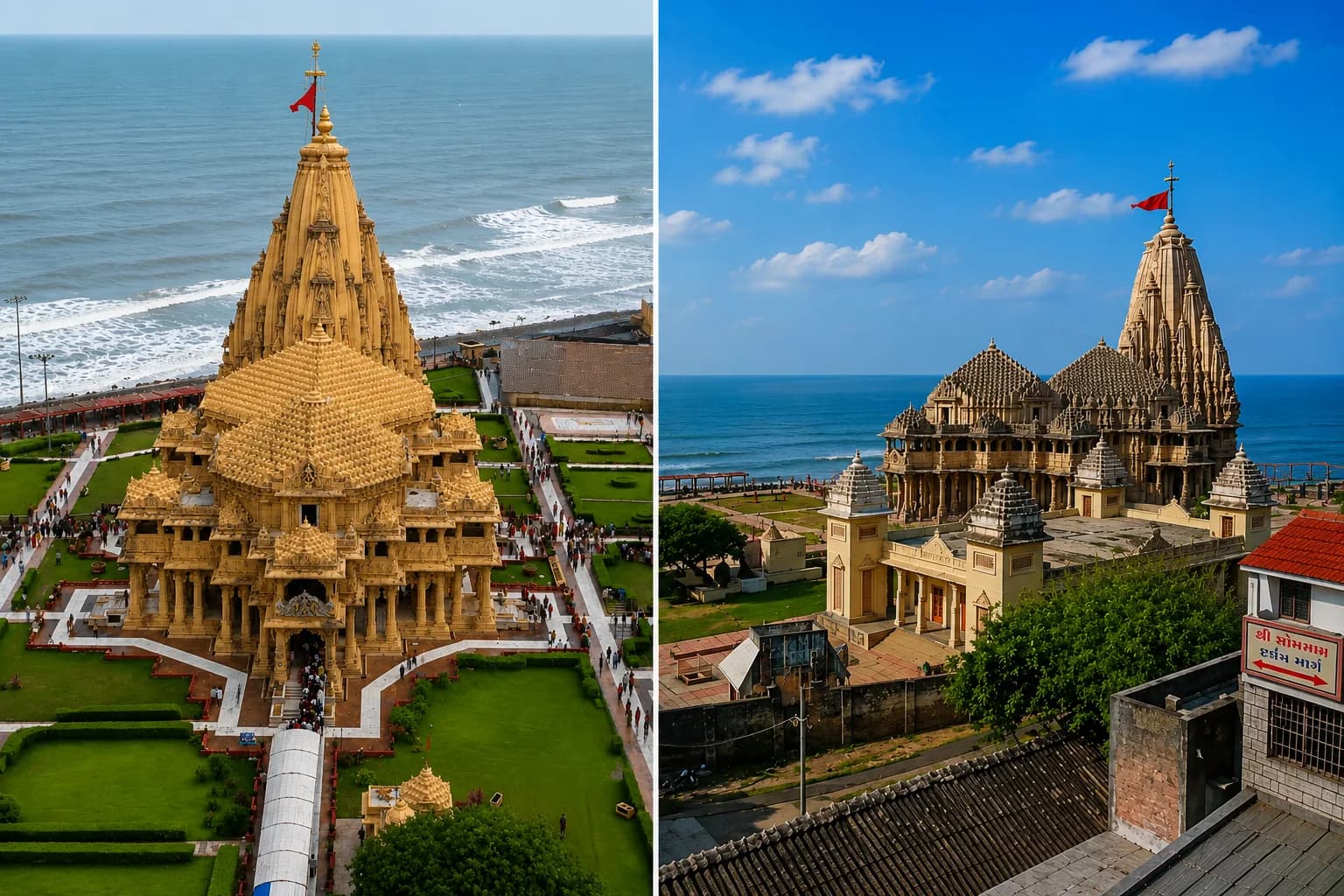
The Somnath Temple in Somnath, on the Arabian Sea coast of Gujarat, is one of the most storied shrines in all of India. It is revered as the first among the twelve sacred Jyotirlingas of Lord Shiva and its name itself carries a legend, the story of the Moon God who was cursed, who did penance here and who was blessed with the gift of the lunar phases. This guide, from the team behind Somnath Dwarka Tour Package, a unit of Experience My India, tells the full story of the Somnath Jyotirlinga: the curse of Chandra, his penance at Prabhas, Shiva's blessing, how the shrine got its name and the extraordinary history of destruction and rebuilding that has made Somnath a symbol of faith and resilience.
Quick facts
Temple | Somnath Jyotirlinga (Somnath Mahadev) |
Location | Prabhas Patan, near Veraval, Gir Somnath district, Gujarat |
Setting | Arabian Sea coast, near the Triveni Sangam of the Kapila, Hiran and Saraswati rivers |
Rank | The first or Adi, of the 12 Jyotirlingas of Shiva |
Darshan | 6:00 AM to 10:00 PM daily (see the Somnath aarti guide for aarti timings) |
Entry fee | Free general entry; mobile phones and electronics prohibited inside |
Current temple | Chalukya-style yellow sandstone, inaugurated in 1951 |
The story: the curse of Chandra
The legend of Somnath begins with the Moon God, Chandra, also called Soma. King Daksha, the Prajapati, married his twenty-seven daughters, the Nakshatras or lunar constellations, to Chandra. Chandra, however, favoured only one of his wives, Rohini and neglected the other twenty-six. Grieved and angered by this unfair treatment of his daughters, Daksha laid a terrible curse on his son-in-law: that Chandra would steadily lose his lustre and waste away. As the curse took hold, the Moon began to fade from the sky, growing dimmer and weaker and his waning threatened the balance of the heavens and the earth below, which depended on his light.
Chandra's penance at Prabhas
Ailing and losing his light, Chandra sought a way to be freed from the curse. He came to Prabhas Kshetra, the sacred shore where Somnath now stands, near the holy confluence of rivers at the Triveni Sangam. There he bathed in the sacred waters and devoted himself to a long and intense penance to Lord Shiva, praying without pause for six months. The choice of Prabhas was itself significant, for it was already a revered tirtha and Chandra's devotion at this spot would make it holier still. His story is part of the deep spiritual heritage of the site explored in our guide to the Somnath Jyotirlinga significance.
Shiva's blessing and the lunar phases
Pleased by Chandra's deep devotion and sustained penance, Lord Shiva appeared before him. A curse of Daksha, once laid, could not simply be erased, so Shiva did something subtler and more merciful: he modified it. Rather than letting Chandra waste away entirely, Shiva blessed him to wane and then wax again across the fortnights, fading through the dark half of the month and returning to fullness through the bright half. This is the mythological explanation for the phases of the moon, the waxing and waning that we still see in the night sky and it transformed Daksha's curse of decay into an eternal rhythm of renewal. Chandra was saved and the Moon has risen and set in its cycle ever since.
How Somnath got its name
Out of boundless gratitude for being saved, Chandra built a magnificent shrine in honour of Lord Shiva at the site of his penance. He is said to have raised it in gold and he gave it the name Somnath, which combines Som, a name of the Moon, with Nath, meaning Lord, so that Somnath means the Lord of the Moon or the Lord worshipped by Soma. The name has endured for all the ages since. Tradition also recalls earlier mythical iterations of the shrine, said to have been built in silver, in sandalwood and in stone by different divine and legendary figures across the yugas, each a forerunner of the temple that would carry the Moon God's name down to the present day.
The history of the Somnath Temple
Few temples in the world have a history as dramatic as Somnath's. The shrine is of great antiquity, referenced in ancient texts including the Rig Veda, the Mahabharata and the Bhagavata Purana. Its legendary wealth, however, made it a repeated target. Over the centuries the temple was looted and demolished many times by invaders, most famously by Mahmud of Ghazni in 1026 CE and again later by forces under Alauddin Khilji, by Muzaffar Shah I and by Aurangzeb in 1706 CE. Each time, the temple was raised again. The relics and sculptural fragments of these older temples can be seen today in the Prabhas Patan Museum, which preserves the story of its many lives.
The cycle of reconstruction is as much a part of Somnath's story as the legend of Chandra. Hindu rulers rebuilt it again and again, among them King Kumarapala, Mahipala I, and, in a celebrated later restoration, Maharani Ahilyabai Holkar, who built an adjacent temple around 1783 CE that still stands beside the main shrine. After India's independence, the modern reconstruction was championed by Sardar Vallabhbhai Patel in 1947 and the present temple, built in the Chalukya style in yellow sandstone, was completed and inaugurated by India's first President, Dr Rajendra Prasad, on 11 May 1951. It is managed today by the Shree Somnath Trust.
A symbol of resilience
Because it has risen so many times from destruction, Somnath stands as a monumental emblem of faith, endurance and cultural revival, which is why it is often called the Shrine Eternal. As the first or Adi, of the twelve Jyotirlingas, it holds pride of place among Shiva's holiest shrines and it is one of the four Char Dham of Gujarat. Near the temple stands the Baan Stambh, an ancient arrow pillar that is said to point in a straight line toward the South Pole with no landmass in between, a striking testament to the knowledge of those who built here and the shrine sits close to the Ahilyabai Temple and the sacred Triveni Sangam.
Experiencing the story at Somnath
A visit lets you feel the legend come alive. The temple is open for darshan from 6:00 AM to 10:00 PM, with three daily aartis whose exact timings and rituals are covered in our Somnath aarti timings guide and each evening the moving Jay Somnath sound and light show narrates the temple's history against the night sky. Before you go, it helps to read the Somnath temple rules, as mobile phones and electronic devices are not allowed inside and the shrine is especially vibrant during Maha Shivaratri, when devotees throng the coast. Experience My India can time a visit to catch both an aarti and the evening light show.
Plan your Somnath pilgrimage
Experience My India can plan a Somnath pilgrimage that brings its story to life, pairing the first Jyotirlinga with Dwarka, Gir and the wider Saurashtra coast in a smooth, well-paced itinerary. Our Somnath Dwarka tour packages and wider Gujarat tour packages weave the temple into a complete journey, with a stay at well-placed hotels and comfortable local transport throughout.
Related guides
To explore Somnath and its region further, these related guides help:
Related guide | What it covers |
A compact plan of the temple town's key sights. | |
Seasons, weather and when to plan your trip. | |
The great full-moon festival on the Somnath coast. |
Plan your visit
Experience My India can arrange your Somnath pilgrimage and wider Saurashtra journey. Browse more travel guides, message us on WhatsApp or call +91 73006 20809.

Harsh Rawat
Somnath–Dwarka circuit planning
Harsh Rawat runs Somnath Dwarka Tour Package on the ground in Gujarat, part of Experience My India. Since 2018 he has been planning and driving the Somnath–Dwarka circuit — the darshan timings, the road hours between temples and the stops worth adding — and the routes, fares and timings published across this site are the ones he maintains.